The Annapurna Circuit Trek 14 Days is one of the most iconic long-distance treks in Nepal. In just two weeks, you cross lush river valleys, alpine forests, high mountain deserts, and the legendary Thorong La Pass at 5,416 meters.
This trek is ideal for adventure seekers who want dramatic Himalayan scenery and cultural immersion. You will pass through Gurung, Thakali, and Tibetan-influenced villages while enjoying views of Annapurna I, Dhaulagiri, and Manaslu.
With experienced local guides and carefully planned acclimatization, this journey is safe, rewarding, and unforgettable.
Detailed Annapurna Circuit Trek Itinerary
Day
Route
Details
Day 1
Drive Kathmandu → Bhulbhule (840m)
7–8 hrs scenic drive along rivers and hills. Overnight tea house.
Day 2
Bhulbhule → Jagat (1,300m)
6 hrs walk through terraced fields, waterfalls, and villages.
Day 3
Jagat → Dharapani (1,860m)
6–7 hrs trek. Suspension bridges and entry to higher valley.
Day 4
Dharapani → Chame (2,670m)
5–6 hrs through pine forest with first big mountain views.
Day 5
Chame → Pisang (3,200m)
5–6 hrs. Wide valley with stunning Annapurna II views.
Day 6
Pisang → Manang (3,540m)
6 hrs via upper trail for better scenery and monasteries.
Day 7
Acclimatization in Manang
Short hike to viewpoint or Ice Lake. Rest and adapt to altitude.
Day 8
Manang → Yak Kharka (4,110m)
4–5 hrs gradual climb into alpine landscape.
Day 9
Yak Kharka → Thorong Phedi (4,600m)
4–5 hrs. Prepare for next day’s pass crossing.
Day 10
Thorong Phedi → Thorong La (5,416m) → Muktinath (3,800m)
8–9 hrs challenging but rewarding day. Cross Thorong La Pass and descend to Muktinath.
Day 11
Muktinath → Jomsom (2,720m)
5–6 hrs through Mustang’s dry landscape. Visit temples.
Day 12
Jomsom → Pokhara
25 min scenic flight or long drive to Pokhara.
Day 13
Rest Day in Pokhara
Relax by lakeside in Pokhara. Optional sightseeing.
Day 14
Drive/Fly Pokhara → Kathmandu
Return to Kathmandu. Trip concludes.
Difficulty Level & Fitness Required
This trek is moderate to challenging due to altitude and the long Thorong La crossing.
Average walking: 5–7 hours per day
Pass day: 8–9 hours
Maximum altitude: 5,416m
You should have:
Good cardio fitness
Previous hiking experience (helpful but not mandatory)
6–8 weeks of preparation before arrival
Altitude & Acclimatization
The highest point is Thorong La Pass (5,416m).
We include one acclimatization day in Manang to reduce altitude risks.
Tips to Prevent Altitude Sickness
Walk slowly
Stay hydrated
Avoid alcohol
Eat properly
Inform your guide immediately if symptoms appear
Best Time to Trek
Spring (March–May) Clear skies and blooming rhododendrons.
Autumn (September–November) Best mountain views and stable weather.
Winter (December–February) Cold but fewer crowds. Possible snow at the pass.
Monsoon (June–August) Rain in lower areas. The Mustang side remains relatively dry.
Packing List
Down jacket
Waterproof jacket
Thermal layers
Trekking boots
Warm gloves & hat
Sleeping bag (-10°C)
Trekking poles
Sunglasses
Sunscreen
Headlamp
Personal medications
Permits & Regulations
This trek requires:
Annapurna Conservation Area Permit (ACAP)
TIMS Card
We arrange all permits before departure.
Accommodation & Meals
Accommodation is in tea houses with twin-sharing rooms.
Meals include:
Dal Bhat
Noodles
Pasta
Soups
Pancakes
Tea & coffee
Hot showers and WiFi are available in most villages for a small fee.
Safety, Guides & Insurance
Government-licensed trekking guides
1 porter for every 2 trekkers
Emergency evacuation support
First aid kit carried by guide
Travel insurance covering trekking up to 5,500m is required.
Book Your Annapurna Circuit Trek
Ready to cross Thorong La and experience the Himalayas up close?
Contact us today to secure your departure date. Limited spaces available during peak seasons.
Let’s plan your Annapurna adventure with trusted local experts.
Pricing Packages
14 Daysfrom US$ 1050US$ 980pp
Save $70 Per Pax
Group-Size Discounts
Discounts are based on your group size. We do not add anyone to your group.
No. of Persons
Price per Person
1 Pax
US$ 980
2 - 4 Pax
US$ 950
5 - 8 Pax
US$ 900
9 - 15 Pax
US$ 850
×
Enquiry Form
Included and Excluded
Kathmandu to Bhulbhule (trek start) by local bus
Birethanti (Trek ends) to Pokhara by private transport
Muktinath to Tatopani by local transport
Pokhara to Kathmandu on a tourist bus
One night accommodation at Pokhara
Total 12 nights - 9 nights room with attached bathroom in Jagat, Dharapani, Chame, Pisang, Manang (2N) Muktinath, Tatopani, and Ghorepani. 3 nights standard rooms - Bhulbhule, Yak Kharka, Thorang Phedi (twin sharing room)
Full-board (main course) meals: 13 lunches, 13 dinners, and 14 breakfasts during the trek
Government licensed, experienced trek leader (guide), assistant trekking guide (for a group of 12 or more trekkers), and porters to help trekkers' luggage (1 porter for 2 trekkers, combined porter weight limit -18kg.)
Guides' and porters' expenses - meals, insurance, salary, lodging, transportation, and other necessary equipment.
Annapurna Conservation Area Permit (ACAP) fee.
Trekkers Information Management System (TIMS) card fee
Snacks (cookies) and seasonal fresh fruits every day
All government, local taxes, and official expenses
Souvenirs - a company T-shirt & Cap
Wilder Way Trekking appreciation certificate after the successful trek
Farewell dinner at the end of the trek in Kathmandu
International flight costs
Excess baggage charges (limit is 9kg per Person)
Nepal entry visa fees required on arrival at Tribhuvan International Airport- USD50 for 30-day stay.
All accommodation and meals in Kathmandu, before and after the journey
Lunch and dinner in Pokhara
Extra night accommodations, meals in Kathmandu and Pokhara due to early arrival or late departure, or early return from the trek.
Personal expenses - shopping, snacks, hot (tea, coffee) and cold drinks, bar bills, bottle or boiled water, shower, Wi-Fi, laundry, telephone call, battery recharge costs, extra porters, etc
Personal clothing and gear
Travel insurance which has to cover emergency high-altitude rescue and evacuation compulsory
Tips for guide and porters
Additional costs or delays caused by circumstances beyond our control like landslides, bad weather conditions, itinerary modification due to safety concerns, illness, change of government policy, strikes, mass movements, etc
All the costs and expenses not listed in - "What is included in this trek package?" above.
Highlights of the Tour
Pass by the yak pastures
Natural hot springs at Tatopani where you can choose to take a dip
Jomsom - the headquarter of Mustang
A day at tourist hub Pokhara
Spectacular views of Mt. Annapurna, Thorung Peak, Nilgiri, Chulu West, and Chulu East, Tukuche Peak, Dhaulagiri, Lamjung Himal, Annapurna II, and Annapurna IV
Visit the beautiful Manang district
Magnificent lakes, glaciers, deep gorges, and stunning waterfalls
Visit Muktinath (a sacred place for both Hindus and Buddhists) known for 108 stone faucets, and eternal flame
Cross Thorong La Pass at 5,416 meters
Visit Barge Monastery, the largest monastery in the Manang district
Poon Hill Viewpoint (3,210 m)
Itinerary
Our first day of the trek starts early in the morning. After breakfast, we take a bus from Kathmandu to Bhulbhule. The route takes us out of the Kathmandu valley along the picturesque Trishuli river to Besisahar, and finally to Bhulbhule. Bhulbhule lies by the side of Marsyangdi river. Throughout the ride, you will get to see the terraced farms, traditional villages, and Ganesh & Manaslu snow peaks. At Bhulbhule, we register our permits at the check post for trek entry.
After a nourishing breakfast, we will set foot on the trails this day. The route follows a pleasant path through the fertile jungle and terraced fields upriver, along the flowing Marsyangdi river. We take a leisurely lunch break and pass through several rural settlements and more farmlands to gradually reach the peaceful village of Jagat, a former trading post.
We begin our 3rd day of the trek following the Marsyangdi river, and after a steep climb, we enter the vicinity of the Manang region at Tal village. Here we can see several waterfalls forming a river by the sandy beaches. We will hike through the barley, rice, and potato fields and reach Kodo - one of the biggest villages in the Manang valley. Moving forward, we cross a suspension bridge, and after a short climb of the stone Kani, we reach Dharapani - the destination for this day.
We leave Dharapani and follow the trails through the forests with pine, fir, oak, and maple trees along the Marsyangdi river to reach Chame - the district headquarter of Manang district. You will find yourself surrounded by the green forests around and over you, and as you look up, you will see remarkable views of Lamjung Himal, Annapurna II, and Annapurna IV (7,525m). We will also stop by a small hot spring for a short rest.
This day, after breakfast, we walk through a steep and narrow valley to have our first view of a massive rock wall - the Paungda Danda Rock, considered very sacred by the local people. The Paungda Danda Rock is a curved rock face rising 1500m from the Marshyandi river. From the trails, we also see clear views of Annapurna II in the south and Pisang Peak in the northeast. Then our path descends taking us to the Manang Valley floor into the Pisang village, where we will spend our night.
On our sixth day, we will be trekking on the upper trails through Upper Pisang via Geru, from where we can catch outstanding views of the north face of Annapurna II, III, IV, Gangapurna, Tilicho, and Pisang Peak. As the path ascends, you will feel the air turn cold, dry, and harsher. This trail goes through the Tibetan settlements, and we get a chance to explore Buddhist culture. We will not miss visiting Barge Monastery, the largest monastery in Manang. You will find that the path is dotted with Buddhist shrines as we pass more monasteries and finally reach Manang bazaar- an area that caters to tourists.
We will be acclimatizing on this day. However, we will remain busy throughout the day exploring Manang village. In the morning, we will visit Gangapurna & Ice Lakes, and spend the rest of the day soaking in the magnificent views of Annapurna III, Tilicho, Pisang, and Chulu Peaks. In the afternoon, we may visit the Himalayan Rescue Association in Vraja village, where we will be briefed about acute mountain sickness, its symptoms, and prevention methods.
After a day in and around Manang, acclimatizing to the high elevation and allowing our bodies time to rest and get used to the environment, we head to Ledar. First, we cross a stream and climb to Tenki village, then head out of Marshyangdi valley northwest to Jar Sang Khola valley. The trail ascends as you head northwards. You will be passing through several pastures and juniper forests. As the trek continues, you will pass through a small village called Gunsan, known for its flat mud roofs. You will also get to see yak and horse pastures. After crossing a small river on a wooden bridge, you will reach a peaceful meadow known as Yak Kharka. A little ahead comes the Ledar hamlet.
Today, we head to Thorong High Camp. From Ledar, you will climb up to a ridge, then head down and cross the Marsyangdi River on a wooden bridge. After ascending further, you will follow a narrow trail across a slope and descend to Thorong Phedi. The uninhabited, rugged terrain is otherworldly and much different than the lush lowlands you passed on the way up during the initial phase of the trek. From Thorong Phedi, you will ascend until you reach the Thorong High Camp. On the way, you may see yak herds and blue sheep.
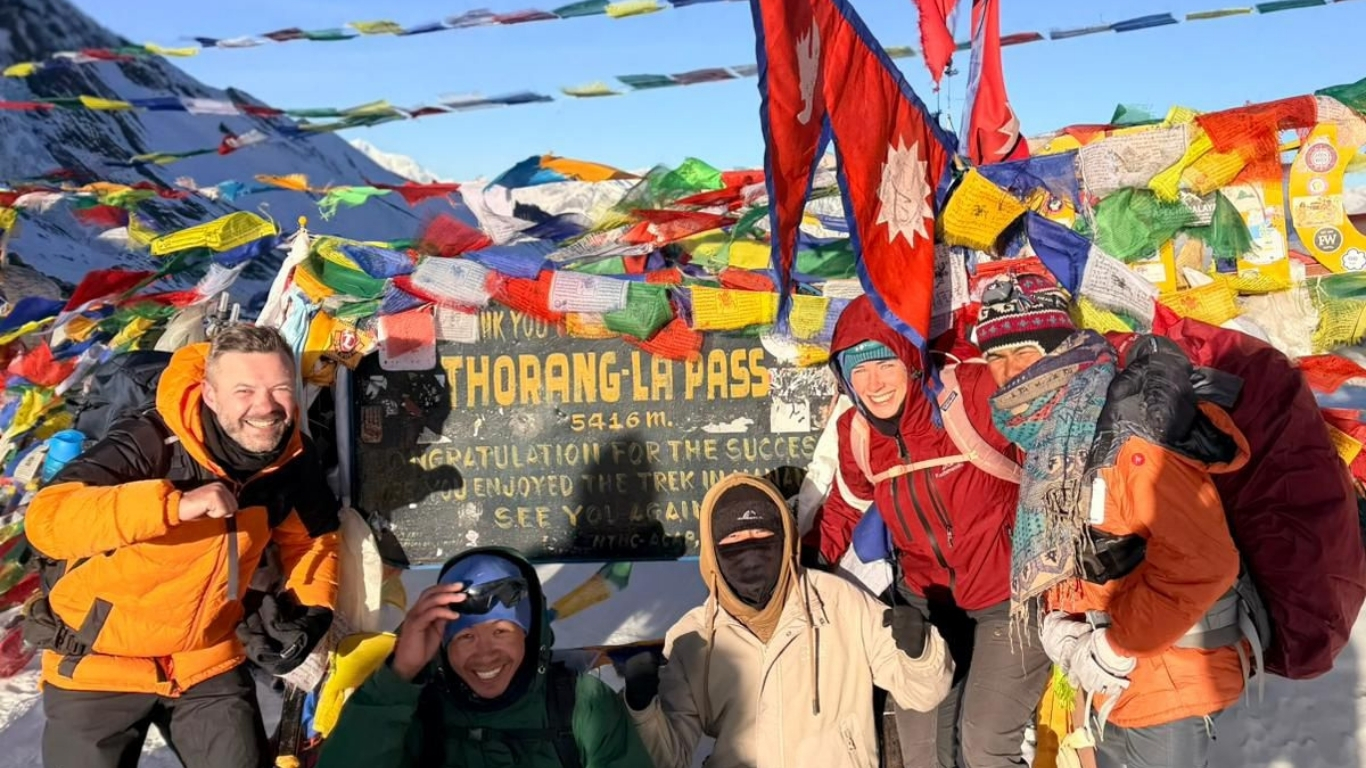
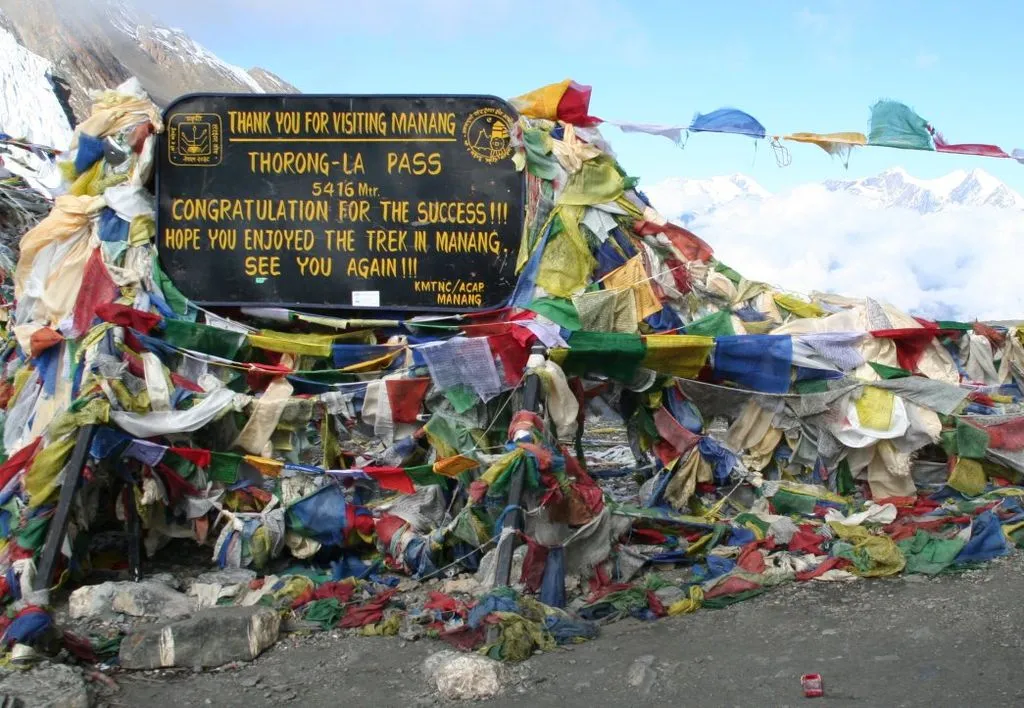
This day will be remarkable as we will trek from Thorong Phedi (4,525m/14,525ft) to Muktinath Temple (3,760m/12,623ft) via Thorung La high pass (5,416 m/17,756 ft). It is also one of the most challenging parts of the trek as Thorong La Pass is one of the highest passes in the world, and it is the highest point of the trek. We start early in the morning and push ourselves through the icy air and high altitude, but the views from the pass are totally worth it. Northwards, towards Tibet, we will see a panorama of majestic Himalayan peaks, and if you look back, you will see the Annapurna Range We then descend to Muktinath - a sacred place for Hindus and Buddhists. The Buddhists call Muktinath - Chumig Gyatsa, which in Tibetan means Hundred Waters. Muktinath Temple is known for 108 stone sprouts with water flowing from the Kaligandaki. You can also see the eternal flame that has been burning there for more than 2,000 years.
In the morning, we visit Muktinath Temple and then continue our journey on a local bus ride to Tatopani. It will be a rough drive as the road passes through some of the deepest gorges in the world. We will be moving from the arid highlands to lush green forests. Tatopani is famous for natural hot springs, and it is a place where we can immerse ourselves in the hot springs and relax. The waters of Tatopani are said to have curative properties against skin diseases.
We leave the hot springs behind and cross to the east side of the Kali Gandaki River and ascend to Ghorepani through the ethnic Thakali villages of Sikha and Chitre. Our trek takes us through terraced farmlands with mountains all around and passes through lush forests filled with rhododendron, birch, and magnolia. We will stop at Ghorepani, a beautiful village located at a ridge top, to spend our night.
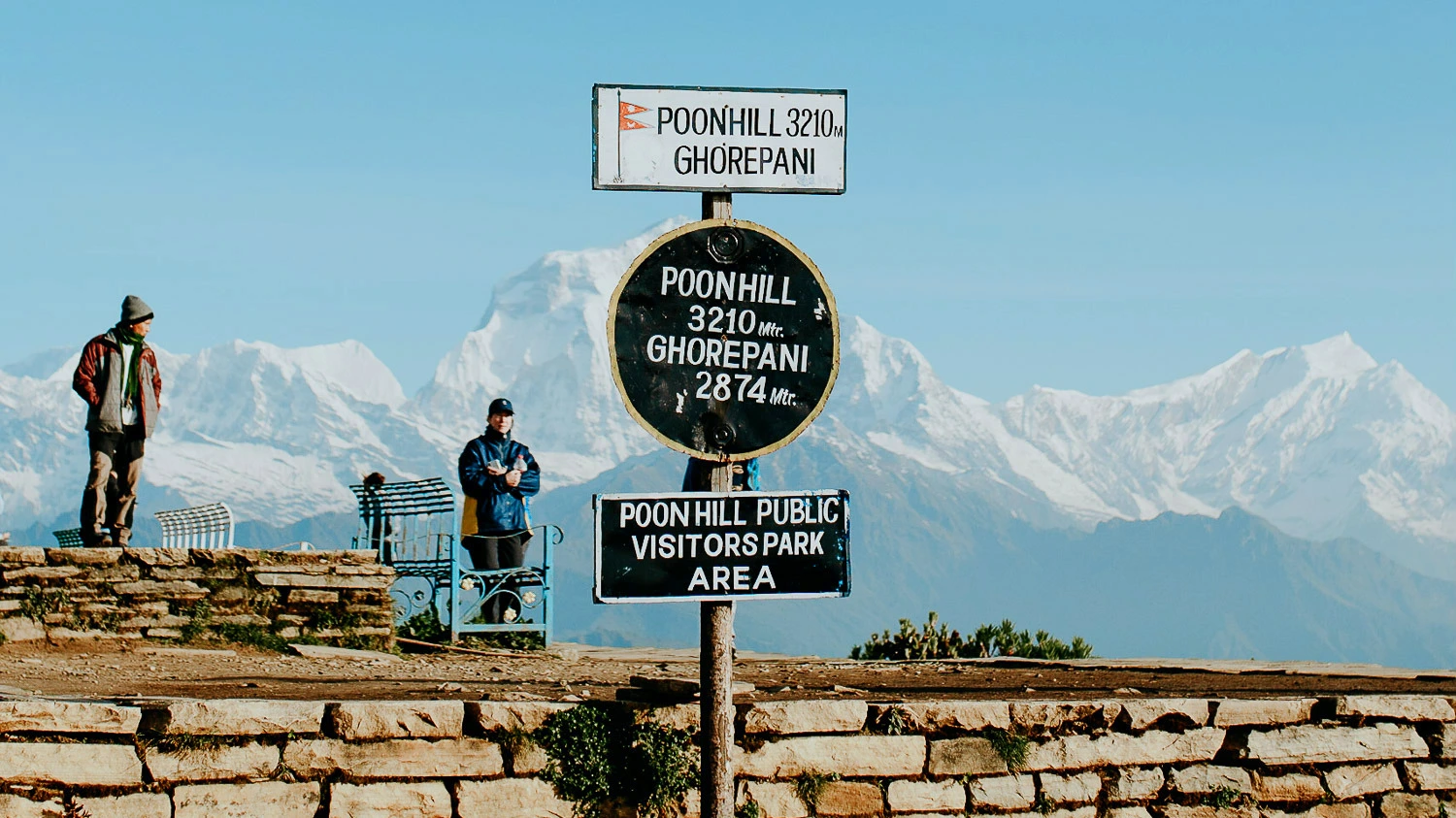
This will be our final day on the trail. We ascend to Poon Hill (3,210m) in the early morning to view sunrise over the whole Annapurna and Dhaulagiri massif -including Mt Machhapuchhre (Fishtail). Poon Hill is one of the favored spots for photography because of the incredible views it offers. We will also be taking pictures to our heart's content and then return to our Ghorepani lodge for breakfast. After breakfast, we will trek to Birethanti and then take a bus to Pokhara.
Your Annapurna Circuit Package ends today. We wake up in Pokhara this day, and after breakfast, we drive back to Kathmandu on a tourist bus. It's a 200 km route that initially follows the Marsyangdi River and Trishuli River later. You may also choose to return by a 25-minute flight (not included in the package) from Pokhara. Our trek package completes at Kathmandu.
Route Map
Click to View Full Route Map
×
Frequently Asked & Question
Booking a trip on our website is easy and accessible. Simply browse through the trekking packages available and select the trip that suits your interest. Click on the" Book Now" button on the package runner, fill in your particular details and favored trip dates, and do with the secure payment process. Once your booking is verified, you'll admit a evidence dispatch with all the necessary trip details and farther instructions. However, our support platoon is always ready to help, If you encounter any issues or need backing during the booking process.
The Annapurna Base Camp Short Trek is considered a moderate- level journey, suitable for individualities with a reasonable level of physical fitness. It involves walking for 5 to 7 hours daily on rugged terrain with significant ascents and descents.
The ideal seasons for this journey are spring( March to May) and autum( September to November), offering stable rainfall, clear skies, and excellent mountain views.
Book Your Tour
Reserve your ideal trip early for a hassle-free trip; secure comfort and convenience!