Khopra Danda and Annapurna Base Camp Trek -13 Days
$1,099$1,190/
Per Person
12 Nights/ 13 Days
Max People : 30
ANNAPURNA REGION
Most people walking to Annapurna Base Camp follow the same crowded trail both ways. But what if you could walk through remote ridges, peaceful villages, hidden community lodges, and still stand inside the famous Annapurna Sanctuary without repeating the same path again and again?
In this blog, we will cover the complete Khopra Danda Trek with Annapurna Base Camp – 13 Days itinerary, permits, altitude, difficulty level, food, accommodation, best season, packing tips, and real trekking advice for 2026 and 2027. If you want a trek that feels more local, quieter, and a little different from the usual ABC route, this guide will help you understand everything before booking.
What Is the Khopra Danda and Annapurna Base Camp Trek?
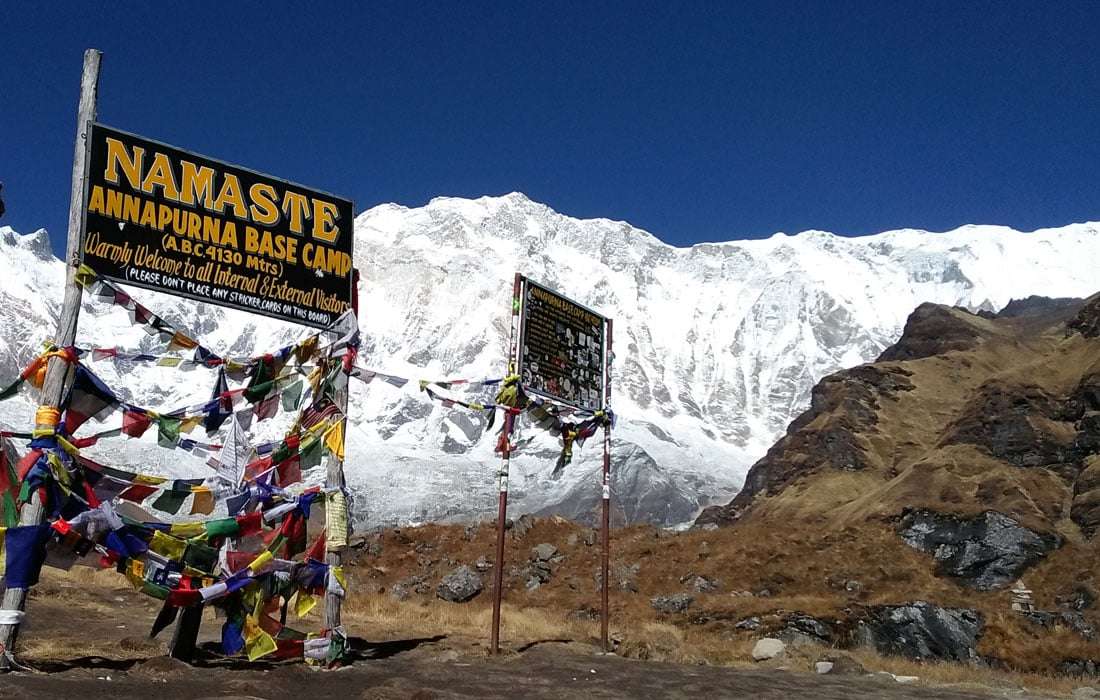
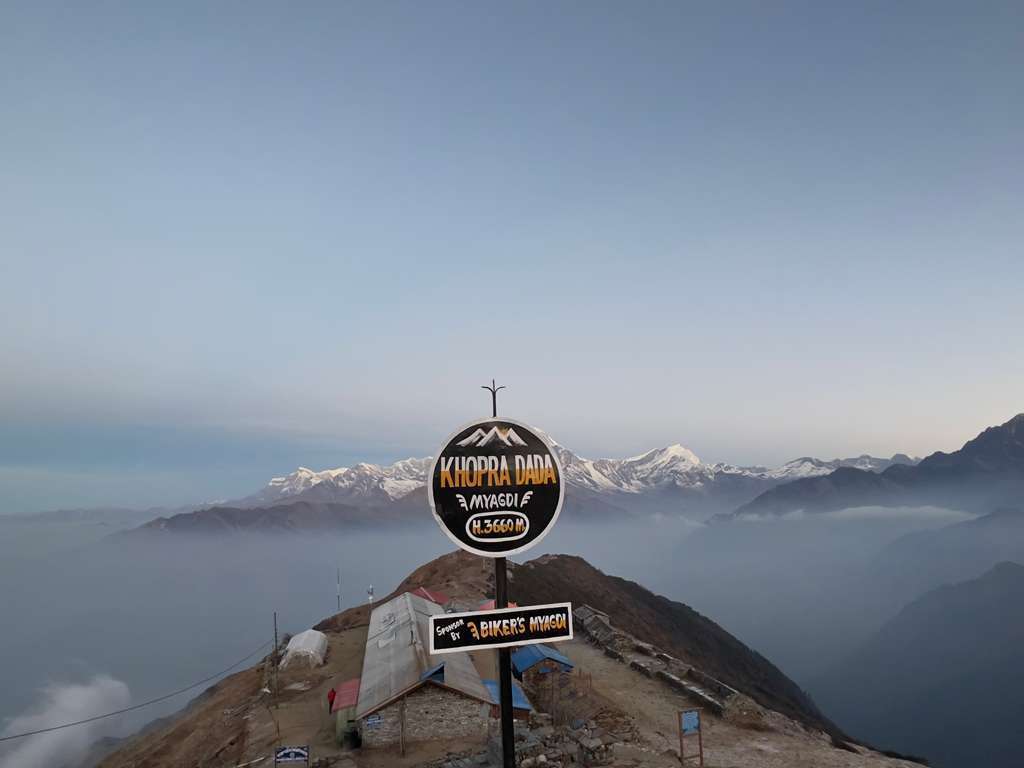
The Khopra Danda and Annapurna Base Camp Trek is a 13 day teahouse trekking route inside Nepal’s Annapurna region that combines remote ridge walking with the classic Annapurna Sanctuary trail. The trek reaches Khopra Ridge at 3,660 meters and Annapurna Base Camp at 4,130 meters while passing through Gurung villages, rhododendron forests, and glacier valleys along the way.
Unlike the normal ABC trek, this route avoids busy trails during the first half of the journey. Trekkers spend several days walking through quiet villages like Swanta and Khopra where community lodges are more common than tourist crowds. Later, the route connects naturally with the Annapurna Base Camp trail near Tadapani and Chhomrong before entering the sanctuary.
Khopra Danda and Annapurna Base Camp Trek at a Glance
Trek Detail
Information
Duration
12 Nights / 13 Days
Region
Annapurna Conservation Area
Maximum Altitude
4,130m (Annapurna Base Camp)
Difficulty
Moderate
Accommodation
Teahouse Lodges
Best Season
Spring and Autumn
Starting From
Contact for pricing
Pricing Note
TAXES INCL/PERS
Why Is the Khopra Danda and ABC Trek So Special?
The Khopra Danda and ABC Trek feels special because it combines two completely different trekking experiences into one route. The first half feels peaceful and remote with open ridges and small villages. The second half becomes dramatic and high alpine as you enter the Annapurna Sanctuary surrounded by giant snowy peaks.
Another reason many trekkers love this route is because it forms a natural loop. You are not simply walking to one destination and turning back the exact same way. The scenery changes almost every day, which honestly makes the trek feel less repetitive and more adventurous compared to many standard Himalayan routes.
Quiet Khopra Ridge Experience
The Khopra Ridge section is much quieter than the classic Annapurna Base Camp trail. Some days you may walk for hours seeing only a few other trekkers on the trail.
Community lodges here are locally operated by villages, so the atmosphere feels more personal and welcoming. Nights are peaceful, mountain views are huge, and sunrise from the ridge can feel unreal sometimes.
This area is also famous for massive Dhaulagiri views which many trekkers say become the highlight of the trip.
Annapurna Sanctuary Glacier Views
Annapurna Base Camp offers one of the most dramatic mountain landscapes in Nepal. The sanctuary is basically a huge natural bowl surrounded by snowy peaks over 7,000 and 8,000 meters.
When you finally arrive at ABC, mountains completely surround you from every direction. Annapurna I, Machhapuchhre, Hiunchuli, and Annapurna South rise directly above the lodges.
The feeling of standing there after days of trekking is honestly hard to explain properly.
Traditional Gurung Villages
The trail passes through old Gurung villages where people still follow traditional mountain lifestyles. Stone houses, prayer flags, terraced farms, and small tea shops line the route.
Villages like Swanta and Chhomrong give trekkers a chance to experience local culture beyond just mountain views. Many trekkers say the hospitality becomes one of the best memories from the journey.
How Difficult Is the Khopra Danda and ABC Trek?
The Khopra Danda and Annapurna Base Camp Trek is considered a moderate trek, but it still requires good physical stamina and mental preparation. Most trekking days involve 4 to 7 hours of walking on stone stairs, forest paths, ridges, and uneven mountain terrain.
The difficult part is not technical climbing because no ropes or mountaineering skills are needed. The challenge comes from continuous uphill walking, changing altitude, and long descents that can become hard on the knees. Trekkers with decent fitness and a slow steady pace usually complete the route successfully.
What Makes the Trek Physically Challenging?
The biggest physical challenge comes from constant elevation changes. Some days involve steep stone staircases followed by long climbs through forests and ridges.
The climb toward Khopra Ridge feels demanding because altitude starts increasing quickly. Later, the route toward Annapurna Base Camp becomes colder and steeper as oxygen levels decrease.
Your legs honestly feel the pressure after several back to back trekking days.
Can Beginners Do This Trek?
Yes, beginners can do the Khopra Danda and Annapurna Base Camp Trek if they prepare properly before arrival in Nepal.
Regular walking, stair climbing, short hikes, and basic cardio training help a lot. You do not need mountaineering experience, but having patience and the ability to walk slowly for several hours daily is important.
Hiring a licensed guide also makes the journey much safer and easier.
Best Time to Do the Khopra Danda and Annapurna Base Camp Trek
The best seasons for this trek are spring and autumn because weather conditions remain stable and mountain visibility stays clear for most days.
Choosing the right season matters a lot in the Himalayas. Good weather gives better mountain views, safer trails, and a more enjoyable trekking experience overall.
Spring Season From March to May
Spring is one of the most beautiful times for the Khopra Danda Trek with Annapurna Base Camp. Rhododendron forests bloom across the hillsides with red, pink, and white flowers covering the trails.
Temperatures stay comfortable during daytime, especially at lower elevations. Mornings are usually clear, though clouds sometimes build later in the afternoon.
This season is ideal for trekkers who enjoy colorful forests and slightly warmer weather conditions.
Autumn Season From September to November
Autumn is considered the best overall trekking season in Nepal because skies stay incredibly clear after the monsoon rains finish.
October especially offers sharp mountain visibility and stable weather. Trails are dry, temperatures remain comfortable, and sunrise mountain views can look absolutely insane honestly.
This is also the busiest trekking season, so teahouses fill quickly in popular villages.
Winter Season From December to February
Winter trekking is possible but temperatures become much colder, especially near Khopra Ridge and Annapurna Base Camp.
Snow sometimes blocks higher sections, and mornings can feel freezing. But fewer trekkers means the trails feel quiet and peaceful.
Trekkers attempting winter should carry proper cold-weather gear and warm sleeping bags.
Monsoon Season From June to August
Monsoon is the least recommended season for this trek because heavy rainfall creates muddy and slippery trails.
Clouds often hide mountain views for several days at a time. Leeches also become common in lower forest areas during this season.
Transportation delays and landslides sometimes affect travel plans too.
What Permits Are Required for the Khopra Danda and ABC Trek?
Two permits are mandatory for the Khopra Danda and Annapurna Base Camp Trek. Most trekking companies arrange these permits before the trek begins.
Permit checkpoints exist throughout the Annapurna region, so trekkers must carry permits during the entire journey.
Annapurna Conservation Area Permit (ACAP)
The ACAP permit allows trekkers to enter the protected Annapurna Conservation Area.
Permit fees help support:
Trail maintenance
Environmental conservation
Local villages
Tourism management projects
Wildlife protection
Trekkers must show this permit at different checkpoints along the route.
TIMS Card
The TIMS Card stands for Trekkers’ Information Management System.
This card records trekker details for safety purposes. If natural disasters, weather emergencies, or accidents happen, authorities use TIMS records to locate trekkers inside the region.
It honestly becomes very important during emergencies.
Food and Accommodation During the Trek
Accommodation during the trek mainly consists of traditional teahouse lodges operated by local families. Facilities become simpler and more basic as altitude increases toward Annapurna Base Camp.
Despite basic conditions, most trekkers find the lodges comfortable enough after long trekking days.
What Are Teahouses Like?
Most teahouses provide:
Twin-sharing rooms
Basic beds and blankets
Shared bathrooms
Dining halls with wood stoves
Charging facilities for extra cost
Limited WiFi in some villages
Higher villages like Khopra and ABC feel colder and more basic compared to lower stops.
Still, the warm dining rooms often become the best place to relax after trekking all day.
What Food Is Available on the Trail?
Food choices are surprisingly good throughout the route.
Common meals include:
Dal bhat
Fried rice
Noodles
Pasta
Pancakes
Soups
Potatoes
Tea and coffee
Dal bhat is usually the most popular meal because it gives strong energy and often includes free refills.
Hot food at altitude honestly tastes way better than expected after hours of walking.
What Should You Pack for the Khopra Danda and ABC Trek?
Packing properly makes the trek much more comfortable because mountain weather changes quickly during the journey.
Layering becomes very important since temperatures can shift from warm afternoons to freezing mornings within the same day.
Essential Clothing Items
You should carry:
Base layers
Down jacket
Waterproof jacket
Trekking pants
Warm gloves
Wool hat
Hiking socks
Sunglasses
Good layers help manage both cold mornings and warmer lower sections of the trail.
Important Trekking Gear
Important trekking gear includes:
Trekking boots
Trekking poles
Sleeping bag
Headlamp
Water bottles
Power bank
Sunscreen
Backpack
Broken-in trekking boots are extremely important. New boots usually create painful blisters after long downhill sections.
Conclusion
The Khopra Danda Trek with Annapurna Base Camp is honestly one of the most underrated trekking combinations in Nepal right now. It gives trekkers peaceful ridge walking, local village experiences, massive Himalayan panoramas, glacier valleys, and the unforgettable feeling of standing inside Annapurna Sanctuary. The route feels varied from beginning to end, which keeps the trek exciting almost every single day.
If you want a Himalayan adventure that combines quieter trails with iconic mountain scenery, this 13-day trek is a really strong option for 2026 and 2027. Prepare properly, walk slowly, respect the altitude, and enjoy the mountains one step at a time. The memories from this trail usually stay much longer than people expect honestly.
Pricing Packages
13 Daysfrom US$ 1190US$ 1099pp
Save $91 Per Pax
Group-Size Discounts
Discounts are based on your group size. We do not add anyone to your group.
No. of Persons
Price per Person
1 Pax
US$ 1099
2 - 4 Pax
US$ 1070
5 - 8 Pax
US$ 1050
9 - 15 Pax
US$ 1030
×
Enquiry Form
Included and Excluded
Transportation for Kathmandu-Pokhara-Kathmandu on a tourist bus
Private transportation from Pokhara to Ulleri (trek start)and Ghandruk Phedi (trek end) to Pokhara
Two nights stay at Silver Oaks Inn in Pokhara (room with attached bathroom)
Total 10 nights in trek regions. 3 nights in rooms with attached bathroom - (Ghorepani, Chhomrong, Jhinu Danda. 7 nights standard rooms at Santa, Khopra Danda, Bayeli Kharka, Tadapani, Himalaya, Annapurna Base Camp, and Bamboo. Twin sharing rooms.
All meals on a full-board basis (breakfast, lunch, and dinner / main course) in the trek region (11 breakfasts, 11 lunches, 10 dinners)
Government-licensed and experienced trek leader (guide)
Porters for carrying luggage (1 porter for two trekkers) Per trekker luggage weight limit is 9 kg.
Guide's and porters' costs - salary, lodging, meals, insurance, transportation, and other necessary equipment
Water purification tablets
Trekkers Information Management System (TIMS) card fee
Annapurna Conservation Area Permit (ACAP) fee
Snacks (cookies) and seasonal fresh fruits every day
Official expenses, government, and local taxes
Rescue operation arrangements in case of complicated health conditions (funded by travel insurance)
Souvenir - company's T-shirt & cap
Wilder Way Trekking trek achievement certificate after a successful trek
Farewell dinner at the end of the trek in Kathmandu
International flight costs and airport tax
Visa application fees at Tribhuvan International Airport - (USD 50 for a 30-day stay)
Excess luggage charges (limit is 9 kg per person)
Accommodations and meals in Kathmandu, before and after the journey
Extra night accommodations, meals in Kathmandu and Pokhara due to early arrival or late departure, and early return from the trek.
Lunch and dinner in Pokhara
Personal expenses (telephone call, battery re-charge fee, shopping, snacks, bottled water or boiled water, hot (tea, coffee) and cold drinks, hot shower, alcohol, Wi-Fi, extra porters, etc)
Personal clothing and gear
Travel insurance that covers emergency high-altitude helicopter rescue and evacuation along with medical treatment costs
Tips for guides and porters
Additional costs due to circumstances outside company control like landslides, weather conditions, itinerary modifications due to safety concerns, illness, change of government policies, strikes, etc
All the costs/expenses not listed in "cost includes" will be counted as excludes.
Highlights of the Tour
2 Nights at the beautiful lake city of Pokhara (830m)
Awe-inspiring views of Dhaulagiri (8,167m), Annapurna South(7,219m), Nilgiri (7,061m), Khangsar, Kang, Gangapurna, Annapurna III, and Machhapuchhare mountains
Amazing sunrise views from Poon Hill
Visit Ghandruk village, Gurung museum, and local monasteries
Khopra Danda Ridge
Relaxing hot springs at Jhinu Danda
First-hand experience of rural Nepali village life
Annapurna Base Camp (4,130m)
Itinerary
Your journey begins in Kathmandu. Early morning, you will leave Kathmandu and head to Pokhara on a tourist bus. The bus follows Prithivi Highway and heads west of Kathmandu. The highway follows a series of deep river valleys, and you can get views of raging rivers, lush forests, terraced fields, and the Himalayas, including the Machhapuchhare and Annapurna range. The bus journey will last around seven hours. Pokhara, also known as the tourist capital of Nepal, is known for its unparalleled beauty.
Early morning, you will leave Pokhara and drive to Ulleri via Tikhedunga. The trek starts from Ulleri. You will pass through lush rhododendron forests as you consistently elevate the hike can be quite exhaustive. As you climb up, you will also notice the changing flora and fauna on the path. All trekkers who want to enjoy the panoramic view from Poon Hill spend a night at Ghorepani.
You will wake up early at around 4:30 am and then leave the lodge by 5 am. It will take about forty minutes to reach Poon Hill, the most famous viewpoint in Nepal. We are sure this will be one of your most memorable days. From Poon Hill, you will get a panoramic view of the Annapurna and Dhaulagiri ranges. Poon Hill is one of the most popular destinations in the Annapurna region. After enjoying the views from Poon Hill, you will descend to Ghorepani for breakfast and then head to Swanta.
From Swanta, you will aim for Khopra ridge. The trails at first ascend through several forests, shrubs, and pastures. You will most probably witness the Himalayan yaks grazing on those pastures, and in the background, you will see Mount Dhaulagiri, Annapurna, and other glorious mountain peaks. Khopra ridge is famous as a spot that provides fantastic sunset and sunrise views.
The first part of the trek is over, and it is time to head to Annapurna Base Camp. So, you will start descending from the Khopra Danda (ridge), passing by rhododendron and bamboo forests and a few yak pastures. After walking some more, you will reach a junction, and after a short climb, you will reach Bayeli Kharka. From Bayeli Kharka, you will get fantastic views of Dhaulagiri mountain.
From Bayeli Kharka, the trail ascends a bit before descending to the flat region at Dobato. Then you will trek through some rhododendron, bamboo, and pine forests before crossing a small pass to arrive at Isharu. From Isharu, you will trek to Tadapani via the Meshar settlement.
You will wake up at Tadapani and enjoy your breakfast, soaking in the beauty of Annapurna South, Fishtail, and Hiunchuli mountains. After breakfast, it is time for a steep descent that passes through rhododendron forests and some tiny settlements. Then, you will cross a suspension bridge and reach Gurjung, a Gurung village. From Gurjung, you will slightly elevate to reach Chhomrong village, located at the base of Himchuli (6,441m). The views of Annapurna and Machhapuchhare look stunning from Chhomrong.
After breakfast, you will head downwards to the Chhomrong river and then continue your trek to Khuldighar and Sinuwa. The trail now becomes rough as it passes through the rocky slopes. At times, from the route, you can get mesmerizing views of the Annapurna ranges and Machhapuchhare. The path through bamboo and rhododendron forests becomes steep just before arriving at Himalaya.
On this day, you will reach Annapurna Base Camp, the highest trek point. You will leave Himalaya early morning after breakfast. It is better to trek slowly as you will be gaining considerable elevation. On your way to Annapurna Base Camp (ABC), you will also pass Macchapuchhare Base Camp (MBC), a flat grassy region of moraines. From ABC, you will get clear views of Annapurna I, Annapurna South, Machhapuchhare, and several other peaks. You will be staying at ABC for the night.
After reaching Annapurna Base Camp, it is time to descend back and out of the Annapurna Sanctuary. But first, in the morning, we will take you to a sunrise spot just above the Annapurna Base Camp for you to witness sunrise on the nearby mountains. You can also see several prayer flags and memorials on the way. Since you will be returning through the same route, you will cross Machhapuchhre Base Camp, Deurali, and Dovan on the way to Bamboo.
From Bamboo, you will head to Chhomrong on a route that you took to ABC. On the way, you will pass an experimental sheep farm as you traverse through bamboo and rhododendron forests. From Chhomrong, the route descends steeply to Jhinu Danda. There is a natural hot spring near Jhinu Danda, where you can take a bath and relax.
You will continue descending from Jhinu Danda following a dust road along the Modi Khola, passing Kyumi village. After trekking for three hours, you will reach Ghandruk Phedi (Siwa). From Ghandruk Phedi, you will drive to Pokhara.
Finally, it is time to return to Kathmandu. After breakfast, you will board a tourist bus to Kathmandu. The bus heads east from Pokhara on Prithivi Highway and enters Kathmandu about seven hours later. Your trek ends in Kathmandu, and you are free to spend your day in Kathmandu as you like.
Route Map
Click to View Full Route Map
×
Frequently Asked & Question
Booking a trip on our website is easy and accessible. Simply browse through the trekking packages available and select the trip that suits your interest. Click on the" Book Now" button on the package runner, fill in your particular details and favored trip dates, and do with the secure payment process. Once your booking is verified, you'll admit a evidence dispatch with all the necessary trip details and farther instructions. However, our support platoon is always ready to help, If you encounter any issues or need backing during the booking process.
In Nepal, we accept a range of payment styles for your convenience. These include major credit and debit cards( Visa, MasterCard, American Express), as well as popular online payment platforms like PayPal. We also accept bank transfers and payments via eSewa or Khalti, which are generally used digital holdalls in Nepal. For any other payment options or backing, please communicate us, and we’ll be happy to help.
Yes, we offer group booking discounts for larger parties. If you are booking for a group, the discount amount depends on the size of the group and the specific trekking package. Typically, groups of 3 or more participants are eligible for a discount. For exact pricing and discount details, please contact us directly with your group’s size and the trek you’re interested in. We’re happy to offer customized packages and ensure a great experience for your entire group!
The Khopra section adds extra distance and ridge climbing, but the overall trek still remains moderate in difficulty.
Yes, current Nepal trekking regulations require trekkers to hire licensed guides in the Annapurna region.
Book Your Tour
Reserve your ideal trip early for a hassle-free trip; secure comfort and convenience!