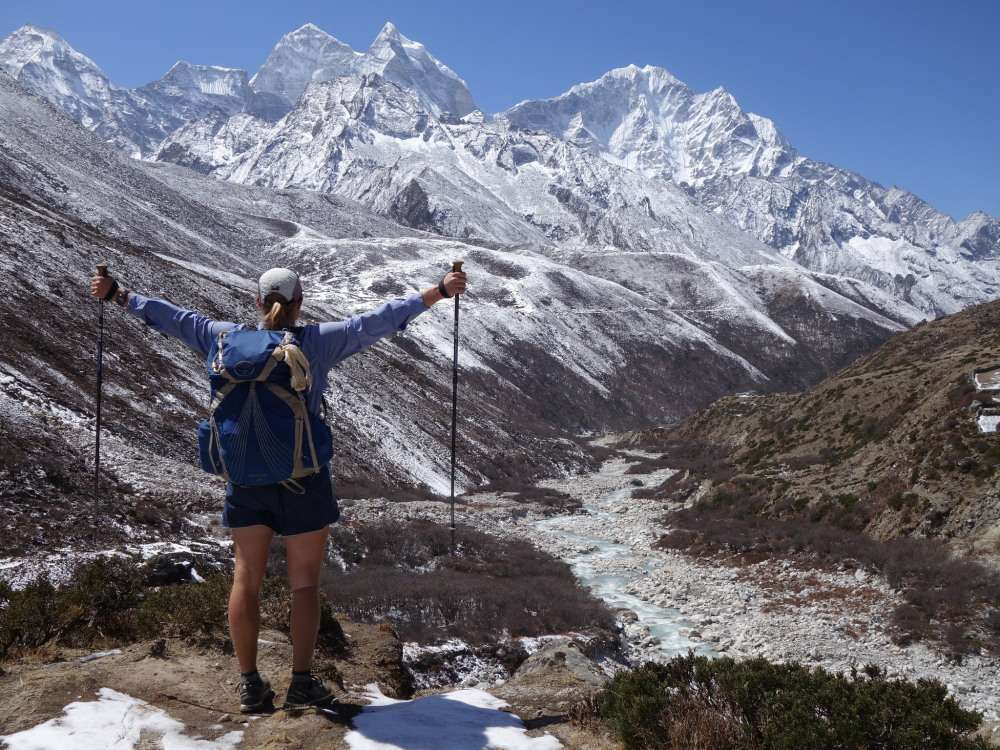
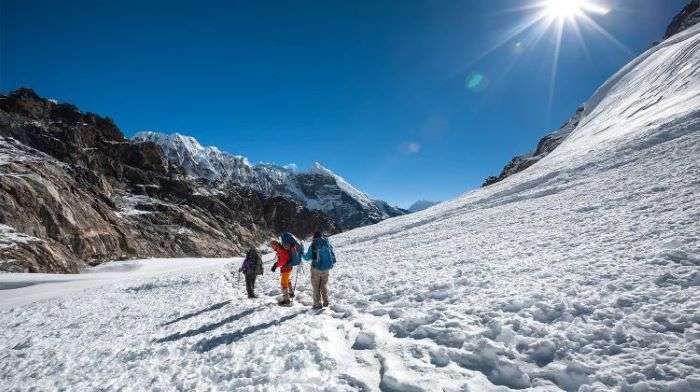
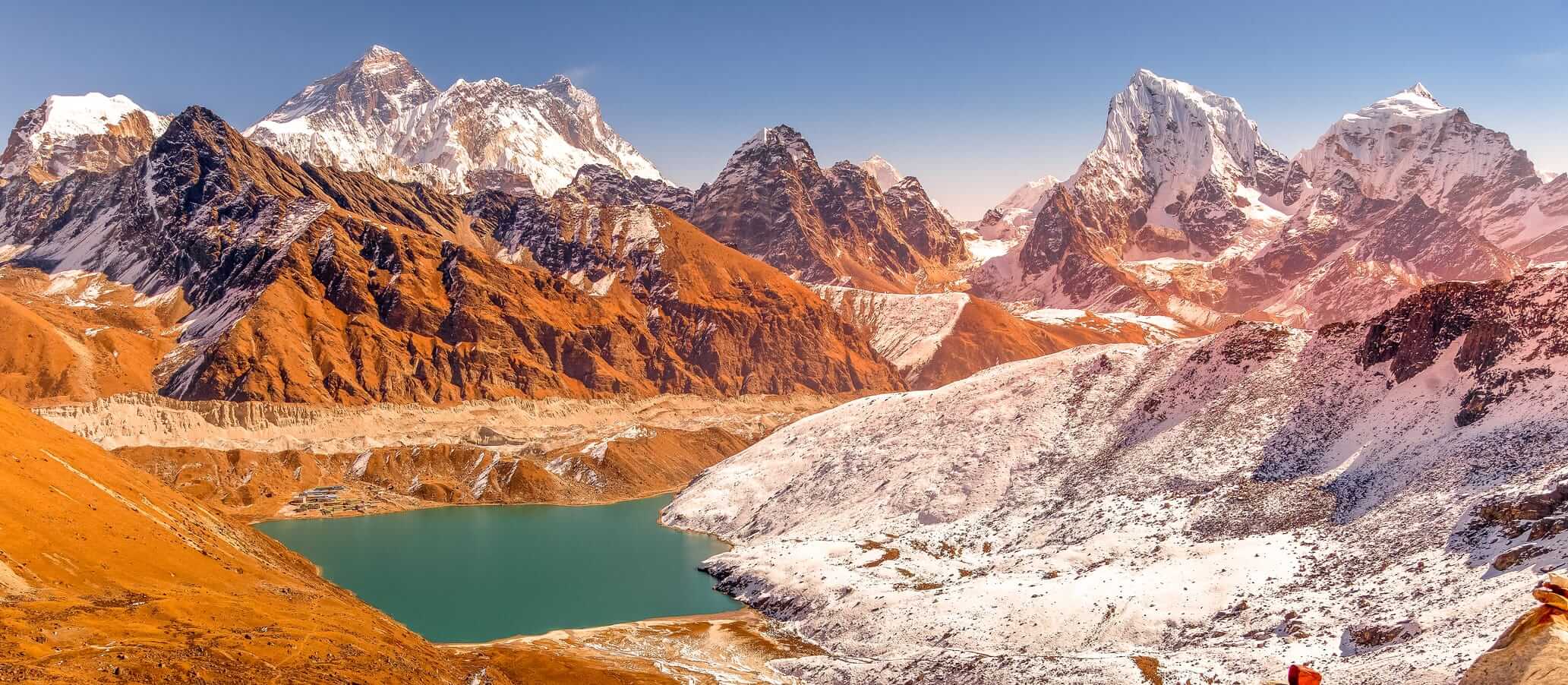
The Everest Three Passes Trek is one of the most adventurous trekking routes in Nepal that takes trekkers across Kongma La, Cho La, and Renjo La passes above 5,000 meters. This trekking circuit combines famous highlights of the Everest region, including Everest Base Camp, Gokyo Lakes, Kala Patthar, Sherpa villages, glaciers, and high mountain viewpoints. Trekkers who want a complete Everest trekking experience usually choose this route because it covers both popular and remote parts of the Khumbu region.
This Everest Three Passes Trek Complete Guide 2026 covers important details like itinerary, difficulty, permits, altitude, weather, acclimatization, and the best trekking season. The trek is physically demanding, but it rewards trekkers with some of the best mountain scenery in the Himalayas. If you are searching for a challenging Everest region trek with fewer crowds, glacier trails, and high mountain passes, this guide will help you plan your adventure properly.
What Is the Everest Three Passes Trek
The Everest Three Passes Trek is a demanding 15- to 21-day alpine circuit in Nepal’s Khumbu region. Trekkers cross three passes above 5,000 meters, Kongma La, Cho La, and Renjo La, while visiting Everest Base Camp, Gokyo Lakes, and Kala Patthar along the way. This route goes far beyond the standard EBC itinerary, linking the major valleys of the Khumbu into one continuous journey.
What makes this trek different from other Everest region options is the sheer variety packed into a single trip. You walk alongside the Ngozumpa Glacier (the longest in Nepal), stand at the edge of sacred turquoise lakes, and cross glaciated passes where the only sounds are wind and your own breathing.
Complete Khumbu circuit: visits all major valleys rather than a single out-and-back route
Three technical passes: glacier crossings and rocky scrambles above 5,300 meters
Premier viewpoints: both Kala Patthar and Gokyo Ri summits included
Off-the-beaten-path sections: significantly fewer crowds on high pass routes
Why Choose the Everest Three Passes Trek?
The Everest Three Passes Trek is popular because it combines Everest Base Camp, Gokyo Lakes, Kala Patthar, and three high mountain passes into one complete Himalayan adventure. Trekkers experience different landscapes every day, including glaciers, turquoise lakes, snowy mountains, yak pastures, and traditional Sherpa settlements. The trek also offers beautiful mountain views of Everest, Lhotse, Makalu, Ama Dablam, and Cho Oyu.
Many trekkers choose this route because it feels more adventurous and less crowded than the regular Everest Base Camp trail. The route explores remote valleys and scenic trails that many tourists never visit. Crossing Kongma La, Cho La, and Renjo La also gives trekkers a strong sense of achievement. If you are searching for a full Everest region trekking experience, this route is one of the best treks in Nepal, above the Ngozumpa Glacier. Many trekkers consider this viewpoint the highlight of the entire trek.
Everest Three Passes Trek Distance, Elevation, and Duration
Understanding the physical scope of this trek helps with planning and preparation. The total circuit covers approximately 130 to 160 kilometers, depending on your exact route and any side trips.
Detail
Information
Total Distance
130–160 km
Maximum Elevation
5,535 m (Kongma La)
Total Elevation Gain
Approximately 6,000 m cumulative
Standard Duration
17–19 trekking days
Recommended Duration
19–21 days with buffer days
The duration varies based on acclimatization, fitness level, and whether you build in rest days for weather delays. Most guided itineraries run 17 days, though adding buffer days is wise given the unpredictable nature of high-altitude weather and Lukla flights.
How Difficult Is the Everest Three Passes Trek?
The Everest Three Passes Trek is considered a strenuous trek because of the long trekking days, steep mountain passes, and high altitude. Trekkers usually walk 6–8 hours daily while crossing passes above 5,300 meters. The highest point of the trek is Kongma La Pass at 5,535 meters. Some sections include glacier crossings, rocky climbs, and snow-covered trails depending on weather conditions.
Altitude sickness is one of the biggest challenges during this trek because trekkers spend several days above 4,500 meters. Proper acclimatization, hydration, slow walking, and rest days are very important for safety in the Everest region. Before planning this trek, it is helpful to learn about the Symptoms of Altitude Sickness on EBC and how to manage altitude-related problems during high-altitude trekking. completed treks like Annapurna Circuit,Langtang Valley, or the standard EBC route, you have a foundation to build on.
When Is the Best Time for the Everest Three Passes Trek?
The best time for the Everest Three Passes Trek is during spring (March to May) and autumn (September to November). These seasons usually bring stable weather, clearer mountain views, and safer trail conditions for crossing high passes. Spring offers blooming rhododendron forests and warmer temperatures, while autumn provides dry trails and excellent visibility in the Everest region.
Winter and monsoon seasons are less suitable for the Everest Three Passes Trek because snow and rain can make the passes dangerous. Heavy snowfall during winter may block Cho La and Kongma La Pass, while monsoon season brings slippery trails and cloudy weather. Trekkers planning their journey can also read this guide about the Best Time to Trek in Nepal before choosing the right trekking season.
Where Is the Everest Three Passes Trek Located?
The Everest Three Passes Trek is located inside Sagarmatha National Park in Nepal’s Khumbu region. The trek begins with a short mountain flight from Kathmandu to Lukla, which is the main gateway to Everest region trekking. From Lukla, trekkers follow trails through Namche Bazaar, Gokyo, Lobuche, Chhukung, and Everest Base Camp.
Unlike the regular Everest Base Camp route, this trekking circuit connects different valleys of the Khumbu region into one long adventure. Trekkers walk beside glaciers like Ngozumpa Glacier and Khumbu Glacier while staying in tea houses along the trail. The route also passes monasteries, Sherpa villages, suspension bridges, and remote mountain landscapes that make this trek one of the most scenic trekking routes in Nepal.
How Long Is the Everest Three Passes Trek?
The Everest Three Passes Trek usually takes around 17 to 21 days, depending on the itinerary and acclimatization schedule. The total trekking distance is around 130 to 160 kilometers. Most itineraries include acclimatization days in Namche Bazaar and Gokyo to help trekkers safely adjust to the altitude during the trek.
Trekkers cross three high passes while visiting Everest Base Camp and Kala Patthar during the journey. Some trekking days involve steep uphill climbs and long descents, which make the trek physically demanding. Lukla flight delays are also common due to mountain weather, so adding extra buffer days is highly recommended while planning the Everest Three Passes Trek itinerary.
What Permits Are Required for the Everest Three Passes Trek?
Trekkers need two permits for the Everest Three Passes Trek: the Sagarmatha National Park Permit and the Khumbu Pasang Lhamu Rural Municipality Permit. These permits are required for entering the Everest region and are checked at different checkpoints during the trek. Trekkers can get the permits either in Kathmandu or during the trekking route.
The Sagarmatha National Park Permit costs around USD 30, while the Khumbu local permit costs around USD 20. Many trekkers also hire guides and porters for extra safety and support during the trek. Since this route includes glacier crossings and remote mountain trails, trekking with an experienced guide is highly recommended for navigation and altitude management.
Everest Three Passes Trek vs Other Everest Region Treks
Different Everest region treks offer different experiences depending on trekking duration, fitness level, and adventure style. Some trekkers prefer the classic Everest Base Camp route, while others look for quieter trails, glaciers, and high mountain passes. The Everest Three Passes Trek is considered one of the most complete trekking circuits because it combines Everest Base Camp, Gokyo Lakes, and three major passes into one route.
Trekkers who want a shorter and easier Everest trekking experience can choose the Everest Base Camp Trek 14 Days instead of the Three Passes Trek. This route focuses mainly on Everest Base Camp and Kala Patthar without crossing difficult mountain passes.
Trek
Duration
Highest Point
Difficulty
Highlights
Three Passes Trek
17–21 days
5,535 m
Strenuous
Complete Everest circuit with all major sites
Everest Base Camp Trek
12–14 days
5,545 m
Moderate-Challenging
Everest Base Camp and Kala Patthar
Gokyo Lakes Trek
10–12 days
5,357 m
Moderate
Gokyo Lakes and Gokyo Ri views
Everest High Passes Trek
15 days
5,420 m
Challenging
Everest Base Camp with two pass crossings
Trekkers looking for another adventurous route in the Everest region can also explore the Everest High Passes Trek 15 Days. This trek includes high mountain passes and Everest Base Camp but usually takes fewer days compared to the complete Three Passes circuit.
Conclusion
The Everest Three Passes Trek is one of the most rewarding trekking adventures in Nepal for trekkers who want more than the regular Everest Base Camp experience. From crossing high mountain passes and walking beside glaciers to visiting Sherpa villages and Everest Base Camp, every day on the trail offers a different Himalayan experience. The trek is physically challenging, but the mountain views, peaceful valleys, and sense of achievement make it worth every step.
Choosing an affordable and experienced trekking company in Nepal can make your journey safer, smoother, and more enjoyable. A reliable local team helps with permits, Lukla flights, guides, accommodation, and proper acclimatization throughout the trek. If you are planning your Everest adventure for 2026, you can explore affordable trekking packages and local trekking support through Wilder Way Trekking.
Pricing Packages
17 Daysfrom US$ 2260US$ 2100pp
Save $160 Per Pax
Group-Size Discounts
Discounts are based on your group size. We do not add anyone to your group.
Total 16 nights (Five nights at Lukla, Phakding and Namche(3N), rooms with a private attached bathroom, Eleven nights standard rooms at Thame, Lungden, Gokyo (2 N), Dzongla, Lobuche (2 N), Chhukung, Gorak Shep, Thangnak, Pheriche.
All standard full-board (main course) meals (17 lunches, 16 dinners, and 17 breakfasts) during the trek.
Government licensed, English Speaking, experienced Wilder Way Trekking trek leader (12 or above trekkers: 1 assistant guide)
Porters for trekkers luggage. One porter for two trekkers. 18kg maximum weight limit for a porter. One trekker luggage limit - 9kg.
Guides and porters coverage - meals, insurance, salary, lodging, transportation, flight, and necessary equipment
Water purification tablets for safe drinking water
Sagarmatha National Park entry permit fee
Khumbu Pashang Lhamu Rural Municipality fees
Snacks (cookies) and seasonal fresh fruits every day
All government, local taxes, and official Expenses
Souvenirs - Discovery World Trekking t-shirt & cap
Wilder Way Trekking certificate of appreciation after a successful trek
Farewell dinner at the end of the trek
International flight airfare
Nepal Entry Visa Fees for multiple entries on arrival at Tribhuvan International Airport- (15 days - $25-30, 30 days- $40-50 and 90 days- $100-110)
Excess baggage charges (Limit is 9kg per Person)
All accommodation and meals in Kathmandu, before and after the journey
Extra night accommodation in Kathmandu due to early arrival or late departure, early return from the trek.
Personal expense (shopping, snacks, boil bottle water, hot (tea, coffee) and cold drinks, hot shower, alcohol, Wi-Fi, telephone call, battery re-charge fee), extra porters, etc
Personal clothing and gear
Travel insurance that covers emergency high-altitude rescue and evacuation (compulsory)
Tips for guide and porters
Additional costs due to delays caused by things beyond the company's control like landslides, weather conditions, itinerary modification due to safety concerns, illness, change of government policies, strikes, etc.
All the costs and expenses which are not listed in "What is included?"
Highlights of the Tour
A scenic flight to Lukla
Spellbinding view of mountains from the three high passes (Kongma La, Cho La & Renjo La)
Famous Sherpa town in the Everest region - Namche Bazaar
Nepal's highest airport Syangboche
Stunning views from Gokyo Ri
One of the world's highest hotels - Everest Hotel
Gokyo Lakes
Ancient monastery in Tengboche
UNESCO World Heritage Sites
Prayer wheels, colorful flags, Mani stones, high suspension bridges
The wide range of flora and fauna
Wildlife like musk deer, colorful pheasants, snow leopard, and Himalayan Thar
Highest glacier on Earth- Khumbu Glacier (4900m)
Amazing panoramic view from Kala Patthar (5,555m)
Itinerary
Your Everest 3 Passes Trek begins with a flight to Lukla. In the busy trekking seasons (March, April, May, September, October, and November), flights from Kathmandu to Lukla might be redirected through Manthali Airport. To catch the early morning Lukla flight from Manthali, we'll pick you up from your hotel around 12:30 am and take you on a 5-hour drive to Manthali Airport. From Manthali, you will fly for about twenty minutes before stepping on Lukla. You can hire a helicopter from Kathmandu to Lukla to skip the Kathmandu-Manthali-Lukla route. The cost is around 550 USD per person, provided the helicopter expenses are split among five passengers. During, December, January, February, June, July, or August, you will directly fly from Kathmandu to Lukla. After breakfast, we'll take you to Tribhuvan International Airport (TIA) for a 40-minute flight to Tenzing Hillary Airport in Lukla. After arriving at Lukla, you descend to the Thado Koshi River and cross a few suspension bridges before reaching Phakding. The trek will be short and enjoyable as you will also be acclimatizing. In Phakding, we will take you for a visit to the local Rimishung Monastery.
We will begin early in the morning at Phakding and move north along the banks of Dudh Koshi River, passing many suspension bridges -including Hillary Suspension Bridge. Our path also takes us through Monjo Village, deep forests, and rocky trails to Sagarmatha National Park Check Post, where we will register our permits and climb up into the forest. From this forest, you will see Mt. Everest for the first time. However, we will continue the trek until we reach Namche Bazaar - the destination for the day.
Today will be an acclimatization day at Namche. We recommend you to explore Namche Bazaar. This town contains numerous Wi-Fi-linked cafes, restaurants, souvenirs, and gear shops. There are other options - visit the Sagarmatha National Park visitor center, traditional Sherpa settlements, Hillary School, Khumjung monastery, Dingboche Airport, and Everest Hotel.
We leave Namche Bazaar and head to Thame following Bhote Koshi and past the pine and rhododendron forests. On the way, you will also get to see the mud-plastered stupa at Phurte. As you move ahead you will come to Thamo and Thamo Gompa, and from here the path drops steeply to Khumbu Hydroelectric Plant, ultimately leading to the Thame, which lies at the end of Khumbu Valley. Thame is home to many famous Sherpa mountaineers, including Apa Sherpa, who holds the world record for summiting Everest 21 times. It is also a childhood home of Tenzing Norgay Sherpa, one of the first men to climb Mt Everest. The other person is Edmund Hillary.
This day you will be walking around the villages while enjoying the views of the landscape, vegetation, and mountains. During sparkling mornings light-painted rocks, lichens, yaks, and snow-capped peaks look surreally vivid. The last village in the valley is Taranga, but we continue the hike through Marulung (4200m) village and finally to Lungden, the destination for this day. In our spare time, we can visit Nakpa Valley that used to be the old trade route to Tibet. Additionally, we can hike to Cho Relmo Lake as well.
It will be one of the most exciting days for you as you will be walking through the first pass in the route - Renjola Pass. We leave Lungden behind to continue our journey forward to the Gokyo Lakes region, depending on the season, you will be able to observe different human activities like yak herding. Once you reach the Renjo La Pass, you will be able to see the majestic views of high peaks like Mt. Everest (8848 m), Mt. Lhotse (8516m), Mt. Makalu (8463m), and Mt. Cho Oyu (8201m). You will also see the third major Gokyo Lake (among five) - Dudh Pokhari, and the Gokyo village lies alongside this lake. The path then descends and lets you enter the Gokyo Valley, but you need to be careful because the trail might be icy.
Acclimatization provides us time to climb the Gokyo Ri Viewpoint from where you can see the mesmerizing views of the Everest region - including Thonak Tsho Lake and the Ngozuma Tsho Lake. Three kilometers north of Gokyo lies Ngozumpa Tsho glacier (5,000m), and within five minutes walk lies Scoundrel's Viewpoint. From here, you get fantastic views of Cho Oyu, Everest, Lhotse, Nuptse, and Makalu. On the north of the fifth Gokyo Lake, you can see astonishing views of the Cho Oyu Base Camp and the Ngozumpa Glacier - the longest glacier in the Himalayas.
We will be back on our trek on this day, walking past the Ngozumpa Glacier, but the trail is rocky and passes through several ups and downs. We will be walking down the valley on the eastern glacial moraine as the scenery becomes stunning and inspiring for you to move forward. Eventually, we arrive at the collection of lodges known as Thangnak. This place lies in a serene setting optimally placed for Cho-La high pass crossing.
There are some more challenging treks to cover today as we will be trekking on rocky trails and the glacial moraines - eventually reaching Dzongla. However, the exciting part is - you will be crossing Cho La Pass (5420m / 17,783ft) that connects Dzongla and Thagnak. This pass provides spectacular views of Everest and the other Himalayas. After enjoying the views from there, you will be descending to Dzongla for the night.
After spending the night at Dzongla, we will wake up the following day and continue our trek. Today's destination will be Lobuche. At Lobuche, we will rejoin the classical Everest Base Camp Trek. But first, we start the day by following the moraine and descending alongside Chola Lake. As we proceed, we will be seeing memorial statues of the climbers who passed away in this region. The hike to Lobuche should be very enjoyable. We will just follow the trails of Imja Khola Valley to reach Lobuche.
Finally, on your eleventh day, you will reach Everest Base Camp. The trek begins by trekking through the lateral moraine of Khumbu Glacier until we arrive at Gorak Shep. We will leave our belongings at Gorak Shep and climb up north to Everest Base Camp. The camp itself forms the base for mountaineers ascending or descending the Everest mountain. Reaching Everest Base Camp (EBC) is not easy, and by reaching EBC, you have shown how determined you are. In a way, it is a victory over yourself -a triumph of determination, a positive attitude, and perseverance. We will stay on EBC for some time soaking in the magnificent views that only a few on earth ever will. After clicking several pictures, we will descend to Gorak Shep, where we will stay for the night.
You were at Everest Base Camp the previous day, but despite reaching EBC, you couldn't really see Mt. Everest. So this day provides you the chance to see Mt. Everest up-close and in all glory. To catch the dawn breaking at Everest, we wake up early in the morning and hike to Kala Patthar (5,555m) - the famous Everest View Point. We will stay at Kala Patthar for some time, enjoy the sunrise over Mt. Everest and then descend to Gorak Shep for breakfast. After having breakfast, we will hike back to Lobuche, the destination for this day.
Today, you will be crossing the final among the three passes that lie on your trail. This pass is considered the most difficult among these three passes. The trek starts from Lobuche. The ascend to Kongma La Pass is easy with the path dotted with frozen lakes, and a mummy-wrapped crane marks this pass. From the pass, you can see Lhotse, Lhotse Shar, Makalu, Baruntse, and Ana Dablam. We descend from the Kongma La pass to the eastern side of Nigyang Khola Valley and into the Chukhung Village. Sherpas use this area as a yak pasture, but there is no permanent habitation. Recently, this region has gained popularity as a trekking peak, and the trekkers often use Chhukhung for acclimatization purposes.
We descend the Imja Khola valley, trek through the village of Dingboche, famous for its stone-walled potatoes fields, alpine pastures, and continue forward. On the way, you will also see Kharkas (highland sheds) at Tsura, Orsho, and Shomare. As we continue our hike, we will reach Pangboche Village - the place for year-round settlement in the valley, and then to Tengboche. From the Tengboche viewpoint, you can see awe-inspiring views of distinctive peaks like Amadablam (6856m), Everest (8848 m), Nuptse (7861m), Lhotse (8501m). We will also be visiting Tengboche Gompa - the oldest monastery in the Khumbu region.
The trail to Namche Bazaar takes us through forests inhabited by highland wildlife like pheasants, musk deer, mountain goats, or even snow leopards. We will be climbing on the steep slopes around which lie chortens and prayer flags. From the path, you can enjoy the view of the tip of Everest and the backside of Lhotse.
Our final day of trekking will lead us back to Lukla. After breakfast, we will be hiking down a steep trail that descends to the Hillary Suspension Bridge. However, we continue walking through several local villages in the Dudh Koshi River Valley until we reach Lukla. It is your sixteenth day of trekking, and your trekking is almost over. We hope you enjoyed the whole trek thoroughly.
If everything goes according to the schedule, you will return to Kathmandu on this day. You will fly to Manthali or Kathmandu, depending on the trekking season. It's likely that if your trek is in March, April, May, September, October, or November, you'll board a flight to Manthali, and we will then drive you to Kathmandu. During other months (December, January, February, June, July, and August), from Lukla, you will directly fly to Kathmandu. To avoid the Lukla-Manthali-Kathmandu route, you can partner with four other individuals to book a helicopter. This will cost you approximately 950 USD extra per person. We hope your trek will be a relaxing one, and you will probably be looking back at the time spent in the Everest region. We will organize a farewell dinner on this day.
Route Map
Click to View Full Route Map
×
Frequently Asked & Question
Booking a trip on our website is easy and accessible. Simply browse through the trekking packages available and select the trip that suits your interest. Click on the" Book Now" button on the package runner, fill in your particular details and favored trip dates, and do with the secure payment process. Once your booking is verified, you'll admit a evidence dispatch with all the necessary trip details and farther instructions. However, our support platoon is always ready to help, If you encounter any issues or need backing during the booking process.
In Nepal, we accept a range of payment styles for your convenience. These include major credit and debit cards( Visa, MasterCard, American Express), as well as popular online payment platforms like PayPal. We also accept bank transfers and payments via eSewa or Khalti, which are generally used digital holdalls in Nepal. For any other payment options or backing, please communicate us, and we’ll be happy to help.
Book Your Tour
Reserve your ideal trip early for a hassle-free trip; secure comfort and convenience!