Can you really reach the heart of the Annapurna Sanctuary in just seven days? Standing at 4,130 meters in a glacial amphitheater, surrounded by 8,000-meter giants like Annapurna I and Machhapuchhre, feels like it should take weeks, but the Annapurna Base Camp short trek proves otherwise. This condensed route delivers every major highlight of the classic sanctuary trek while cutting rest days to fit a single week.
In this blog about the Annapurna Base Camp short trek, we’ll walk you through the complete 7-day itinerary, realistic costs and what’s included, fitness requirements you’ll need, permit details, and all the practical information to plan your trek to 4,130 meters with confidence.
Duration: 6 Nights/7 Days Region: Annapurna Region, Nepal Difficulty: Moderate Max Elevation: 4,130m (Annapurna Base Camp)
Annapurna Base Camp 7 day short trek overview
The 7-day Annapurna Base Camp short trek is an accelerated route that takes you straight into the heart of the Annapurna Sanctuary at 4,130 meters. You start from Pokhara, drive to the trailhead at Nayapul, and spend six days walking through rice terraces, rhododendron forests, and glacial moraine before standing in a natural amphitheater surrounded by 8,000-meter peaks.
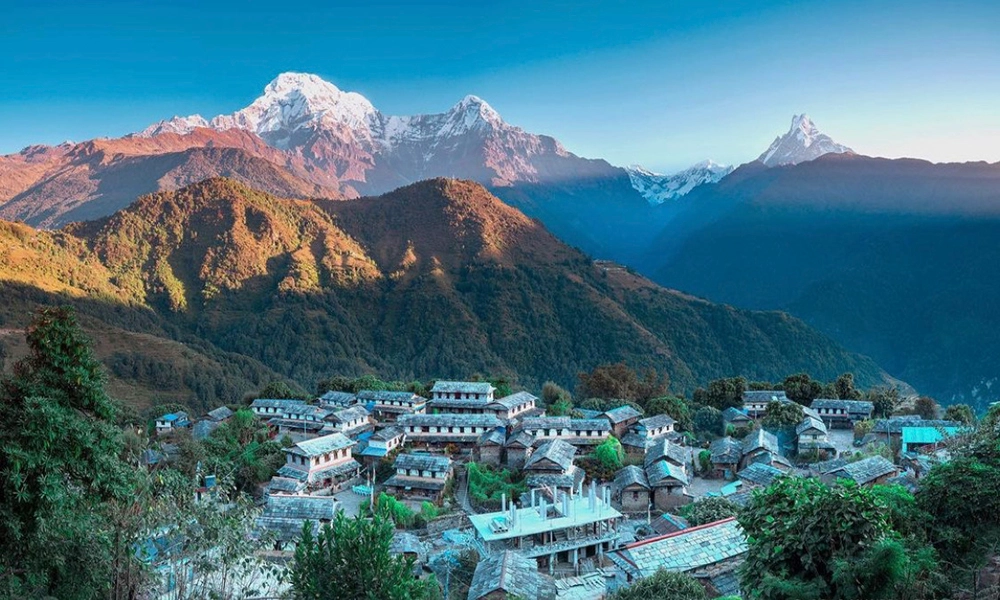
The Annapurna Sanctuary is a high glacial basin ringed by Annapurna I, Annapurna South, Hiunchuli, and the iconic Machhapuchhre (Fishtail). Reaching this basin is the ultimate goal of the trek. The 7-day version compresses the ABC route into one week, cutting rest days while keeping all the major highlights intact.
This condensed itinerary is designed for trekkers who have limited vacation time but still want to experience the full magic of the Annapurna Sanctuary. You’ll pass through traditional Gurung villages, climb through changing vegetation zones, and reach the base of some of the world’s highest peaks, all within a single week.
Trek Distance: Approximately 65 kilometers round trip
Starting Point: Nayapul via Pokhara
Ending Point: Return to Pokhara
Highest Point: 4,130m at Annapurna Base Camp
Best For: Trekkers with limited time who want the complete ABC experience
Annapurna Base Camp route map and elevation profile
The ABC short trek follows a straightforward out-and-back route. You start at Nayapul (1,050m), climb steadily through traditional villages and changing forest zones, reach the sanctuary at 4,130 meters, then retrace your steps back down. The entire route is well-marked with teahouses spaced at regular intervals, so navigation is simple even for first-time trekkers in Nepal.
The elevation profile shows a gradual climb for the first three days as you move through Ghandruk, Chhomrong, and into the sanctuary entrance. The real altitude gain happens on Day 4 when you push from Himalaya (2,920m) to Annapurna Base Camp (4,130m). That’s over 1,200 vertical meters in a single day. This is why understanding the elevation changes matters for pacing yourself and avoiding altitude issues.
Checkpoint
Approximate Elevation
Nayapul
1,050m
Ghandruk
1,940m
Chhomrong
2,170m
Himalaya
2,920m
Machhapuchhre Base Camp
3,700m
Annapurna Base Camp
4,130m
Day 4 is the most physically demanding section where you gain over 1,200 meters from Himalaya to ABC. The air gets noticeably thinner, the terrain opens up into glacial moraine, and the temperature drops. Walking slowly and drinking plenty of water on this day makes a huge difference in how you feel at base camp.
Annapurna Base Camp trek difficulty and fitness requirements
The 7-day ABC trek sits comfortably in the moderate difficulty range. You’re not dealing with technical climbing or rope work, just solid, consecutive days of mountain walking. The real challenge comes from the daily grind of 5-7 hours on uneven trails, often climbing or descending steep stone staircases that test your legs and lungs. Some days you’ll gain significant elevation, other days you’ll lose it just as quickly, and your knees will remind you of every step.
What makes this trek manageable for most people is that it follows well-established hiking trails throughout. There’s no scrambling over rocks, no glacier crossings, and no need for crampons or ice axes. If you can handle long days of uphill walking with a daypack and don’t mind basic mountain accommodation, you’re already halfway there.
Here’s what you need physically to enjoy this trek rather than just survive it:
Cardiovascular Fitness: You should be comfortable walking uphill for 5-7 hours daily without feeling completely wrecked. Think sustained effort, not sprinting.
Leg Strength: Steep ascents and descents are part of daily life on this trail. Strong quads and calves make the stone staircases much less painful.
Mental Stamina: Six consecutive days of trekking requires mental toughness. Some mornings you’ll wake up sore and still need to lace up your boots.
No Technical Skills Required: This is a standard hiking trail from start to finish. If you can walk on uneven ground, you can do this trek.
Preparation makes a massive difference. Regular hiking, stair climbing, or cardio training in the two to three months before your trek pays off in a big way. The fitter you arrive, the more mental space you’ll have to actually enjoy the mountains instead of obsessing over your burning legs or gasping lungs. You don’t need to be an athlete, but showing up completely unprepared will make the experience much harder than it needs to be.
Altitude sickness and safety on a 7 day ascent
The 7-day itinerary gets you to 4,130 meters relatively fast, which means altitude awareness isn’t optional. It’s essential. Acute Mountain Sickness (AMS) happens when your body can’t adapt quickly enough to the reduced oxygen levels at elevation. It doesn’t care how fit you are, how young you are, or how many mountains you’ve climbed before. Anyone can get altitude sickness.
The most common symptoms include a persistent headache that won’t go away, nausea or complete loss of appetite, dizziness or unusual fatigue, and difficulty sleeping even when you’re exhausted. These symptoms usually start appearing above 3,000 meters, and they can escalate quickly if ignored. The golden rule is simple: if you feel worse instead of better after resting, you need to descend.
Prevention comes down to three things: hydration, pacing, and listening to your body. Drink at least 3-4 liters of water daily, even when you don’t feel thirsty. Walk slowly, especially on Day 4 when you gain over 1,200 meters. And if something feels off, tell your guide immediately. Experienced guides are trained to spot early symptoms and will monitor the group closely. If things get serious, they can arrange descent or helicopter evacuation, which is why travel insurance with high-altitude coverage is mandatory.
Best time for the Annapurna Base Camp short trek
When you go matters almost as much as going at all. Timing affects everything: weather stability, mountain visibility, trail conditions, and how many other trekkers you’ll share the path with. The Annapurna region has distinct trekking seasons, and each one offers a different experience. For a complete breakdown of weather patterns and seasonal conditions, see our detailed guide on the best time for Annapurna Base Camp.
Spring and autumn are the two main trekking windows, and for good reason. These seasons deliver the most reliable weather, the clearest skies, and the most comfortable temperatures. Winter and monsoon are technically possible but come with trade-offs that most trekkers prefer to avoid.
Spring trekking conditions (March to May)
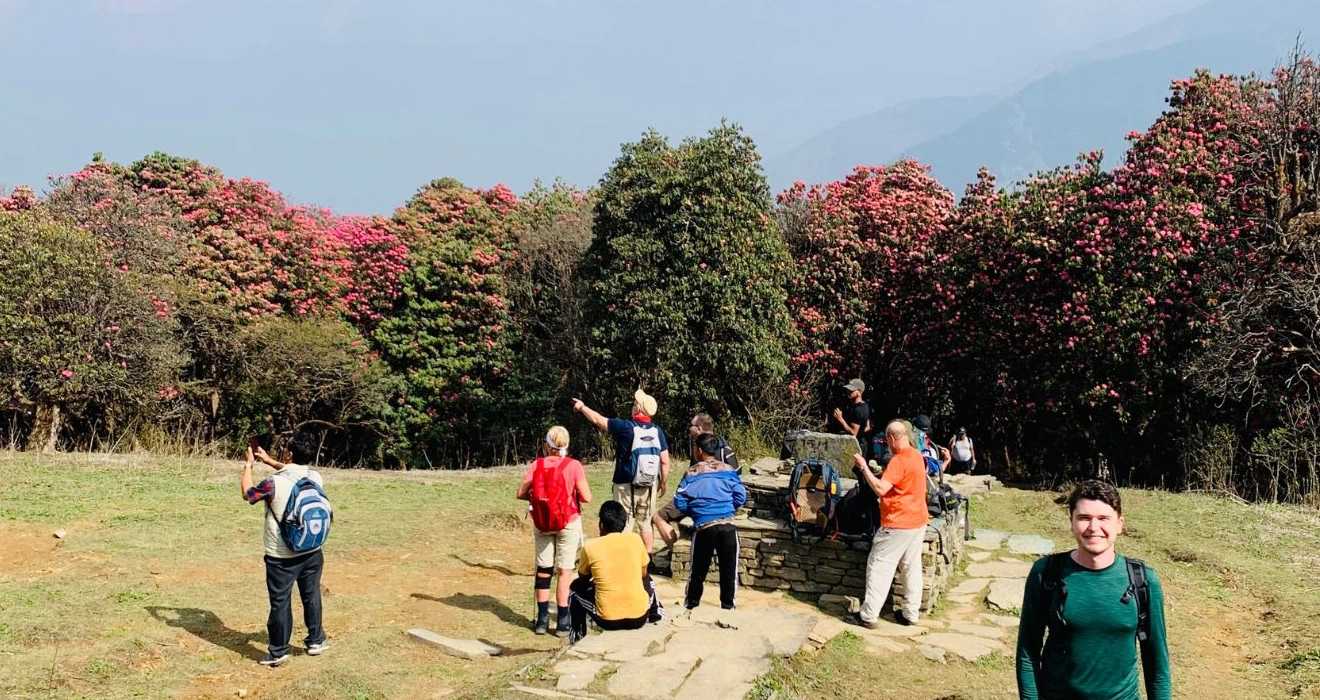
Spring is when the Annapurna Sanctuary comes alive with color. March through May brings warmer temperatures and blooming rhododendrons that turn entire hillsides pink, red, and white. The forests look like something out of a postcard, and the weather is generally stable with excellent visibility in the mornings.
Afternoon clouds do roll in regularly, which can obscure the peaks by mid-day, but mornings are usually crystal clear. This is peak trekking season, so expect busier trails and fuller teahouses. If you don’t mind the company and want to see the rhododendrons in full bloom, spring is hard to beat.
Autumn trekking conditions (September to November)
Autumn is the most popular season for good reason. It offers the best overall conditions. September through November delivers stable weather, the clearest mountain views, and moderate temperatures that aren’t too hot or too cold. The monsoon rains have washed the air clean, leaving the skies a deep blue and the peaks sharp against the horizon.
Visibility is at its peak, which means your photos will look incredible. Like spring, this is also peak season, so trails and teahouses fill up quickly. If you want the most reliable weather and don’t mind sharing the trail, autumn is your best bet.
Winter and monsoon trekking considerations
December through February is winter trekking season. Temperatures drop significantly, especially at higher elevations where snow is common above 3,500 meters. The cold can be brutal at Annapurna Base Camp, with nighttime temperatures well below freezing. The upside? Far fewer trekkers, which means quieter trails and a more solitary experience.
If you’re prepared for the cold and don’t mind the risk of snow blocking higher sections, winter offers a peaceful alternative. June through August is monsoon season, and most trekkers avoid it entirely. Heavy rain, slippery trails, leeches in the forests, and clouds that obscure the mountains make for a challenging experience. That said, the landscape is incredibly lush and green, and you’ll have the trail almost entirely to yourself if you’re willing to deal with the conditions.
Permits required for the Annapurna Base Camp trek
You need two permits to trek to Annapurna Base Camp: the Annapurna Conservation Area Permit (ACAP) and the Trekkers’ Information Management System (TIMS) card. Both are mandatory, and without them, you won’t be allowed to enter the conservation area or proceed along the trail. Most trekking operators, including Wilder Way Trekking, handle the permit paperwork for you before departure, so you don’t have to worry about navigating government offices in Kathmandu or Pokhara.
The permits serve different purposes. ACAP is your entry ticket into the protected Annapurna Conservation Area, while the TIMS card is a safety registration system that tracks trekkers in case of emergencies. Together, they cost around $30-40 USD depending on your nationality and whether you’re trekking independently or with an agency. Your operator will need a passport-sized photo and a copy of your passport to process both permits.
Annapurna Conservation Area Permit (ACAP)
The ACAP is your official entry permit for the Annapurna Conservation Area, which covers the entire trekking region including the sanctuary. The permit costs approximately 3,000 NPR (around $22 USD) for foreign nationals. This fee isn’t just bureaucracy. It directly funds conservation projects, trail maintenance, waste management, and community development programs in the villages you’ll pass through.
Without this permit, checkpoints along the trail will turn you back, so it’s non-negotiable. Your trekking operator arranges this permit through the Nepal Tourism Board or the ACAP office in Pokhara before you start trekking.
TIMS card (Trekkers’ Information Management System)
The TIMS card is a registration document that records your personal details, trekking route, and emergency contact information. It costs around 2,000 NPR (approximately $15 USD) for organized group trekkers and slightly more for independent trekkers.
The card helps authorities keep track of who’s on the trail, which becomes critical if there’s an emergency, natural disaster, or if someone goes missing. You’ll need to show your TIMS card at various checkpoints along with your ACAP, so keep both documents accessible in your daypack throughout the trek.
Accommodation, meals and transportation on the ABC trail
One of the biggest questions trekkers have is what daily life actually looks like on the trail: where you sleep, what you eat, and how you get to the starting point. The Annapurna Base Camp route is well-developed with teahouse infrastructure throughout, meaning you’re never camping in tents or carrying your own food. Everything from lodging to meals is handled at mountain guesthouses spaced at regular intervals along the trail.
That said, comfort levels vary significantly depending on elevation. Lower villages offer relatively cozy setups with hot showers and varied menus, while higher stops become more basic as you approach base camp. Understanding what to expect at each stage helps you pack appropriately and manage expectations, especially if this is your first teahouse trek in Nepal.
Teahouse accommodation along the sanctuary
Teahouses are simple mountain lodges run by local families, offering twin-bedded rooms with basic foam mattresses and thick blankets. Most rooms are unheated, so temperatures drop significantly at night, especially above 3,000 meters. Bringing your own sleeping bag rated for cold weather is highly recommended for both warmth and hygiene, since blankets are shared between guests and not always washed frequently.
Bathrooms are shared at most teahouses, with squat toilets being the norm at higher elevations. Hot showers are available at lower villages like Ghandruk and Chhomrong for a fee (usually 200-500 NPR), but become scarce or unavailable above Bamboo. At Annapurna Base Camp itself, don’t expect any showers, just basic sleeping quarters and a communal dining hall where trekkers gather around a wood stove for warmth.
Meals and drinking water on the trek
Dal bhat is the staple meal throughout the trek. A hearty plate of steamed rice, lentil soup, vegetable curry, and pickles that’s served with unlimited refills. It’s the most filling and energy-efficient option, which is why experienced trekkers eat it twice a day. Beyond dal bhat, teahouse menus offer noodle soups, fried rice, pasta, pancakes, and even pizza at lower elevations, though variety decreases as you climb higher.
Drinking water is available everywhere, but buying bottled water creates serious plastic waste along the trail. Instead, carry water purification tablets, a SteriPEN, or a filter bottle to refill from taps or streams. Boiled water is also available at teahouses for a small fee (50-100 NPR per liter). Staying hydrated is critical at altitude. Aim for at least 3-4 liters daily, even if you don’t feel particularly thirsty.
Pokhara ground transportation and drop offs
The trek officially starts at Nayapul, which is about 1.5 hours by road from Pokhara. The drive follows a winding mountain highway that runs alongside river valleys and passes through small roadside towns. Most trekking packages include this vehicle transfer in both directions, so you don’t need to arrange anything separately or haggle with local drivers.
On the return journey, you’ll be picked up from Nayapul after completing the final day’s walk and driven back to Pokhara, usually arriving by early afternoon. If you’re booking independently, shared jeeps and private taxis are readily available from Pokhara’s tourist area, though having it arranged through your trekking operator is far more convenient and reliable.
Amenities along the Annapurna Sanctuary trail
The Annapurna Base Camp trail is well-developed compared to more remote trekking routes in Nepal, with teahouses spaced at regular intervals throughout the sanctuary. That said, amenities become noticeably more basic as you gain elevation, and what’s available at Ghandruk or Chhomrong won’t necessarily be available at Machhapuchhre Base Camp or ABC itself.
Understanding what services exist and where they disappear helps you pack appropriately and manage expectations. Lower villages offer relatively comfortable setups with hot showers, charging stations, and varied menus, while higher stops strip things down to the essentials: a bed, a meal, and a roof over your head.
Here’s what you can expect along the trail:
Charging Stations: Available at most teahouses for a fee, typically 200-500 NPR per device depending on elevation. Higher you go, the more expensive it gets since electricity is scarce. Bring a power bank to reduce dependency on teahouse charging.
Wi-Fi: Intermittent availability at lower elevations like Ghandruk and Chhomrong, often slow and unreliable. Some teahouses charge for Wi-Fi access (200-500 NPR), though speeds rarely support video calls or large downloads. Above Bamboo, Wi-Fi becomes almost non-existent.
Hot Showers: Solar-heated or gas-powered showers are available at lower villages for a fee (200-500 NPR). Above Bamboo, hot showers become scarce or unavailable entirely. At Annapurna Base Camp, don’t expect any shower facilities, just basic sleeping quarters.
Shops: Basic supplies, snacks, trekking gear, and toiletries are available at larger villages like Ghandruk and Chhomrong. Selection shrinks dramatically at higher elevations, so stock up on essentials early if you need anything specific.
Carrying a power bank and sufficient cash in Nepali rupees is essential since ATMs do not exist anywhere on the trail. Once you leave Pokhara, you’re relying entirely on the cash you brought with you for personal expenses, tips, and any extra services you want along the way.
Annapurna Base Camp short trek packing list
Packing light matters because every extra gram adds up over seven consecutive days of walking. Porters carry your main duffel bag, which is limited to around 10-12 kilograms, so your daypack holds only the essentials you need during the day: water, snacks, layers, and personal items.
The key is packing smart, not heavy. You don’t need a different outfit for every day, and you definitely don’t need to bring your entire bathroom cabinet. Focus on versatile, quick-dry layers that you can mix and match depending on temperature and weather conditions. The mountains don’t care what you look like, and neither does anyone else on the trail.
Head and face gear
Sun protection is critical at altitude where UV exposure is significantly stronger. Bring a wide-brimmed sun hat for daytime trekking, a warm beanie for cold mornings and evenings, UV-rated sunglasses to protect your eyes from glare, and a buff or scarf for wind protection. The buff is especially useful since it can double as a face mask, headband, or neck warmer depending on conditions.
Upper body layers
Layering is everything in the mountains. Start with moisture-wicking base layers that pull sweat away from your skin, add an insulating fleece or lightweight down jacket for warmth, and top it off with a waterproof shell jacket for wind and rain protection. Avoid cotton entirely. It absorbs moisture and takes forever to dry, which makes you cold and miserable.
Lower body layers
Bring trekking pants in quick-dry synthetic material that can handle sweat, dirt, and multiple days of wear. Thermal leggings are essential for cold mornings and high-altitude sections, and waterproof pants protect you during unexpected rain or snow. Convertible zip-off pants work well if you want flexibility between shorts and full-length coverage.
Hands and footwear
Your hands and feet take the most abuse on the trail, so protect them properly. Bring lightweight trekking gloves for daytime walking and warm insulated gloves for base camp where temperatures drop well below freezing. Broken-in hiking boots with good ankle support and grip are non-negotiable. Blisters from new boots will ruin your trek. Pack camp sandals or lightweight shoes for wearing around teahouses in the evenings to give your feet a break.
Daypack and personal accessories
A small daypack (20-30 liters) carries everything you need during the day: water bottles or a hydration bladder, snacks, extra layers, a headlamp with spare batteries, trekking poles for stability on steep sections, a personal first aid kit with blister treatment and pain relievers, toiletries, and high-SPF sunscreen. Keep your daypack light since you’ll be carrying it for 5-7 hours daily.
For a complete breakdown with specific brand recommendations and gear tips, see our detailed ABC Trek Packing Guide.
Responsible trekking in the Annapurna Base Camp
The Annapurna Sanctuary is a protected conservation area, and responsible trekking practices help preserve it for future generations. The mountains are stunning, but they’re also fragile ecosystems that suffer when trekkers leave trash, waste resources, or disrespect local communities. Small actions add up, and every trekker has a responsibility to minimize their impact.
Here’s how to trek responsibly in the Annapurna Sanctuary:
Carry Out All Trash: Pack out everything you bring in, including wrappers, bottles, and any waste you generate. Don’t leave anything behind, even biodegradable items like fruit peels, since they take longer to decompose at high altitudes.
Minimize Plastic Use: Carry a reusable water bottle and refill it with purified or boiled water instead of buying single-use bottles. Plastic waste is a massive problem in the Himalayas, and reducing your contribution makes a real difference.
Respect Local Customs: Dress modestly in villages, ask permission before photographing people, and be mindful of religious sites and practices, especially in Gurung communities where traditional culture remains strong.
Support Local Teahouses: Eat and sleep at local teahouses rather than bringing outside food. The money you spend on meals, accommodation, and services stays in the villages and helps fund schools, healthcare, and infrastructure improvements.
Conserve Resources: Use water sparingly, avoid wasting food, and be mindful of energy consumption at higher elevations where resources are scarce and expensive to transport.
Trekking responsibly isn’t complicated. It just requires awareness and a bit of effort. The sanctuary is one of Nepal’s most beautiful places, and keeping it that way is a shared responsibility among everyone who walks these trails.
Book your Annapurna Base Camp short trek with Wilder Way Trekking
The 7-day Annapurna Base Camp trek delivers the full sanctuary experience in a compact timeframe. Here’s why trekking with Wilder Way Trekking makes the difference:
Government-Registered Operation: Years of experience guiding trekkers through the Annapurna Sanctuary with proper licensing and credentials
Complete Logistics Handled: We manage permits, ground coordination, transportation, and emergency support so you focus on the mountains, not paperwork
Professional Guide Team: Trained professionals who monitor altitude symptoms, adjust pace based on fitness levels, and share deep knowledge of Gurung culture and mountain ecology
Small Group Sizes: Intimate groups that allow personalized attention and flexible pacing throughout the trek
Transparent Pricing: No hidden fees or surprise charges. What you see is what you pay
24/7 Support: Round-the-clock assistance from booking through your return to Pokhara
Safety-First Approach: Your wellbeing and experience are prioritized above everything else, which is the difference between completing a trek and actually enjoying it
Whether you join a group departure or book a private trek customized to your schedule, you’re trekking with people who know these trails intimately.
Pricing Packages
7 Daysfrom US$ 800US$ 750pp
Save $50 Per Pax
Group-Size Discounts
Discounts are based on your group size. We do not add anyone to your group.
No. of Persons
Price per Person
1 Pax
US$ 750
2 - 4 Pax
US$ 700
5 - 8 Pax
US$ 650
9 - 15 Pax
US$ 620
×
Enquiry Form
Included and Excluded
Two nights accommodation with breakfast (room with attached bathroom) in Pokhara
Accommodation: Total six nights. Three nights room with attached bathroom at Ghandruk, Jhinu Danda, and Chomrong. Three nights standard accommodation at Himalayan, Annapurna Base Camp, Bamboo(Generally, twin sharing room)
Both way on a private transport from Pokhara to Syauli Bazaar / Kimche(trek start) and Ghandruk Phedi (trek end) to Pokhara.
All full-board (main course) meals (7 Lunches, 6 Dinners, and 7 Breakfasts/ main course) during the trek
Government-licensed English Speaking Wilder Way Trekking experienced trek leader/guide and porters to help trekkers luggage. (1 porter for every 2 trekkers. 9 kg per trekker maximum luggage weight limit)
Guides and porters costs- their meals, insurance, salary, lodging, transportation, flight, and other necessary equipment
Annapurna Conservation Area Permit (ACAP) fee
Trekkers Information Management System (TIMS) card fee
All government, local taxes, and official expenses
Souvenir - company's T-shirt & cap
Wilder Way Trekking certificate of appreciation after the successful trek
Farewell dinner at Pokhara after trek ends
International flight airfare
Nepal entry visa fees on arrival at Tribhuvan International Airport- (15 days - $25-30, 30 days- $40-50 and 90 days- $100-110)
Excess baggage charges (limit is 9kg per trekker)
All accommodation and meals in Kathmandu, before and after the journey
Lunch and dinner in Pokhara
Extra night accommodations, meals in Kathmandu and Pokhara due to early arrival or late departure, or early return from the trek
Personal expense (shopping, snacks, boil bottle water, hot (tea, coffee) and cold drinks, hot shower, Alcohol, Wi-Fi, telephone call, battery re-charge fee), extra porters, etc
Personal clothing and gear
Travel insurance which has to cover emergency high-altitude rescue and evacuation compulsory
Tips for guide and porters
Additional costs or delays caused due to circumstances beyond our control, for example, landslide, weather condition, itinerary modification due to safety concerns, illness, change of government policies, strikes, etc
All costs and expenses not listed in "What is included in Annapurna Base Camp Tour Package?" above
Highlights of the Tour
A day in tourist hub Pokhara
Visit to Ghandruk Gurung village, Gurung museum and monasteries
Annapurna Base Camp (4,130m)
Relaxing hot springs at Jhinu Danda
Hiunchuli, Annapurna South Annapurna I ,Khangsar, Kang, Gangapurna, Annapurna III and Machhapuchhare
Itinerary
The trek normally starts from Pokhara. However, Discovery World Trekking provides a complimentary bus ride from Kathmandu to Pokhara. The bus ride lasts for about six hours. You can choose to fly to Pokhara for an extra cost. From Pokhara, we will be driving to Kimche through Nayapul and Syauli Bazaar. The real trekking starts from Kimche and ends at Ghandruk. On the path, you will see incredible mountain terrain, terraced farms, humongous mountains, and subtropical forests. Ghandruk village contains numerous Buddhist monasteries and is rich in traditional customs and lifestyles. We will not miss our chance to explore Gurung Museum. From Ghandruk, we can see the spectacular views of Fishtail, Annapurna South, and the Hiunchuli mountains.
After a cup of tea early morning, we hike from Ghandruk through a steep descent to Kimron River and then ascend to reach Chomrong. From the way, you will see stunning views of Annapurna South, Fishtail mountain that look heavenly early in the morning. Chomrong lies on the lap of the mighty Annapurna massif over a hillside. If we arrive at Chomrong early, we will trek further to Sinuwa to spend the night.
Today's trek will differ slightly based on where we stayed last night. If we stayed at Chomrong, then we hike to Himalaya through Sinuwa. Else, we will start the trek from Sinuwa and reach Deurali. So you may leave Chomrong and pass through the lush forest on a path paved with stones until we cross Chomrong Khola. Then the path ascends, passing through deep bamboo and rhododendron forest until we reach Himalaya. If we trekked from Chomrong, we stop at Himalaya for the night or else at Deurali.
If in Himalaya, we leave Himalaya and follow a route that passes through the Modi Khola glacier valley past the Machhapuchhre Base Camp, which ultimately takes us to the Annapurna Base Camp. Otherwise, the trek will start from Deurali. Machhapuchhre Base Camp offers stunning panoramic views of the surrounding mountains, but we will continue trekking north until we reach Annapurna Base Camp. Throughout the journey, we will be walking close to the Annapurna glaciers. From Annapurna Base Camp, we get a 360-degree view from Hiunchuli, Annapurna ranges - including Annapurna I (8,097m/26,566ft), Khangsar Kang, Gangapurna, Annapurna III, and Machhapuchhare.
After enjoying breakfast along with the views of beautiful sunrise over the Himalayas, we start our trek that will eventually take us out of Annapurna Sanctuary. However, we first retrace our steps out of Modi River Valley to reach Bamboo village - the destination for the day.
Our trek continues, we head down to Kimrong Khola, and from there, the path ascends and passes through the serene rhododendron, bamboo, and oak forests, ultimately leading to Chomrong village. However, we continue until we reach a small peaceful settlement called Jhinu Danda. This village has nearby riverside hot springs, where we soothe our tired muscles. We will be staying at Jhinu Danda for the night.
Today will be the last day of the trek. We leave Jhinu Danda and follow the dust road along the right of Mardi Khola. After a leisurely walk for 3 to 4 hrs, we reach Siwa/Ghandruk Phedi. From Ghandruk Phedi, we first drive to Birethanti, then Nayapul until we reach Pokhara. Our trek package completes at Pokhara. We hope, by then, you would have created precious memories of reaching Annapurna Base Camp.
Route Map
Click to View Full Route Map
×
Frequently Asked & Question
Booking a trip on our website is easy and accessible. Simply browse through the trekking packages available and select the trip that suits your interest. Click on the" Book Now" button on the package runner, fill in your particular details and favored trip dates, and do with the secure payment process. Once your booking is verified, you'll admit a evidence dispatch with all the necessary trip details and farther instructions. However, our support platoon is always ready to help, If you encounter any issues or need backing during the booking process.
The Annapurna Base Camp Short Trek is considered a moderate- level journey, suitable for individualities with a reasonable level of physical fitness. It involves walking for 5 to 7 hours daily on rugged terrain with significant ascents and descents.
The ideal seasons for this journey are spring( March to May) and autum( September to November), offering stable rainfall, clear skies, and excellent mountain views.
Yes, beginners with reasonable fitness who can walk several hours daily on uneven terrain can complete this trek. If the 7-day pace feels aggressive, the 10-day ABC itinerary offers a gentler schedule with extra acclimatization days. Prior hiking experience helps but is not strictly required.
Comprehensive travel insurance covering high-altitude trekking and emergency helicopter evacuation is mandatory. Verify your policy covers activities above 4,000 meters before departure.
Your guide will assess your condition and arrange descent or helicopter evacuation if necessary. Travel insurance with evacuation coverage is required for all trekkers for this reason.
Book Your Tour
Reserve your ideal trip early for a hassle-free trip; secure comfort and convenience!