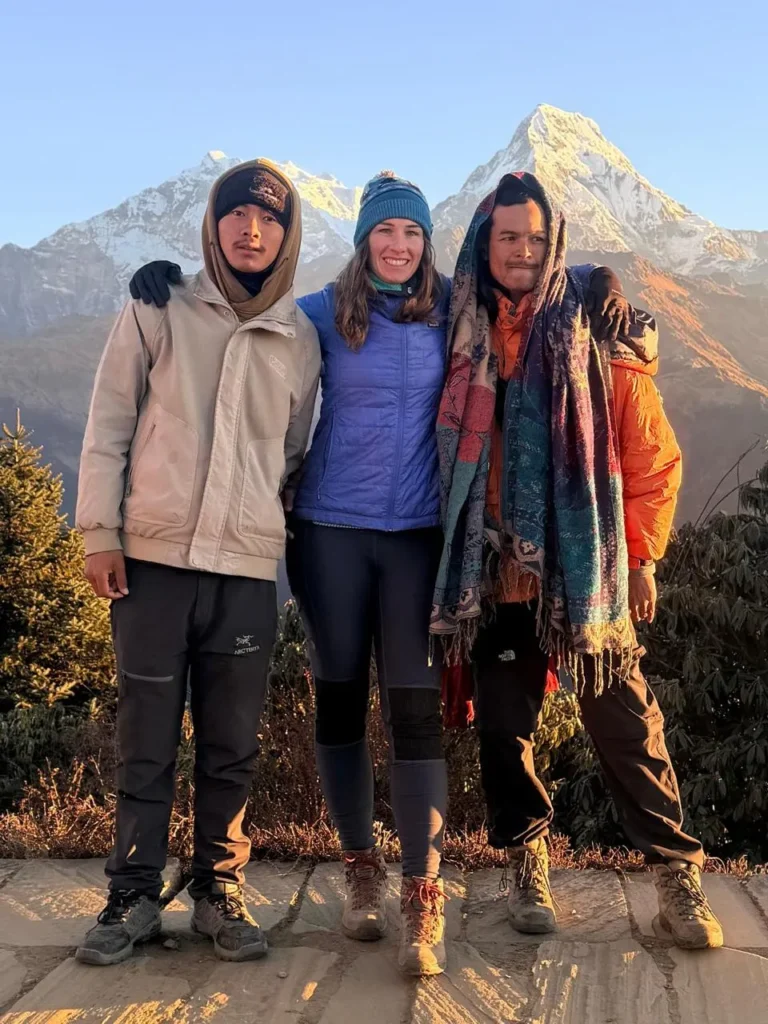
Annapurna Circuit Trek with Tilicho Lake – 16 Days
$1,100$1,250/
Per Person
15 Nights/16 Days
Max People : 30
ANNAPURNA REGION
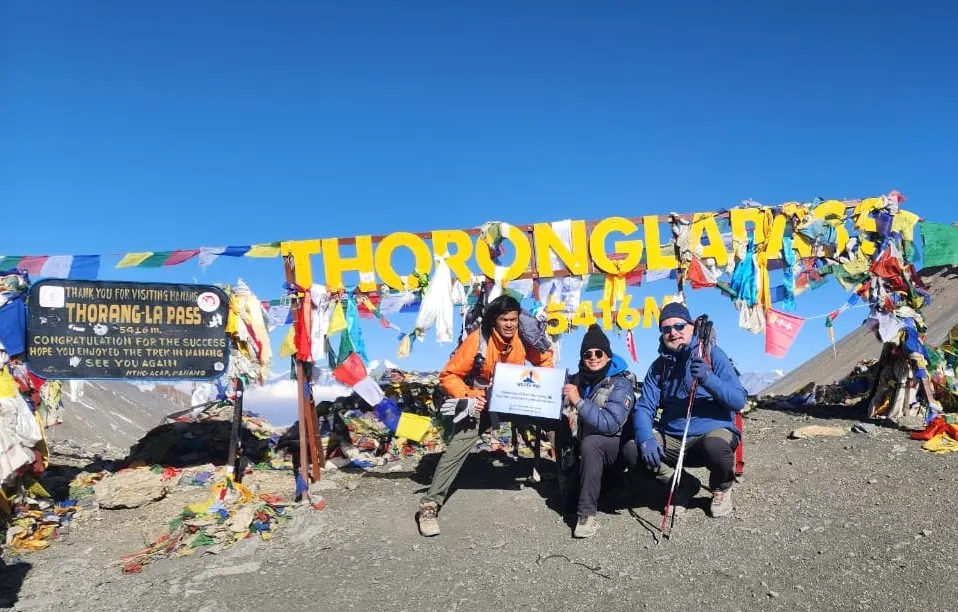
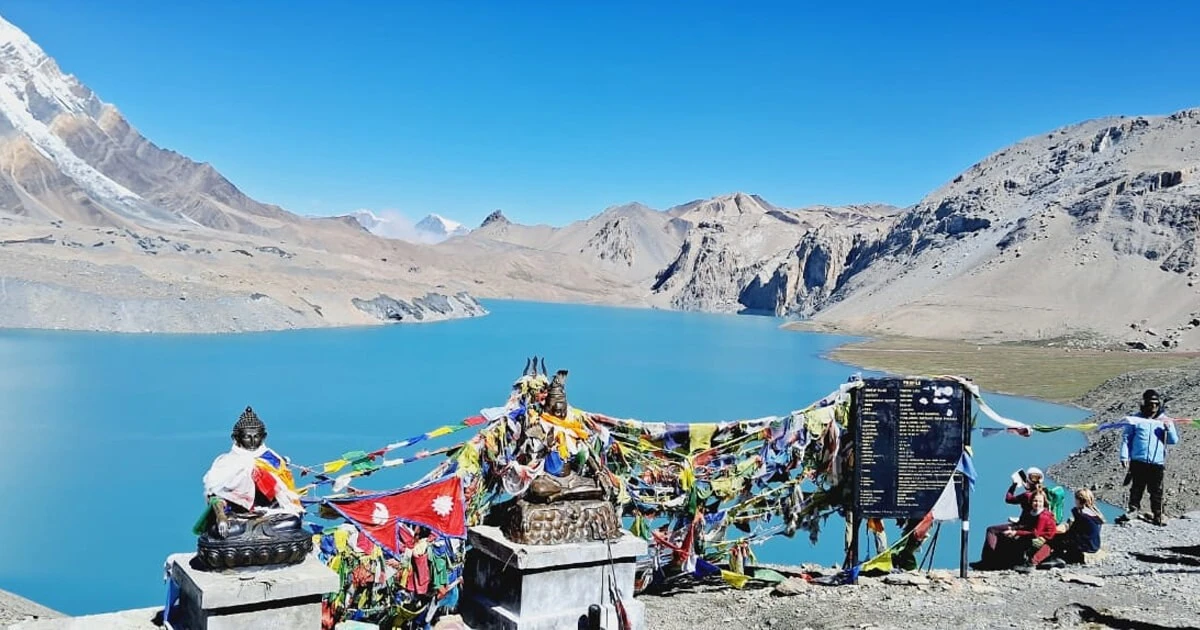
The Annapurna Circuit Trek with Tilicho Lake is one of Nepal’s most rewarding Himalayan adventures, combining the legendary Annapurna Circuit with a visit to the breathtaking Tilicho Lake (4,919m / 16,138ft), one of the world’s highest alpine lakes. Over 16 days, this journey takes you through traditional mountain villages, lush forests, deep river valleys, and high mountain deserts before crossing the iconic Thorong La Pass (5,416m / 17,769ft).
Every day brings a different experience, from meeting local Gurung, Manangi, and Thakali communities to enjoying spectacular views of Annapurna, Dhaulagiri, Manaslu, Gangapurna, and Tilicho Peak. Designed with gradual altitude gain and proper acclimatization, this itinerary offers the perfect balance of adventure, scenery, culture, and safety for trekkers seeking a complete Annapurna experience.
Quick Facts
Trek Information
Details
Trek Duration
16 Days
Region
Annapurna Region
Highest Point
Thorong La Pass (5,416m / 17,769ft)
Highest Lake
Tilicho Lake (4,919m / 16,138ft)
Trek Difficulty
Moderate to Challenging
Trek Distance
Approximately 180–200 km
Accommodation
Local Teahouses
Best Seasons
March–May & September–November
Permits Required
ACAP & TIMS (subject to current regulations)
Start Point
Kathmandu
End Point
Kathmandu
Is This Trek Right for You?
The Annapurna Circuit Trek with Tilicho Lake is ideal for active trekkers who want more than a standard mountain hike. It suits travelers looking for a longer adventure, dramatic scenery, authentic local culture, and the rewarding challenge of trekking above 5,000 meters without technical climbing.
If you have good fitness and enjoy walking 5 to 7 hours each day, this trek is achievable with proper preparation. Whether you’re an experienced trekker or a determined beginner trekking with an experienced guide, this route offers one of Nepal’s most memorable Himalayan journeys.
Why Choose the 16-Day Itinerary?
The 16-day itinerary provides enough time to enjoy both Tilicho Lake and the full Annapurna Circuit without rushing. Gradual altitude gain and carefully planned overnight stops help your body acclimatize before reaching higher elevations, making the journey safer and more enjoyable.
This itinerary also allows you to experience the region’s changing landscapes, local villages, and major highlights at a comfortable pace. It’s an excellent choice for trekkers who want a complete Annapurna adventure while maximizing both safety and the overall trekking experience.
Why Choose the Annapurna Circuit Trek with Tilicho Lake?
You should choose the Annapurna Circuit Trek with Tilicho Lake if you want to experience Nepal’s most diverse trekking route, combining one of the world’s highest alpine lakes, the legendary Thorong La Pass (5,416m / 17,769ft), dramatic Himalayan landscapes, and authentic mountain cultures in a single 16-day adventure. It offers the perfect balance of scenery, challenge, culture, and unforgettable mountain experiences.
Unlike the standard Annapurna Circuit, this itinerary includes a rewarding side trip to the stunning Tilicho Lake while allowing enough time for proper acclimatization and cultural exploration. Every day reveals a different side of the Himalayas, making it one of the most complete and memorable treks in Nepal.
Visit Tilicho Lake (4,919m / 16,138ft)
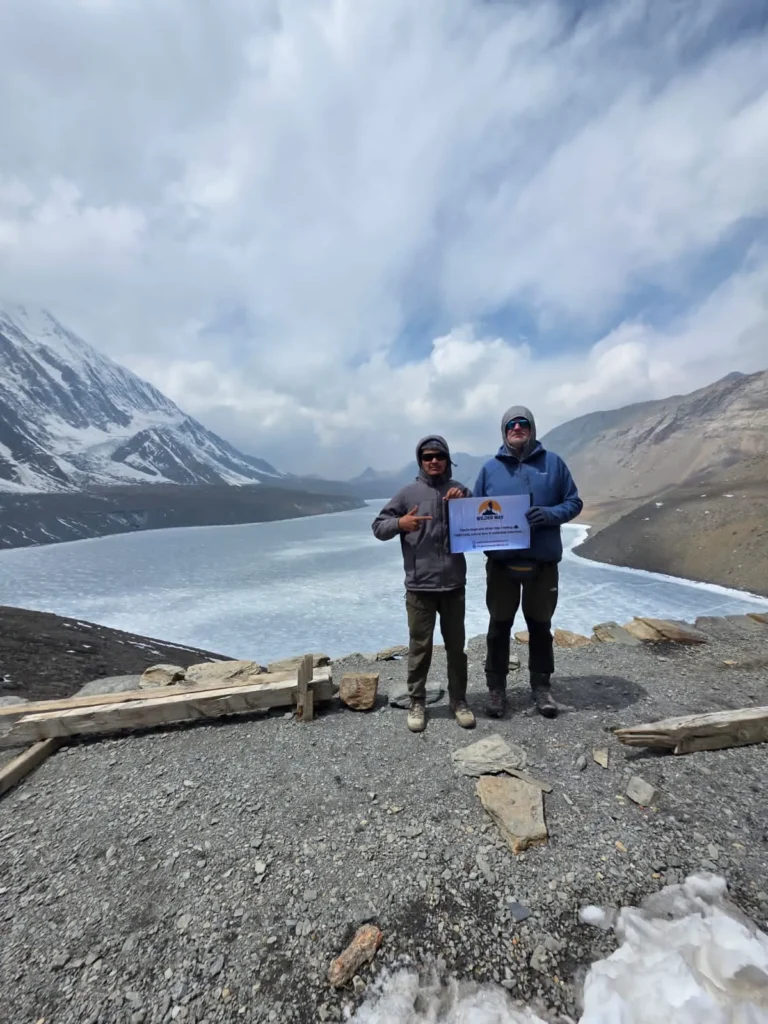
Tilicho Lake is one of the biggest highlights of the trek and one of the world’s highest alpine lakes. Surrounded by towering snow-covered peaks and rugged cliffs, its turquoise water creates one of the most breathtaking mountain landscapes in Nepal.
The trail to the lake takes you through remote valleys that are quieter than many other trekking routes. Reaching the lakeshore is a rewarding moment and one that many trekkers consider the highlight of their Annapurna adventure.
Cross Thorong La Pass (5,416m / 17,769ft)
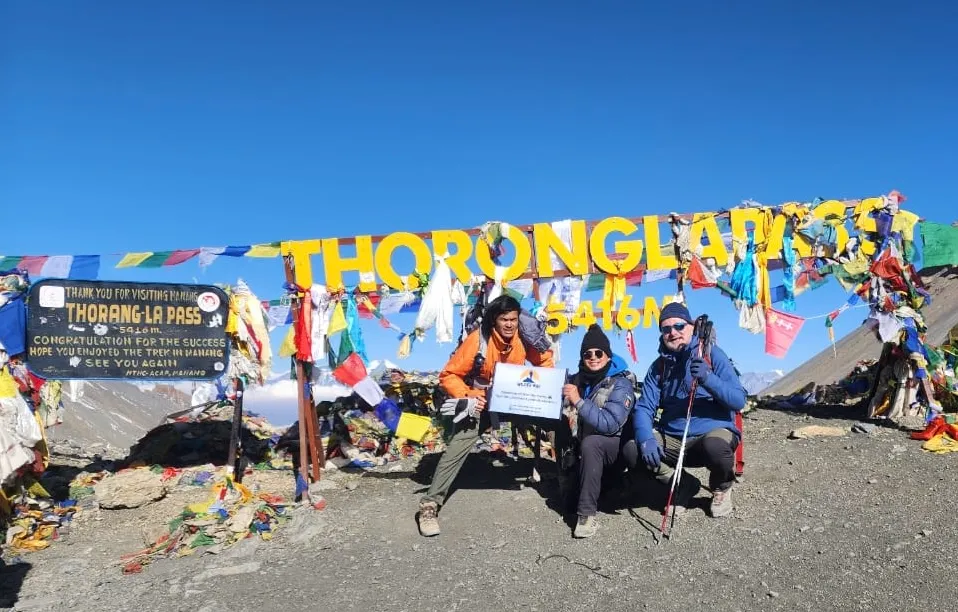
Crossing Thorong La Pass is the highest point of the trek and one of Nepal’s greatest trekking achievements. Starting before sunrise, you’ll gradually climb to the prayer-flag-covered summit, where panoramic views stretch across the Annapurna and Dhaulagiri ranges.
After reaching the pass, the trail descends into the Mustang region, where the scenery changes dramatically into dry valleys, colorful cliffs, and Tibetan-influenced settlements.
Trek Through Diverse Himalayan Landscapes
One of the reasons this trek is so popular is its incredible variety of landscapes. You’ll walk through green river valleys, waterfalls, terraced farms, pine forests, alpine meadows, rocky canyons, and high mountain deserts during a single journey.
Very few treks in Nepal offer such dramatic changes in scenery. Every day feels different, making the entire adventure exciting from start to finish.
Experience Gurung, Manangi, and Thakali Culture
The trek passes through traditional villages where Gurung, Manangi, and Thakali communities have lived for generations. Staying in locally owned teahouses allows you to experience genuine Himalayan hospitality while learning about local traditions and daily life.
You’ll also visit ancient monasteries, walk past colorful prayer flags, spin prayer wheels, and discover the unique blend of Nepali and Tibetan cultures that makes the Annapurna region so special.
Complete the Classic Annapurna Circuit
This itinerary combines all the highlights of the classic Annapurna Circuit with the unforgettable side trip to Tilicho Lake. Instead of choosing between two iconic destinations, you experience both in one carefully planned adventure.
For trekkers looking to make the most of their time in the Annapurna region, the 16-day Annapurna Circuit Trek with Tilicho Lake offers a richer, more complete Himalayan experience than the standard circuit alone.
Route Map & Trail Overview
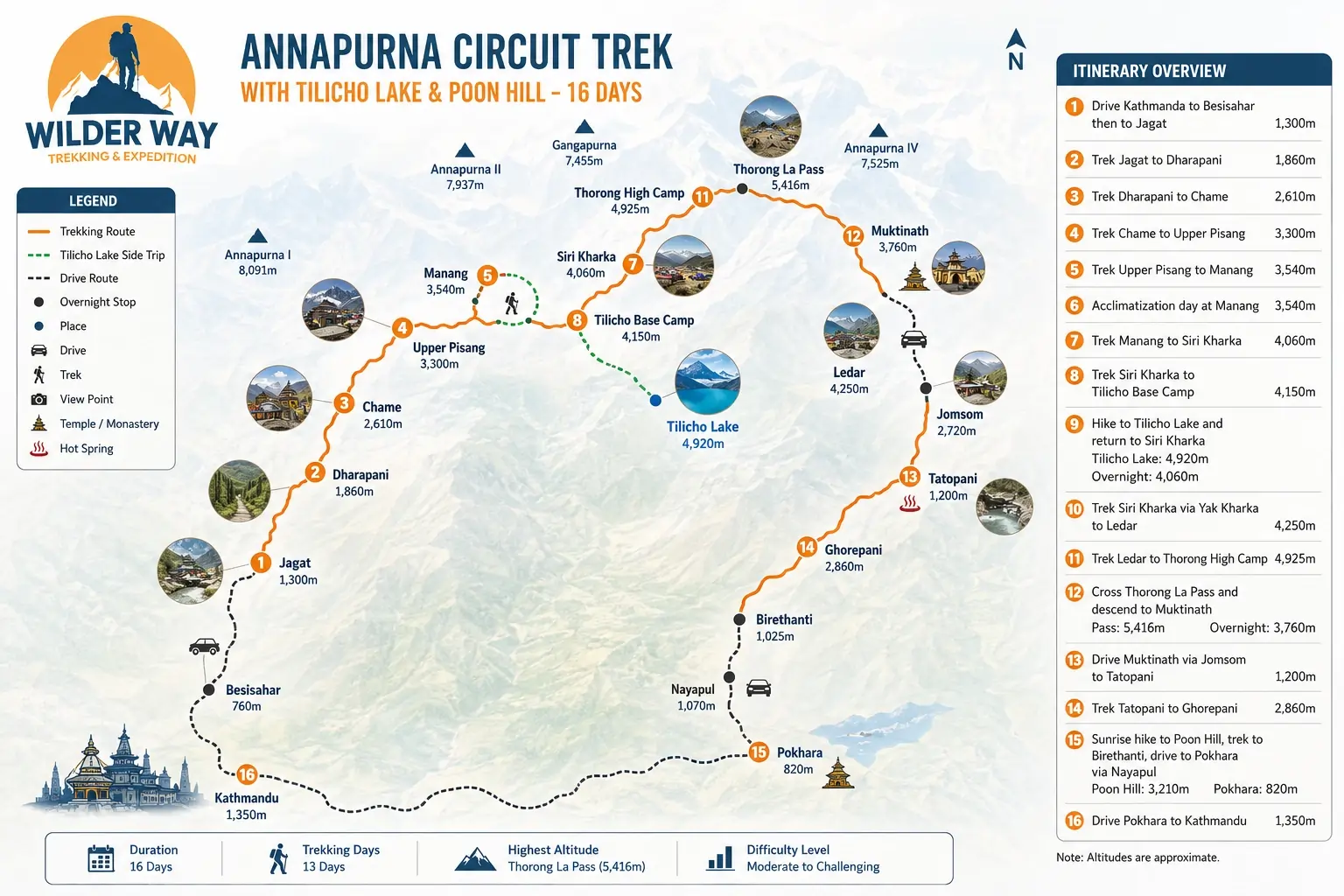
The Annapurna Circuit Trek with Tilicho Lake follows one of Nepal’s most scenic and rewarding trekking routes, combining the classic Annapurna Circuit with a visit to the stunning Tilicho Lake (4,920m / 16,138ft). Starting with a drive from Kathmandu to Jagat, the trail gradually climbs through lush valleys, pine forests, traditional Gurung and Manangi villages, and dramatic alpine landscapes before reaching the high Himalayas. Along the way, you’ll acclimatize in Manang, explore the turquoise waters of Tilicho Lake, and cross the iconic Thorong La Pass (5,416m / 17,769ft) before descending into the Mustang region.
The adventure continues beyond Muktinath with a scenic drive to Tatopani, followed by a trek to Ghorepani and an early morning hike to the famous Poon Hill viewpoint. This well-designed 16-day itinerary offers the perfect balance of altitude acclimatization, cultural experiences, diverse landscapes, and some of the finest mountain scenery in Nepal.
Trek Route Overview
This 16-day itinerary combines three of the Annapurna region’s biggest highlights: Tilicho Lake, Thorong La Pass, and Poon Hill. Beginning in the Marsyangdi Valley, the trail follows the traditional Annapurna Circuit before branching toward Tilicho Lake from Manang. After returning to the main trail, you’ll cross Thorong La Pass and descend into the Kali Gandaki Valley before finishing with a sunrise hike to Poon Hill and returning to Pokhara.
Complete Trek Route
Kathmandu → Besisahar → Jagat → Dharapani → Chame → Upper Pisang → Manang → Siri Kharka → Tilicho Base Camp → Tilicho Lake → Siri Kharka → Yak Kharka → Ledar → Thorong High Camp → Thorong La Pass → Muktinath → Jomsom → Tatopani → Ghorepani → Poon Hill → Birethanti → Nayapul → Pokhara → Kathmandu
Route Map
Day
Route
Overnight Elevation
Day 1
Drive from Kathmandu to Besisahar, then continue to Jagat
The route follows a gradual ascent that allows your body to adjust naturally before reaching higher elevations. An acclimatization day in Manang helps reduce the risk of altitude sickness before visiting Tilicho Lake and crossing Thorong La Pass. After the highest point of the trek, the trail descends steadily into the Mustang region before finishing in the lower hills of Ghorepani and Pokhara.
Location
Elevation
Kathmandu
1,350m (4,429ft)
Jagat
1,300m (4,265ft)
Dharapani
1,860m (6,200ft)
Chame
2,610m (8,890ft)
Upper Pisang
3,300m (10,826ft)
Manang
3,540m (11,614ft)
Siri Kharka
4,060m (13,320ft)
Tilicho Base Camp
4,150m (13,615ft)
Tilicho Lake
4,920m (16,138ft)
Ledar
4,250m (13,943ft)
Thorong High Camp
4,925m (16,158ft)
Thorong La Pass
5,416m (17,769ft)
Muktinath
3,760m (12,336ft)
Tatopani
1,200m (3,940ft)
Ghorepani
2,860m (9,383ft)
Poon Hill
3,210m (10,531ft)
Pokhara
820m (2,690ft)
Transportation Route
Transportation combines scenic mountain drives with unforgettable trekking through the Annapurna region. The road journey takes you from Kathmandu to Jagat at the beginning of the trek, while the return route includes a drive from Muktinath through Jomsom to Tatopani and another drive from Nayapul to Pokhara before returning to Kathmandu.
Route
Transportation
Kathmandu → Besisahar → Jagat
Tourist Bus or Private Jeep
Jagat → Muktinath
Trekking
Muktinath → Jomsom → Tatopani
Shared Jeep or Private Jeep
Nayapul → Pokhara
Private Vehicle or Tourist Vehicle
Pokhara → Kathmandu
Tourist Bus, Private Vehicle, or Domestic Flight
Local Guide Recommendation
This itinerary is designed to maximize both the trekking experience and altitude safety. Spending an acclimatization day in Manang before visiting Tilicho Lake allows your body to adjust before sleeping above 4,000 meters. After returning from Tilicho Lake, the gradual ascent through Ledar and Thorong High Camp provides the best chance of successfully crossing Thorong La Pass. Finishing the trek with Ghorepani and Poon Hill adds one final highlight, giving you a spectacular Himalayan sunrise before returning to Pokhara.
Trek Distance, Elevation & Walking Hours
The Annapurna Circuit Trek with Tilicho Lake covers approximately 180–200 km (112–124 miles) over 16 days, including the side trip to Tilicho Lake and the hike to Poon Hill. Most trekking days involve 5 to 8 hours of walking, with gradual altitude gain that helps your body acclimatize before crossing Thorong La Pass (5,416m / 17,769ft). The combination of manageable daily distances and carefully planned overnight stops makes this itinerary both challenging and achievable.
While the trek does not require technical climbing skills, it demands good physical fitness and endurance. The longest and most demanding day is the crossing of Thorong La Pass, but the breathtaking mountain views and sense of achievement make every step worthwhile.
Total Trek Distance
The complete trek covers approximately 180–200 km (112–124 miles), depending on the exact route, side trips, and road conditions. This includes the classic Annapurna Circuit, the detour to Tilicho Lake, and the final hike to Poon Hill before returning to Pokhara.
The route passes through forests, alpine valleys, high mountain deserts, glacial terrain, and traditional Himalayan villages, making every section of the journey unique.
Daily Walking Distance
Most trekking days cover between 10 and 18 km (6–11 miles). Distances vary depending on altitude, trail conditions, and elevation gain, with shorter days scheduled at higher elevations to allow proper acclimatization.
Day
Route
Distance
Walking Time
Day 2
Jagat → Dharapani
15 km
6–7 hrs
Day 3
Dharapani → Chame
16 km
6–7 hrs
Day 4
Chame → Upper Pisang
14 km
5–6 hrs
Day 5
Upper Pisang → Manang
17 km
6–7 hrs
Day 6
Acclimatization Hike
6–8 km
3–5 hrs
Day 7
Manang → Siri Kharka
12 km
5–6 hrs
Day 8
Siri Kharka → Tilicho Base Camp
7 km
3–4 hrs
Day 9
Tilicho Lake → Siri Kharka
15 km
6–7 hrs
Day 10
Siri Kharka → Ledar
12 km
5–6 hrs
Day 11
Ledar → Thorong High Camp
8 km
4–5 hrs
Day 12
Thorong High Camp → Muktinath
16 km
8–10 hrs
Day 14
Tatopani → Ghorepani
17 km
7–8 hrs
Day 15
Poon Hill → Birethanti
14 km
6–7 hrs
Total Elevation Gain
The trek begins at Jagat (1,300m / 4,265ft) and gradually climbs to Thorong La Pass (5,416m / 17,769ft), the highest point of the journey. Along the way, you’ll also visit Tilicho Lake (4,920m / 16,138ft), one of the world’s highest alpine lakes.
Thanks to the acclimatization day in Manang and gradual ascent through the upper valleys, the itinerary reduces the risk of altitude sickness while allowing you to enjoy the high Himalayas safely.
Elevation Highlights
Height
Starting Point
Jagat – 1,300m (4,265ft)
Acclimatization Stop
Manang – 3,540m (11,614ft)
Tilicho Lake
4,920m (16,138ft)
Thorong High Camp
4,925m (16,158ft)
Highest Point
Thorong La Pass – 5,416m (17,769ft)
Ending Point
Kathmandu – 1,350m (4,429ft)
Longest Trekking Day
The longest day is Day 12, when you cross Thorong La Pass (5,416m / 17,769ft) and descend to Muktinath (3,760m / 12,336ft). The day usually begins before sunrise to take advantage of stable morning weather and avoid strong afternoon winds.
Expect 8 to 10 hours of trekking, including a steady climb to the pass followed by a long descent into the Mustang region. Although demanding, it is also one of the most rewarding days of the entire trek.
Hardest Day
The most challenging day is also Day 12, primarily because of the high altitude rather than the distance itself. The thin air above 5,000 meters makes every step more physically demanding, and the long descent after the pass requires endurance and strong leg muscles.
Proper acclimatization, a slow walking pace, good hydration, and guidance from an experienced local guide greatly improve your chances of crossing Thorong La Pass comfortably and safely.
Local Guide Recommendation
Train with regular hikes, stair climbing, or cardio exercises for at least six to eight weeks before your trek. Walking at a steady pace, drinking plenty of water, and allowing your body time to acclimatize are the keys to enjoying both Tilicho Lake and Thorong La Pass. The journey is challenging, but with good preparation, it is well within reach for most fit and determined trekkers.
Annapurna Circuit Trek with Tilicho Lake Difficulty
The Annapurna Circuit Trek with Tilicho Lake is considered a moderately challenging to challenging trek due to its long duration, high altitude, and the crossing of Thorong La Pass (5,416m / 17,769ft). Although the route does not require technical climbing or mountaineering skills, trekkers should be prepared for consecutive days of walking, steep ascents and descents, and thinner air above 3,500 meters.
With proper preparation, gradual acclimatization, and guidance from an experienced local guide, most healthy trekkers with good fitness can successfully complete the trek. The itinerary is designed to reduce altitude-related risks by including an acclimatization day in Manang before visiting Tilicho Lake and crossing the highest pass.
How Difficult Is the Trek?
The trek is physically demanding rather than technically difficult. You’ll spend up to two weeks walking through varied terrain, with daily hikes ranging from 5 to 8 hours and occasional longer days. The biggest challenges are the high altitude, changing weather, and the long crossing of Thorong La Pass.
Adding Tilicho Lake makes the journey slightly more demanding than the standard Annapurna Circuit because it involves extra walking above 4,000 meters. However, the stunning scenery and peaceful surroundings make the additional effort well worthwhile.
Trail Conditions
The trail changes significantly throughout the journey. Lower sections feature stone-paved paths, suspension bridges, forests, and traditional villages, while higher elevations become rocky, narrow, and more exposed to wind and snow.
Some sections near Tilicho Base Camp and Thorong La Pass can be uneven, with loose rocks and steep climbs. During spring and autumn, trail conditions are generally stable, while winter snow and monsoon rainfall can make certain sections more difficult.
Fitness Requirements
Good physical fitness is recommended for this trek. You don’t need previous mountaineering experience, but you should be comfortable walking 5 to 8 hours a day on consecutive days while carrying a light daypack.
Preparing with regular hiking, stair climbing, cycling, running, or other cardio exercises for six to eight weeks before your trip will make the trek more enjoyable and reduce fatigue on higher sections of the trail.
Is It Suitable for Beginners?
Yes, the Annapurna Circuit Trek with Tilicho Lake is suitable for motivated beginners who are physically fit and willing to prepare before the trek. Many first-time trekkers successfully complete the route each year by walking at a steady pace and following their guide’s advice.
If you’ve previously completed multi-day hikes or regularly participate in outdoor activities, you’ll find the trek more comfortable. Choosing a well-paced itinerary with proper acclimatization greatly increases your chances of a successful and enjoyable experience.
Daily Physical Demands
Most trekking days involve 5 to 8 hours of walking, although the crossing of Thorong La Pass can take 8 to 10 hours. Daily elevation gain becomes more noticeable after Manang, where the thinner air naturally slows your pace.
Trekkers should expect long uphill climbs, rocky mountain trails, steep descents, and changing weather conditions. Maintaining a slow, steady rhythm and staying well hydrated are far more important than walking quickly at higher elevations.
Difficulty Comparison Table
Factor
Annapurna Circuit with Tilicho Lake
Annapurna Circuit
Annapurna Base Camp
Everest Base Camp
Overall Difficulty
Moderate to Challenging
Moderate to Challenging
Moderate
Moderate to Challenging
Duration
16 Days
12–15 Days
7–11 Days
12–14 Days
Highest Elevation
5,416m
5,416m
4,130m
5,545m
Maximum Walking Hours
8–10 hrs
7–9 hrs
5–7 hrs
6–8 hrs
Technical Climbing
No
No
No
No
Altitude Challenge
High
High
Moderate
Very High
Best For
Fit beginners & experienced trekkers
Most trekkers
Beginners
Experienced hikers
Local Guide Recommendation
The biggest challenge on this trek isn’t the distance it’s the altitude. Take your time, walk at a comfortable pace, drink plenty of water, and never skip the acclimatization day in Manang. In our experience, trekkers who focus on steady progress rather than speed enjoy the journey more and have a much higher chance of reaching both Tilicho Lake and Thorong La Pass safely.
The Annapurna Circuit Trek with Tilicho Lake reaches a maximum elevation of Thorong La Pass (5,416m / 17,769ft) and also visits Tilicho Lake (4,920m / 16,138ft), making altitude one of the biggest challenges of the journey. As you climb above 3,500 meters, the air becomes thinner and your body needs time to adjust. A well-planned itinerary, proper acclimatization, and a steady pace are essential for completing the trek safely.
Although many trekkers finish the route without serious problems, everyone reacts differently to altitude. Understanding the symptoms of Acute Mountain Sickness (AMS) and knowing when to rest or descend can make a significant difference during your trek.
Highest Altitude
The highest point of the trek is Thorong La Pass (5,416m / 17,769ft). Trekkers usually begin the climb before sunrise to take advantage of calmer weather and reach the pass before afternoon winds become stronger.
At this altitude, oxygen levels are significantly lower than at sea level, making even short uphill sections feel more demanding. Walking slowly and maintaining a steady pace is the safest approach.
Tilicho Lake Altitude
Tilicho Lake sits at an elevation of 4,920m (16,138ft), making it one of the world’s highest alpine lakes. The hike from Tilicho Base Camp is steep in places, but the spectacular turquoise lake surrounded by snow-covered peaks makes the effort worthwhile.
Most trekkers return to Siri Kharka after visiting the lake, which helps reduce the amount of time spent sleeping at very high altitude.
Thorong La Pass Altitude
Crossing Thorong La Pass (5,416m / 17,769ft) is the most physically demanding part of the trek. The final ascent is gradual but challenging due to the thinner air and colder temperatures.
After reaching the summit, you’ll begin a long descent to Muktinath (3,760m / 12,336ft), where the lower altitude often brings noticeable relief.
AMS Symptoms
Acute Mountain Sickness (AMS) can affect anyone, regardless of age or fitness level. Common symptoms include:
Headache
Loss of appetite
Nausea or vomiting
Fatigue and unusual tiredness
Dizziness or lightheadedness
Difficulty sleeping
Shortness of breath during activity
Loss of energy
If symptoms become worse instead of improving with rest, they should never be ignored.
Preventing Altitude Sickness
The best way to reduce the risk of AMS is to allow your body enough time to adapt to higher elevations.
Follow a gradual ascent.
Spend the acclimatization day in Manang.
Walk slowly and avoid rushing uphill.
Drink plenty of fluids throughout the day.
Eat regular, high-energy meals.
Avoid alcohol and smoking at higher elevations.
Listen to your guide if they recommend slowing down or resting.
Acclimatization Strategy
This itinerary is designed to help trekkers adjust safely to increasing altitude before reaching the highest points of the trek.
Overnight stay in Manang (3,540m)
Dedicated acclimatization day in Manang
Gradual ascent to Siri Kharka and Tilicho Base Camp
Return to a lower sleeping elevation after visiting Tilicho Lake
Steady climb through Ledar and Thorong High Camp before crossing Thorong La Pass
Following this schedule significantly improves acclimatization compared to rushing directly toward the pass.
Hydration Tips
Staying hydrated is one of the simplest and most effective ways to support your body at high altitude.
Drink at least 3–4 liters of water daily.
Carry a reusable water bottle or hydration bladder.
Refill with purified or treated drinking water.
Include warm drinks such as ginger tea or lemon tea.
Limit caffeine and avoid alcohol at higher elevations.
Drink small amounts regularly instead of waiting until you feel thirsty.
When to Descend
Descending is the safest treatment if altitude sickness symptoms become severe or continue to worsen.
Descend immediately if you experience:
Severe or persistent headache
Repeated vomiting
Difficulty walking in a straight line
Confusion or unusual behavior
Extreme weakness
Shortness of breath while resting
Chest tightness or persistent cough
Never continue climbing if serious AMS symptoms develop.
AMS Risk Table
Elevation
AMS Risk
Recommendation
Below 2,500m
Low
Normal trekking pace
2,500–3,500m
Moderate
Stay hydrated and monitor symptoms
3,500–4,500m
High
Walk slowly and acclimatize properly
4,500–5,000m
Very High
Limit exertion and monitor your health closely
Above 5,000m
Highest
Cross efficiently and descend to a lower elevation as soon as possible
Local Guide Recommendation
Our guides pay the closest attention to trekkers after reaching Manang (3,540m), especially during the sections to Tilicho Base Camp, Thorong High Camp, and Thorong La Pass. The most important rule in the Himalayas is simple: climb slowly, stay hydrated, and never ignore early symptoms of altitude sickness. Reaching the pass is optional, but returning home safely is always the priority.
Best Time to Visit Tilicho Lake and Cross Thorong La Pass
The best time for the Annapurna Circuit Trek with Tilicho Lake is during the spring (March to May) and autumn (September to November) seasons. These months offer the most stable weather, clear mountain views, and comfortable trekking conditions for visiting Tilicho Lake (4,920m / 16,138ft) and crossing Thorong La Pass (5,416m / 17,769ft). While the trek is possible in winter, heavy snowfall can affect the high pass, and the monsoon season brings rain, landslides, and poor visibility.
Choosing the right season not only improves your mountain views but also increases your chances of safely crossing Thorong La Pass. Each season offers a different experience, so understanding the weather will help you decide when to plan your adventure.
Spring (March to May)
Spring is one of the most popular seasons for the Annapurna Circuit Trek with Tilicho Lake. As temperatures become warmer, the lower hills come alive with blooming rhododendron forests, green landscapes, and flowing waterfalls. The skies are usually clear in the mornings, providing outstanding views of Annapurna, Dhaulagiri, Gangapurna, and Manaslu.
Although the trail is busier than winter, it never feels overcrowded. The pleasant weather, longer daylight hours, and stable trail conditions make spring an excellent choice for both first-time and experienced trekkers.
Summer / Monsoon (June to August)
Summer is the monsoon season in Nepal, bringing frequent rainfall to the lower sections of the Annapurna region. Wet trails, muddy paths, leeches, and occasional landslides can make trekking more difficult, while clouds often hide the mountain views.
The upper Mustang region receives less rainfall, but the route to Tilicho Lake and Thorong La Pass is still affected by unstable weather. Unless you’re comfortable trekking in wet conditions, this is generally not the ideal time to visit.
Autumn (September to November)
Autumn is widely considered the best season for the Annapurna Circuit Trek with Tilicho Lake. After the monsoon ends, the air becomes fresh and clean, creating some of the clearest mountain views of the year. Dry trails, comfortable daytime temperatures, and stable weather provide ideal trekking conditions.
This is also the busiest trekking season, so popular villages and teahouses can fill up quickly. Booking your trek in advance is recommended if you plan to travel during October or November.
Winter (December to February)
Winter offers peaceful trails, crisp mountain views, and fewer trekkers, creating a quieter Himalayan experience. Lower villages remain beautiful during this season, while snow-covered peaks make the scenery even more dramatic.
However, temperatures above 4,000 meters drop well below freezing, and heavy snowfall can sometimes close Thorong La Pass or make the trail to Tilicho Lake unsafe. Winter trekking is best suited to experienced trekkers who are prepared for cold weather and flexible itineraries.
Month-by-Month Weather Guide
Month
Trail Conditions
Mountain Views
Recommendation
January
Cold with snow at higher elevations
Clear
Good
February
Cold, occasional snowfall
Clear
Good
March
Blooming rhododendrons, pleasant weather
Excellent
Excellent
April
Warm days and stable trails
Excellent
Excellent
May
Mild temperatures and green landscapes
Excellent
Excellent
June
Beginning of monsoon, wet trails
Fair
Fair
July
Heavy rain and slippery paths
Poor
Not Recommended
August
Rain, clouds, and landslide risk
Poor
Not Recommended
September
Fresh greenery after monsoon
Very Good
Good
October
Dry weather and crystal-clear skies
Excellent
Excellent
November
Stable weather with cool temperatures
Excellent
Excellent
December
Cold but generally dry
Very Good
Good
Local Guide Recommendation
Our favorite months for the Annapurna Circuit Trek with Tilicho Lake are April, October, and early November. These months usually offer the best balance of stable weather, comfortable temperatures, clear mountain views, and safer conditions for visiting Tilicho Lake and crossing Thorong La Pass. If you’re planning this trek for the best overall experience, these are the months we recommend most.
The Annapurna Circuit Trek with Tilicho Lake follows a traditional teahouse trekking route, allowing you to stay in locally owned mountain lodges throughout the journey. Accommodation is comfortable in the lower villages and becomes more basic as you gain altitude. Meals are freshly prepared at each stop, with plenty of options to keep you energized during long trekking days.
While facilities become simpler near Tilicho Lake and Thorong La Pass, you’ll still find warm hospitality, hearty food, and everything needed for a memorable Himalayan adventure.
Tea House Accommodation
Most nights are spent in family-run teahouses that provide clean twin-sharing rooms with comfortable beds, pillows, and blankets. Lower villages such as Jagat, Chame, and Manang offer better facilities, while higher settlements have simpler lodges due to their remote location.
Attached bathrooms are available in some lower villages, but shared toilets become more common above Manang. During the busy trekking seasons, booking through a trekking agency helps secure accommodation in popular villages.
Location
Room Type
Attached Bathroom
WiFi
Charging
Jagat
Comfortable Teahouse
Some Lodges
Limited
Yes
Dharapani
Teahouse
Some Lodges
Available
Yes
Chame
Comfortable Teahouse
Available
Available
Yes
Upper Pisang
Teahouse
Some Lodges
Available
Yes
Manang
Comfortable Lodge
Available
Available
Yes
Siri Kharka
Basic Teahouse
No
Limited
Extra Cost
Tilicho Base Camp
Basic Lodge
No
Limited
Extra Cost
Ledar
Basic Teahouse
No
Limited
Extra Cost
Thorong High Camp
Basic Lodge
No
Rare
Limited
Muktinath
Comfortable Lodge
Available
Available
Yes
Ghorepani
Comfortable Lodge
Available
Available
Yes
Tilicho Base Camp Lodge
Tilicho Base Camp has only a few basic mountain lodges that provide simple accommodation before the early morning hike to Tilicho Lake. Rooms are clean but modest, with shared dining areas heated by a stove during colder months.
Electricity, internet, and hot water are limited because of the high altitude. Most trekkers spend only one night here before continuing their journey.
Meals During the Trek
The menu is surprisingly varied, even in remote villages. Fresh ingredients become more limited at higher elevations, but teahouses prepare filling meals designed for trekkers.
Dal Bhat, fried rice, noodles, pasta, momos, vegetable curry
Dinner
Dal Bhat, soup, fried noodles, rice dishes, pasta, potatoes
Drinks
Ginger tea, lemon tea, black tea, coffee, hot chocolate
Vegetarian meals are widely available throughout the trek, and vegan options can usually be prepared on request.
Drinking Water
Safe drinking water is available throughout the trek, but buying bottled water at higher elevations becomes increasingly expensive. Carrying a reusable bottle with water purification tablets or a portable filter is the most economical and environmentally friendly option.
Most teahouses also sell boiled drinking water for a small fee.
Internet & Charging
WiFi is available in many villages, including Chame, Manang, and Muktinath, although the connection can be slow and unreliable at higher elevations. Charging facilities are available in most teahouses, but many charge a small fee above Manang because electricity is generated by solar power.
Carrying a power bank is highly recommended, especially before reaching Tilicho Base Camp and Thorong High Camp.
Hot Showers & Laundry
Hot showers are available in most lower villages for an additional charge. As you climb higher, hot water becomes less reliable, and some lodges provide only bucket showers.
Laundry services are available in larger villages such as Chame and Manang. Above Manang, most trekkers wash small items by hand or wait until returning to lower elevations.
Trek Cost and Price Breakdown
The Annapurna Circuit Trek with Tilicho Lake typically costs between USD 1,150 and USD 2,000 per person, depending on your group size, accommodation standard, transportation, and the services included. Booking with a local trekking company usually offers better value, as permits, guides, accommodation, and logistics are arranged before your arrival.
Although this trek costs more than shorter Annapurna routes, it provides a longer itinerary, greater landscape diversity, and the unforgettable experience of visiting Tilicho Lake and crossing Thorong La Pass.
What’s Included
Most 16-day trekking packages include:
Airport transfers
Tourist bus or private vehicle transportation as per itinerary
Annapurna Conservation Area Permit (ACAP)
TIMS Card (if required under current regulations)
Licensed English-speaking trekking guide
Porter service (depending on package)
Teahouse accommodation during the trek
Three meals a day during the trek
Government taxes and service charges
First aid kit carried by the guide
What’s Excluded
Personal expenses are usually not included in the package price.
These commonly include:
Nepal entry visa
International airfare
Travel insurance with helicopter evacuation
Drinks and snacks
Hot showers
WiFi and battery charging fees
Personal trekking equipment
Tips for guides and porters
Permit Fees
The trek requires permits to enter the Annapurna Conservation Area.
Permit
Cost
Annapurna Conservation Area Permit (ACAP)
NPR 3,000 (approximately USD 22)
TIMS Card
Subject to current Nepal Tourism Board regulations
Permit requirements and fees may change, so it’s always best to confirm the latest information before traveling.
Guide & Porter Costs
Hiring experienced local staff makes the trek safer and more enjoyable.
Service
Average Cost
Licensed Trekking Guide
USD 30–40 per day
Porter
USD 25–30 per day
One porter typically carries luggage for two trekkers within the recommended weight limit.
Personal Expenses
You should also budget for daily personal expenses during the trek.
Drinks and bottled water
Snacks and chocolates
WiFi and charging fees
Hot showers
Souvenirs
Tips for guides and porters
Equipment rental (if needed)
Complete Cost Breakdown Table
Expense Category
Estimated Cost (USD)
Trek Package
1,150–2,000
ACAP Permit
Approximately 22
Licensed Guide
30–40/day
Porter
25–30/day
Transportation
Usually Included
Accommodation
Usually Included
Meals
Usually Included
Drinks & Snacks
80–150
WiFi & Charging
20–50
Hot Showers
20–40
Travel Insurance
Varies
Tips
Optional
Local Guide Recommendation
When comparing trekking prices, don’t choose a package based only on cost. Make sure it includes a licensed guide, permits, accommodation, transportation, and proper acclimatization. A well-organized itinerary with experienced local staff provides better value and a much safer experience than simply choosing the cheapest option.
Permits Required
Every foreign trekker needs the required permits before starting the Annapurna Circuit Trek with Tilicho Lake. These permits help protect the Annapurna Conservation Area, support trail maintenance, and monitor trekkers along the route. If you book your trek with Wilderway Trekking & Expedition, we arrange all the required permits before your adventure begins, making the process simple and hassle-free.
Permit checkpoints are located throughout the trek, so always carry your original passport and permits with you. Officials regularly inspect trekking documents at several villages along the route.
Annapurna Conservation Area Permit (ACAP)
The Annapurna Conservation Area Permit (ACAP) is mandatory for everyone entering the Annapurna Conservation Area. The permit fee supports conservation projects, wildlife protection, trail maintenance, and local community development throughout the region.
Permit
Cost
Annapurna Conservation Area Permit (ACAP)
NPR 3,000 (approximately USD 22)
Trekkers must carry their permit throughout the journey, as it will be checked at multiple entry and exit points.
TIMS Card (Current Requirements)
The Trekkers’ Information Management System (TIMS) was introduced to improve trekker safety and maintain trekking records. However, under Nepal’s current trekking regulations, trekkers hiring a licensed guide through a registered trekking agency generally do not need to obtain a separate TIMS card for the Annapurna region.
As trekking regulations may change, it’s always best to confirm the latest requirements before your trip. When you book with Wilderway Trekking & Expedition, we ensure all required trekking documents are arranged according to the latest government regulations.
Required Documents
Before your trek begins, make sure you have the following documents:
Original passport valid for at least six months
Nepal tourist visa
Passport-sized photographs (if required)
Annapurna Conservation Area Permit (ACAP)
Travel insurance covering high-altitude trekking and emergency helicopter evacuation
Emergency contact information
Copies of important travel documents (recommended)
Keeping both printed and digital copies of your documents is a good idea during your trek.
Permit Checkpoints
Your permits are checked several times as you travel through the Annapurna Conservation Area. These checkpoints help authorities monitor trekkers and protect the region.
Checkpoint
Purpose
Besisahar
Trek registration
Dharapani
Permit verification
Chame
Conservation area checkpoint
Manang
Trekker registration and monitoring
Muktinath
Exit checkpoint
Birethanti
Final permit inspection before leaving the conservation area
Local Guide Recommendation
Carry your passport and permits in a waterproof pouch that’s easy to access during the trek. Permit inspections only take a few minutes if your documents are ready. Booking through a registered local trekking company also ensures your paperwork is completed correctly before you reach the trail.
Packing List
Packing the right gear can make your Annapurna Circuit Trek with Tilicho Lake much more comfortable and enjoyable. Temperatures vary from warm afternoons in the lower valleys to below freezing around Tilicho Lake and Thorong La Pass. Dressing in layers allows you to adjust to changing weather throughout the day while keeping your backpack light.
Focus on bringing quality essentials instead of overpacking. Most trekkers only carry a daypack, while a porter transports the main duffel bag.
Essential Clothing
Bring clothing that can be layered as temperatures change.
Moisture-wicking T-shirts
Thermal base layers
Fleece jacket
Down jacket
Waterproof jacket
Waterproof trekking pants
Trekking trousers
Hiking shorts
Warm hat
Sun hat
Buff or neck gaiter
Lightweight gloves
Insulated gloves
Wool socks
Quick-dry underwear
Footwear
Comfortable footwear is one of the most important parts of your packing list.
Waterproof trekking boots
Camp shoes or sandals
Lightweight sneakers (optional)
Gaiters (winter or snowy conditions)
Trekking Equipment
These items help make the trek safer and more comfortable.
Trekking poles
Daypack (25–35L)
Duffel bag
Rain cover
Sleeping bag (-10°C to -15°C recommended)
Reusable water bottles
Water purification tablets or filter
Headlamp
Sunglasses with UV protection
Sunscreen (SPF 50+)
Lip balm
Quick-dry towel
Electronics
Electricity is available in most villages but usually comes with an extra charging fee.
Mobile phone
Camera
Power bank
Charging cables
Universal travel adapter
Spare camera batteries
Memory cards
Medical Kit
Carry a small personal first-aid kit throughout the trek.
Personal medications
Altitude medication (consult your doctor)
Pain relievers
Bandages
Blister treatment
Antiseptic cream
Oral rehydration salts
Anti-diarrheal medication
Cold medicine
Insect repellent
Documents
Keep all important documents in a waterproof pouch.
The Annapurna Circuit Trek with Tilicho Lake is a safe trek when completed with proper preparation and an experienced guide. However, mountain weather changes quickly, and trekkers should always follow local advice and remain flexible if conditions change.
Understanding the potential risks before your trip allows you to enjoy the adventure with greater confidence.
Weather Hazards
Mountain weather can change within minutes, especially above 3,500 meters.
Possible weather challenges include:
Heavy snowfall
Strong winds
Freezing temperatures
Rain at lower elevations
Sudden temperature drops
Reduced visibility
Landslides
Some lower sections of the trail, particularly during the monsoon season, are vulnerable to landslides.
To stay safe:
Follow your guide’s instructions.
Cross affected areas carefully.
Avoid trekking during heavy rainfall.
Never stop beneath unstable slopes.
Snow Conditions
Snow is common around Tilicho Lake and Thorong La Pass during winter and early spring.
Heavy snowfall may cause:
Trail closures
Slippery conditions
Delayed crossings
Route changes
Your guide will always assess trail conditions before attempting the pass.
Emergency Evacuation
Helicopter evacuation is available for serious illness, injury, or severe altitude sickness when weather conditions allow.
Your guide will coordinate with local rescue services and your insurance provider if an evacuation becomes necessary.
Travel Insurance
Comprehensive travel insurance is strongly recommended before trekking.
Your policy should include:
High-altitude trekking above 5,000 meters
Emergency helicopter evacuation
Medical treatment
Trip cancellation
Lost or delayed baggage
Always carry a copy of your insurance details during the trek.
Responsible Trekking Practices
Help protect the Himalayas by following responsible trekking practices.
Carry a reusable water bottle.
Avoid single-use plastic bottles.
Stay on marked trails.
Respect local customs and traditions.
Dispose of waste responsibly.
Support locally owned teahouses.
Ask permission before photographing local people.
Leave the mountains cleaner than you found them.
Local Guide Recommendation
Safety always comes before reaching the destination. Weather and trail conditions can change unexpectedly in the Himalayas, so listen to your guide, walk at your own pace, and never hesitate to turn back if conditions become unsafe. The mountains will always be there for another visit.
Why Book with Wilderway Trekking?
Choosing the right trekking company can make a big difference to your experience in the Himalayas. At Wilderway Trekking & Expedition, we focus on safety, personalized service, and authentic local experiences. Our experienced team takes care of every detail so you can simply enjoy the journey.
From your arrival in Nepal until the end of your trek, we’re committed to making your Annapurna adventure safe, comfortable, and unforgettable.
Experienced Local Guides
Our licensed local guides have years of experience leading trekkers through the Annapurna region. They know the trails, mountain weather, local culture, and how to recognize early signs of altitude sickness.
Carefully Planned Acclimatization
Our itinerary is designed to help your body adjust gradually to higher elevations. The acclimatization day in Manang and steady ascent toward Thorong La Pass reduce altitude-related risks and improve your overall trekking experience.
Transparent Pricing
We believe there should be no hidden costs. Our packages clearly explain what is included and what is not, allowing you to budget confidently before your trip.
Small Group Experience
We keep our groups small to provide more personal attention, flexible pacing, and a better connection with your guide and fellow trekkers. Smaller groups also create a more enjoyable trekking experience.
24/7 Trek Support
From your first inquiry until you complete the trek, our team is available to assist you. Whether you need help before arrival, during the trek, or after your journey, we’re only a phone call away.
Local Guide Recommendation
We don’t just guide treks we share the mountains we call home. Our goal is to help you experience the Annapurna region safely, responsibly, and with lasting memories. Whether it’s your first Himalayan trek or your fifth, our team is here to support you every step of the way.
How This Trek Compares to Other Popular Treks
The Annapurna Circuit Trek with Tilicho Lake is one of Nepal’s most complete trekking experiences, combining a high mountain pass, a world-famous alpine lake, diverse landscapes, and rich Himalayan culture. While several trekking routes offer incredible scenery, each provides a different experience depending on your fitness, available time, and travel goals.
Comparing these popular Himalayan treks will help you choose the adventure that best matches your interests, whether you’re looking for dramatic mountain views, cultural experiences, remote trails, or a shorter trekking holiday.
Annapurna Circuit with Tilicho Lake vs Annapurna Circuit
Both treks follow the famous Annapurna Circuit and cross Thorong La Pass (5,416m / 17,769ft). The main difference is the side trip to Tilicho Lake, which adds extra trekking days and one of Nepal’s most spectacular alpine lakes.
If you have enough time and want a more rewarding experience, the Tilicho Lake extension is well worth the additional effort. If you’re short on time or prefer a slightly easier itinerary, the classic Annapurna Circuit remains an excellent choice.
Feature
Annapurna Circuit with Tilicho Lake
Annapurna Circuit
Duration
16 Days
12–15 Days
Highest Point
Thorong La Pass (5,416m)
Thorong La Pass (5,416m)
Highest Lake
Tilicho Lake (4,920m)
Not Included
Difficulty
Moderate to Challenging
Moderate to Challenging
Landscapes
Very Diverse
Diverse
Best For
Trekkers wanting the complete Annapurna experience
Trekkers with less time
Annapurna Circuit with Tilicho Lake vs Annapurna Base Camp
These two treks offer completely different experiences. The Annapurna Base Camp Trek leads directly into the heart of the Annapurna Sanctuary, while the Annapurna Circuit with Tilicho Lake circles the mountain range, crosses a high Himalayan pass, and visits one of the world’s highest alpine lakes.
If you’re looking for a shorter trek with incredible close-up mountain views, Annapurna Base Camp is ideal. If you want greater variety, more remote landscapes, and a longer adventure, the Annapurna Circuit with Tilicho Lake is the better choice.
Feature
Annapurna Circuit with Tilicho Lake
Annapurna Base Camp
Duration
16 Days
10–11 Days
Highest Elevation
5,416m
4,130m
Trek Distance
180–200 km
About 115 km
Difficulty
Moderate to Challenging
Moderate
Mountain Pass
Yes
No
Alpine Lake
Yes
No
Cultural Diversity
High
Moderate
Best For
Adventure seekers
First-time Himalayan trekkers
Tilicho Lake vs Gokyo Lakes Trek
Both treks feature beautiful high-altitude lakes, but the scenery and trekking experiences are very different. Tilicho Lake is reached as part of the Annapurna Circuit and is combined with the challenge of crossing Thorong La Pass. The Gokyo Lakes Trek explores a chain of glacial lakes in the Everest region and includes the famous viewpoint of Gokyo Ri.
Choose Tilicho Lake if you want a longer circuit trek with changing landscapes and diverse cultures. Choose Gokyo Lakes if you’re interested in Everest views, glaciers, and Sherpa villages.
Feature
Tilicho Lake Trek
Gokyo Lakes Trek
Region
Annapurna
Everest
Highest Lake
Tilicho Lake (4,920m)
Gokyo Lakes (4,700–5,000m)
Highest Point
Thorong La Pass (5,416m)
Gokyo Ri (5,357m)
Main Highlight
Tilicho Lake & Thorong La
Gokyo Lakes & Everest Views
Duration
16 Days
12–14 Days
Culture
Gurung, Manangi, Thakali
Sherpa
Which Trek Is Best for You?
Your ideal trek depends on your available time, fitness level, and the type of experience you’re looking for.
If You Want…
Recommended Trek
A complete Himalayan adventure
Annapurna Circuit with Tilicho Lake
A shorter classic circuit
Annapurna Circuit
A shorter trek with incredible mountain scenery
Annapurna Base Camp
A high-altitude lake with Everest views
Gokyo Lakes Trek
A high mountain pass
Annapurna Circuit with Tilicho Lake
Diverse landscapes and local culture
Annapurna Circuit with Tilicho Lake
A good first Himalayan trek
Annapurna Base Camp
Fewer crowds and a longer adventure
Annapurna Circuit with Tilicho Lake
Local Guide Recommendation
If you have around 16 days and good fitness, the Annapurna Circuit Trek with Tilicho Lake offers the most complete experience in the Annapurna region. It combines everything trekkers come to Nepal for traditional mountain villages, changing landscapes, one of the world’s highest alpine lakes, and the unforgettable challenge of crossing Thorong La Pass. For many of our guides, it’s the trek they would choose for themselves.
If you’re exploring trekking options in the Annapurna region, these adventures offer unique landscapes, mountain views, and cultural experiences. Whether you’re looking for a shorter trek, a remote Himalayan journey, or another high-altitude adventure, our experienced local team can help you choose the itinerary that best matches your time, fitness, and travel goals.
Annapurna Circuit Trek– Follow the classic Annapurna Circuit and cross Thorong La Pass (5,416m / 17,769ft) while trekking through traditional villages, alpine valleys, and spectacular Himalayan scenery. It’s an excellent choice if you want the classic circuit without visiting Tilicho Lake.
Annapurna Base Camp Trek – Journey into the heart of the Annapurna Sanctuary and enjoy breathtaking views of Annapurna I, Machhapuchhre, Hiunchuli, and Annapurna South. This shorter trek is ideal for first-time trekkers and those with limited time.
Tilicho Lake Trek – Visit the stunning Tilicho Lake (4,920m / 16,138ft), one of the world’s highest alpine lakes. This trek is perfect for travelers who want to experience the beauty of the Manang Valley and one of Nepal’s most iconic mountain lakes.
Annapurna Sanctuary Trek – Explore lush forests, waterfalls, traditional Gurung villages, and the magnificent Annapurna Sanctuary while enjoying one of Nepal’s most scenic trekking routes.
Mardi Himal Trek– Discover a quieter trail with incredible views of Machhapuchhre, Annapurna South, and Hiunchuli. This short trek is perfect for those looking for a peaceful Himalayan adventure in less than a week.
Nar Phu Valley Trek – Venture into one of Nepal’s most remote trekking regions, where ancient Tibetan culture, dramatic landscapes, hidden villages, and high mountain passes offer an unforgettable off-the-beaten-path experience.
Book Your Annapurna Circuit Trek with Tilicho Lake – 16 Days
The Annapurna Circuit Trek with Tilicho Lake – 16 Days is an unforgettable journey through Nepal’s most diverse mountain landscapes, combining the beauty of Tilicho Lake, the challenge of Thorong La Pass, and the iconic sunrise from Poon Hill. Whether you’re planning your first Himalayan trek or returning for another adventure, our experienced local team is here to help you enjoy a safe, well-organized, and memorable experience from start to finish.
Trip Inquiry
Have questions about the itinerary, permits, fitness level, cost, accommodation, or the best time to trek? Send us an inquiry, and our local trekking experts will provide honest advice and help you choose the best option for your travel plans.
Private Departures
Prefer to travel at your own pace? We offer private departures with flexible travel dates, personalized itineraries, and dedicated guides for individuals, couples, families, and small groups.
Group Departures
Join one of our scheduled group departures and share the adventure with fellow trekkers from around the world. Group departures are a great way to reduce costs while enjoying the support and company of like-minded travelers.
Custom Itinerary
Looking for something different? We can customize your trek by adding extra acclimatization days, extending your stay in the Annapurna region, including side trips, or combining this adventure with other trekking destinations in Nepal.
Contact Wilderway Trekking & Expedition
Ready to start your Himalayan adventure? Contact Wilderway Trekking & Expedition today for a personalized itinerary, detailed quotation, and expert local guidance. We’ll help you plan an Annapurna Circuit Trek with Tilicho Lake that matches your schedule, experience, and travel goals, ensuring every step of your journey is memorable.
Pricing Packages
16 Daysfrom US$ 1350US$ 1200pp
Save $150 Per Pax
Group-Size Discounts
Discounts are based on your group size. We do not add anyone to your group.
No. of Persons
Price per Person
1 Pax
US$ 1200
2 - 4 Pax
US$ 1050
5 - 8 Pax
US$ 1030
9 - 15 Pax
US$ 1015
×
Enquiry Form
Included and Excluded
Transportation: Public transportation from Kathmandu to Jagat (trek starting point), shared transportation from Muktinath to Tatopani, private transportation from Birethanti to Pokhara, and a tourist bus from Pokhara to Kathmandu.
Pokhara Accommodation: One night's accommodation in Pokhara with breakfast in a room with an attached bathroom.
Teahouse Accommodation: Total of 14 nights' accommodation during the trek, including eight nights in rooms with attached bathrooms where available and six nights in standard mountain teahouses.
Meals During the Trek: Full-board meals throughout the trek, including 16 breakfasts, 15 lunches, and 14 dinners.
Professional Trekking Guide: Government-licensed, English-speaking trekking guide throughout the journey, with an assistant guide provided for groups of 12 or more trekkers.
Porter Service: One porter shared between two trekkers, carrying up to 18 kg in total (maximum 9 kg per trekker).
Guide and Porter Expenses: All salaries, meals, accommodation, insurance, transportation, and equipment for guides and porters are covered.
Drinking Water Support: Water purification tablets are provided to help ensure safe drinking water during the trek.
Trekking Permits: Annapurna Conservation Area Permit (ACAP) and TIMS Card (if required under current government regulations).
Daily Refreshments: Seasonal fresh fruits and light snacks are provided during the trek.
Government Taxes: All applicable government taxes, local taxes, and official service charges.
Wilderway Souvenir: Complimentary Wilderway Trekking T-shirt and cap.
Trek Completion Certificate: Official Wilderway Trekking Completion Certificate presented after successfully completing the Annapurna Circuit Trek with Tilicho Lake.
Farewell Dinner: Traditional farewell dinner in Kathmandu at the end of the trek.
International Airfare: International flights to and from Nepal.
Nepal Entry Visa: Nepal tourist visa fees on arrival at Tribhuvan International Airport (approximately USD 30 for 15 days, USD 50 for 30 days, and USD 125 for 90 days, subject to government updates).
Excess Baggage Charges: Any luggage exceeding the porter weight limit of 9 kg per trekker.
Kathmandu Accommodation and Meals: Hotel accommodation and meals in Kathmandu before and after the trek unless specifically included.
Meals in Pokhara: Lunch and dinner in Pokhara.
Additional Hotel Nights: Extra accommodation and meals due to early arrival, late departure, flight delays, itinerary changes, or early return from the trek.
Personal Expenses: Shopping, snacks, bottled or boiled water, tea, coffee, soft drinks, alcoholic beverages, WiFi, hot showers, laundry, telephone calls, battery charging, and other personal expenses.
Personal Trekking Equipment: Clothing, footwear, trekking gear, and other personal equipment.
Travel Insurance: Comprehensive travel insurance covering high-altitude trekking and emergency helicopter evacuation is mandatory.
Guide and Porter Tips: Gratuities for guides, porters, and trekking staff.
Unforeseen Expenses: Additional costs caused by weather conditions, landslides, road closures, flight delays, illness, government policy changes, political events, strikes, or any circumstances beyond our control.
Other Services: Any service, activity, or expense not specifically listed under the "What's Included" section.
Highlights of the Tour
Cross the legendary Thorong La Pass (5,416m / 17,769ft), one of the highest trekking passes in the Himalayas.
Visit Tilicho Lake (4,919m / 16,138ft), one of the world's highest alpine lakes surrounded by dramatic snow-covered peaks.
Trek through the beautiful Manang Valley, known for its Tibetan-influenced culture, ancient villages, and spectacular mountain scenery.
Explore Barge Monastery, the largest and oldest monastery in the Manang District and an important center of Tibetan Buddhism.
Visit Muktinath Temple (3,760m / 12,336ft), a sacred pilgrimage site revered by both Hindus and Buddhists.
Walk through diverse landscapes, from subtropical forests and deep river gorges to alpine meadows, glaciers, and high mountain deserts.
Relax in the natural Tatopani Hot Springs, a popular place to soothe tired muscles after days of trekking.
Watch for Himalayan wildlife, including the blue sheep (bharal), Himalayan griffon vultures, and colorful mountain birds around Yak Kharka and the upper valleys.
Experience the rich traditions of the Gurung, Manangi, and Thakali communities while staying in authentic Himalayan teahouses.
Cross suspension bridges, follow the Marsyangdi River valley, and hike beneath towering cliffs, waterfalls, and glacial landscapes.
Witness unforgettable sunrises and sunsets over the Annapurna and Dhaulagiri mountain ranges from some of Nepal's most scenic viewpoints.
Enjoy panoramic views of Annapurna I (8,091m / 26,545ft), Annapurna II (7,937m / 26,040ft), Annapurna IV (7,525m / 24,688ft), Dhaulagiri I (8,167m / 26,795ft), Nilgiri (7,061m / 23,166ft), Lamjung Himal (6,983m / 22,910ft), Thorong Peak (6,144m / 20,157ft), Chulu East (6,584m / 21,601ft), Chulu West (6,419m / 21,060ft), and Tukuche Peak (6,920m / 22,703ft).
Itinerary
Early morning we drive from Kathmandu for about 6-7 hours (190 km) to the Besishar. On the way, you can see beautiful villages, farms, fast-flowing rivers, and glimpses of mountain ranges. As we will be taking a local bus, we might face some unplanned traffic, and there is a chance that we might not reach Besishar on time to catch a local bus to Jagat - our destination for the day. However, to avoid such delays, you can take a private car/jeep to Jagat for an extra cost.
After breakfast, we begin the 2nd day of our trip. First, we leave Jagat, cross a suspension bridge, and reach Tal Village. At Tal, you can witness several waterfalls forming a river by the sandy beaches. However, we will continue the journey that takes us through barley, rice, and potato fields leading us to Kodo - one of the biggest villages in Manang Valley. But, we will continue our trek, and after crossing a suspension bridge, we climb to stone Kani to finally reach Dharapani, where we will be spending the night.
Today's trek takes us through a forest with pine, fir, oak, and maple trees, eventually taking us to Chame, the district headquarter of Manang district. You will find yourself surrounded by the green forests, and over you, you will see remarkable views of Lamjung Himal, Annapurna II, and Annapurna IV (7,525m). We will also stop by small hot springs and relax for a while, and if you want, you can take a dip in these hot springs.
We walk through a steep and narrow valley to catch the views of Paungda Danda Rock Face - a curved rock face rising 1500m from the Marshyandi River. From here, you will also see clear views of Annapurna II in the south and Pisang Peak in the northeast. After viewing the Paungda Danda Rock Face, we descend to the Manang Valley floor, eventually reaching Pisang- our destination for the day.
We leave Pisang behind and trek on the upper trails of Pisang via Geru. This path offers outstanding north face views of Annapurna II, III, IV, Gangapurna, Tilicho, and Pisang Peak. Since we are ascending, you will feel the air turn cold, dry, and harsh. Even in this harsh environment, you will find Tibetan-style settlements, and we will not miss visiting the Barge Monastery - the largest monastery in Manang.
By reaching Manang, we will have gained a lot of elevation, and our body needs time to adjust to high altitudes, so we will stop at Manang for a day. We will use this day to explore Manang. In the early morning, we hike up to Gangapurna Lake / Ice Lake, and during the day, we will enjoy the outstanding views of Annapurna III, Tilicho, Pisang, and Chulu Peaks. Of course, you can also explore the Manang village. Most trekkers visit the Himalayan Rescue Association in Vraga village to learn about Acute Mountain Sickness, its symptoms, and ways to prevent it.
The trek from Manang to Siri Kharka is an easier one. We take the upper route that leads down to a river, which we will cross, and then continue on a path that takes us through the coniferous forests. After walking for about three hours, we reach Tibetan settlement Khangsar, but we will continue our journey forward to reach Shiri Kharka. On the trails, we will get to see gorgeous views of Gungang Himal and Mt.Chulu.
On our eighth day, we will leave Siri Kharka in the morning and trek towards Tilicho Base Camp. The path should be easy, but it passes through landslide-prone areas. From the trails, we get to enjoy the impressive rock formations along with magnificent snow peaks - including Tilicho Peak.
This is one of the special days of the trek as we will be viewing Tilicho Lake itself. But we start our day early in the morning at Tilicho Base Camp to avoid afternoon wind. The path is quite steep, and after laboring for two to three hours, we will reach Tilicho Lake - one of the highest lakes in the world. A well-known French expedition team referred to Tilicho Lake as The Great Ice Lake. Tilicho lake sits surrounded by the majestic peaks - Tilicho Himal, Annapurna Range, and Nilgiri Himal. After enjoying the views of Tilicho Lake, we retrace our path back to Siri Kharka, where we will be spending our night.
From Siri Kharka, we descend to the uninhabited Khangsar Village. On the way, we pass Tare Gumba, a thousand-year-old monastery, but our journey continues following a rock wall that takes us out of Khangsar and leads us to Thorong Khola Valley and finally to Yak Kharka. From Yak Kharka, you can get glorious views of the Annapurna mountain ranges. If lucky, you may see blue sheep or even a snow leopard. Moving forward, you will cross a historic Mani wall just before arriving at Ledar.
You will walk uphill from Ledar to reach Thorong High Camp. Thorong High Camp is the last hamlet before the Thorong La Pass. While walking uphill, you will see mesmerizing views of several mountains - including Gudang, Syagang, Khatungkan, and Thorong Peak.
Today's trek will be the most challenging part of this trip, as we will be crossing Thorong La Pass - one of the highest passes in the world. It is also the highest point of the trek. To avoid the afternoon wind, we wake up at Thorong Phedi at 3 am and push ourselves against high altitude and icy air. When you reach the Thorong La Pass, just by seeing the incredible scenery, you will feel that nature has paid back your efforts handsomely. From here, you can see the Himalayan peaks extending to Tibet in the north, and if you look back, you will see Annapurna standing proud and tall. We descend from Thorong La Pass to reach Muktinath - a sacred site for Hindus and Buddhists. The Buddhist name for Muktinath is Chumig Ghasa which means Hundred Waters in Tibetan. And, of course, Muktinath hosts 108 stone sprouts through which flows the icy cold water of Kali Gandaki. In addition to the water sprouts, you will also see the eternal flame at Muktinath, which has been burning there for more than 2000 years.
After a holy visit to Muktinath Temple, we continue our journey, this time in a local bus that takes us to Tatopani. The drive is pretty rough, full of twists and turns, in a region that is home to the world's deepest gorges. Our path will take us through the bustling Jomsom Bazaar and finally to Tatopani - known for natural hot springs. Before the night sets in, it would make great sense to enjoy a bath in these hot springs.
On our fourteenth day, we ascend to Ghorepani, through ethnic Sikha and Chitre village. We will be passing through the lush rhododendron, birch, and magnolia forests to reach Ghorepani, which sits on top of a ridge. During the blooming season, the rhododendrons add pink and bright red colors to the entire forest.
Poon Hill is one of the most famous viewpoints in the world. So, early in the morning, we wake up at Ghorepani and climb up a steep trail for about an hour to see the magnificent views of dawn breaking on Annapurna and Dhaulagiri ranges. From here, you will also see Mustang and Pokhara in addition to over 20 high mountains. Poon Hill, with its glorious beauty, provides a favorite venue for photographers, and we will not miss the chance of clicking some pictures here. After spending some time at Poon Hill, we will descend to Birethanti, from where we will take a bus to Pokhara via Nayapul.
On our sixteenth day, after breakfast, we will take a tourist bus from Pokhara to Kathmandu. You may also choose to return by a 25-minute flight (not included in the package) for an extra cost. Our trek package completes at Kathmandu. Wilder Way Trekking will also host a farewell dinner at Kathmandu later in the day. We hope, by completing this trek, you will have formed lifelong memories.
Route Map
Click to View Full Route Map
×
Frequently Asked & Question
Booking a trip on our website is easy and accessible. Simply browse through the trekking packages available and select the trip that suits your interest. Click on the" Book Now" button on the package runner, fill in your particular details and favored trip dates, and do with the secure payment process. Once your booking is verified, you'll admit a evidence dispatch with all the necessary trip details and farther instructions. However, our support platoon is always ready to help, If you encounter any issues or need backing during the booking process.
In Nepal, we accept a range of payment styles for your convenience. These include major credit and debit cards( Visa, MasterCard, American Express), as well as popular online payment platforms like PayPal. We also accept bank transfers and payments via eSewa or Khalti, which are generally used digital holdalls in Nepal. For any other payment options or backing, please communicate us, and we’ll be happy to help.
Yes, you can make changes to your reservation after booking, but it is subject to availability and certain conditions. If you need to modify your travel dates, trekking package, or any other details, please contact us as soon as possible. We will do our best to accommodate your requests, but please note that changes may incur additional fees, depending on the nature of the modification and the time remaining before the trip. We recommend contacting us at least a few weeks in advance for smoother adjustments.
Yes, we offer group booking discounts for larger parties. If you are booking for a group, the discount amount depends on the size of the group and the specific trekking package. Typically, groups of 3 or more participants are eligible for a discount. For exact pricing and discount details, please contact us directly with your group’s size and the trek you’re interested in. We’re happy to offer customized packages and ensure a great experience for your entire group!
Yes, the Tilicho Lake side trip is one of the more challenging sections of the Annapurna Circuit. The trail involves steep ascents, rocky terrain, and high altitude, reaching Tilicho Lake at 4,919m (16,138 ft). Good physical fitness and proper acclimatization are essential.
Yes, an 8-day Annapurna Circuit is possible using road transportation, but it is a fast-paced itinerary with limited acclimatization. For trekkers visiting Tilicho Lake and Thorong La Pass (5,416m), a 14–16 day itinerary is strongly recommended for safety and a more enjoyable experience.
The Annapurna Circuit Trek with Tilicho Lake typically costs USD 900–1,500 per person, depending on the itinerary, group size, transportation, accommodation, permits, and guide or porter services. Most packages include permits, meals, teahouse accommodation, and an experienced licensed guide.
Yes. Under current Nepal tourism regulations, international trekkers are required to trek with a licensed guide in the Annapurna region. A guide also improves safety, assists with navigation, and helps manage altitude-related risks.
The Annapurna Circuit is a complete trekking route that circles the Annapurna Massif and crosses Thorong La Pass (5,416m). Tilicho Lake is an optional side trip from Manang that visits one of the world's highest lakes before rejoining the main circuit.
The best seasons are spring (March–May) and autumn (September–November). These months offer stable weather, clear mountain views, comfortable temperatures, and the safest conditions for crossing Thorong La Pass and visiting Tilicho Lake.
Yes, beginners with good physical fitness and adequate preparation can complete the trek. Choosing a well-paced itinerary with acclimatization days and trekking with an experienced guide greatly improves safety and enjoyment.
The highest point is Thorong La Pass at 5,416 meters (17,769 feet). Although Tilicho Lake sits at 4,919 meters (16,138 feet), crossing Thorong La is the highest and most physically demanding section of the trek.
Trekkers need two permits: the Annapurna Conservation Area Permit (ACAP) and the TIMS (Trekkers' Information Management System) Card, if applicable under current regulations. Your trekking agency usually arranges these permits before the trek begins.
Yes. Tilicho Lake is one of Nepal's most spectacular high-altitude destinations, surrounded by dramatic Himalayan scenery. Although the detour adds an extra day and requires additional effort, many trekkers consider it one of the highlights of the entire Annapurna Circuit because of its pristine beauty and unforgettable mountain views.
Book Your Tour
Reserve your ideal trip early for a hassle-free trip; secure comfort and convenience!