
- 120 Views
- 16 Min Read
- (0) Comment
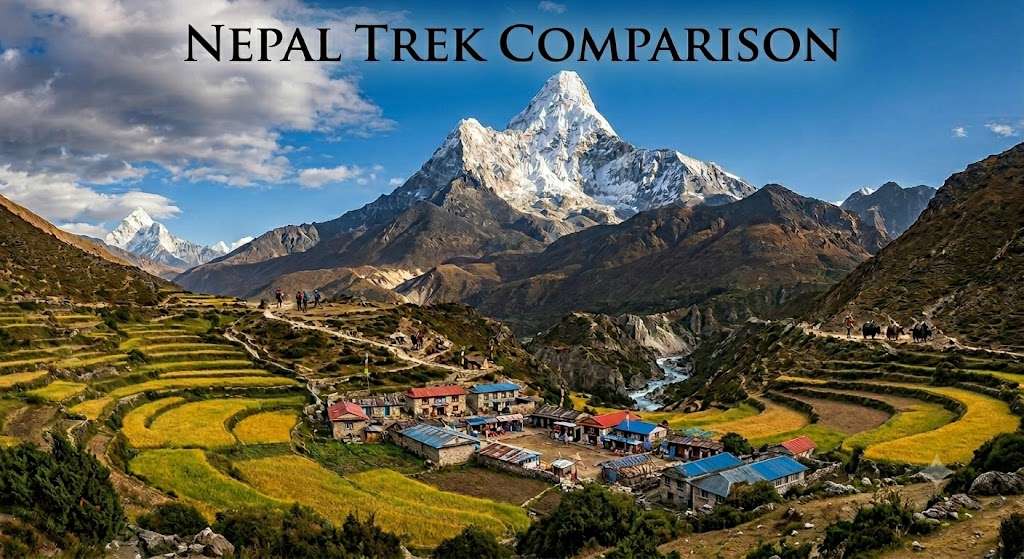
Choosing the right trek in Nepal can be overwhelming, especially when routes like Everest Base Camp, Annapurna Circuit, Annapurna Base Camp, Gokyo Lakes, and Manaslu all promise incredible Himalayan scenery. Each trek offers a different combination of mountain views, culture, altitude, difficulty, and trekking style, making it important to find the route that matches your experience level and travel goals.
This Nepal trek comparison guide breaks down the country’s most popular trekking routes side by side, comparing factors such as difficulty, altitude, duration, cost, scenery, crowd levels, and cultural experiences. By the end of this guide, you’ll know exactly which Himalayan adventure is the best fit for your budget, fitness level, and trekking expectations.
Everest Base Camp Trek vs Annapurna Base Camp Trek
The Everest Base Camp Trek and Annapurna Base Camp Trek are Nepal’s two most popular trekking adventures, but they deliver very different experiences. Everest Base Camp focuses on high-altitude landscapes, Sherpa culture, and the world’s highest mountain, while Annapurna Base Camp offers diverse scenery, lower altitude, and easier accessibility.
For first-time trekkers, Annapurna Base Camp is often the more comfortable choice due to its lower elevation and shorter itinerary. However, if standing beneath Mount Everest (8,848.86m) has always been on your bucket list, the Everest Base Camp Trek remains one of the world’s most iconic trekking experiences.
| Factor | Everest Base Camp Trek | Annapurna Base Camp Trek |
| Difficulty | Challenging | Moderate |
| Duration | 12–14 Days | 7–12 Days |
| Highest Elevation | 5,545m (18,192ft) | 4,130m (13,550ft) |
| Mountain Views | Everest, Lhotse, Nuptse, Ama Dablam | Annapurna I, Machhapuchhre, Hiunchuli |
| Accommodation | Traditional Teahouses | Teahouses & Lodges |
| Cost Range | Higher | Lower |
| Altitude Risk | High | Moderate |
| Cultural Experience | Sherpa Villages & Monasteries | Gurung & Magar Villages |
| Best For | Everest Dreamers | First-Time Trekkers |
Best for First-Time Nepal Trekkers
Annapurna Base Campis generally the better option for first-time trekkers because it combines stunning Himalayan scenery with a lower altitude and shorter itinerary. The trail is well-established, accommodation is comfortable, and altitude-related issues are less common than in the Everest region.
The Everest Base Camp Trek is better suited for trekkers who are prepared for longer hiking days and sustained altitude above 4,000 meters. While more demanding, the reward of reaching Everest Base Camp and viewing Everest from Kala Patthar makes the challenge worthwhile for many adventurers. For more detail, read ebc vs abc trekking.
Annapurna Circuit Trek vs Everest Base Camp Trek
The Annapurna Circuit Trekand Everest Base Camp Trek are often considered Nepal’s two classic long-distance trekking routes. Both offer incredible mountain scenery, but they differ significantly in terrain, culture, and overall trekking experience.
The Annapurna Circuit is known for its extraordinary landscape diversity, taking trekkers from subtropical valleys to high-altitude deserts and over Thorong La Pass (5,416m). Everest Base Camp focuses more on alpine environments, glaciers, and Sherpa culture throughout the Khumbu region.
| Factor | Annapurna Circuit Trek | Everest Base Camp Trek |
| Difficulty | Challenging | Challenging |
| Duration | 12–18 Days | 12–14 Days |
| Highest Point | Thorong La Pass (5,416m) | Kala Patthar (5,545m) |
| Landscape Diversity | Very High | Moderate |
| Cultural Variety | Gurung, Thakali, Tibetan Communities | Sherpa Culture |
| Cost | Moderate | Higher |
| Road Access | Partial | No Road Access |
| Altitude Exposure | Moderate | Extended High Altitude |
Which Trek Is Harder?
The Everest Base Camp Trek generally exposes trekkers to high altitude for a longer period, while the Annapurna Circuit’s biggest challenge is crossing Thorong La Pass. Many hikers find the single pass day on the Annapurna Circuit physically tougher, even though Everest maintains higher overall elevation exposure.
If altitude is your primary concern, the Annapurna Circuit may feel more manageable due to lower overnight elevations. If you prefer a gradual ascent profile and dream of Everest, the Everest Base Camp Trek remains an excellent choice. Also read is ebc hard difficulty guide.
Annapurna Base Camp Trek vs Annapurna Circuit Trek
The Annapurna Base Camp Trek and Annapurna Circuit Trek are two of Nepal’s most popular trekking routes, but they cater to different types of trekkers. Annapurna Base Camp delivers a shorter journey into the heart of the Annapurna Sanctuary, while the Annapurna Circuit offers a longer and more diverse adventure across multiple landscapes and cultural regions.
If you have limited time and want spectacular mountain views without extreme altitude, Annapurna Base Camp is often the better choice. If you’re looking for a classic Himalayan journey with varied scenery and a major high-pass crossing, the Annapurna Circuit provides a more comprehensive trekking experience.
| Factor | Annapurna Base Camp Trek | Annapurna Circuit Trek |
| Difficulty | Moderate | Challenging |
| Duration | 7–12 Days | 12–18 Days |
| Highest Elevation | 4,130m (13,550ft) | 5,416m (17,769ft) |
| Landscape Variety | Moderate | Very High |
| Cost | Lower | Moderate |
| Altitude Risk | Lower | Higher |
| Accommodation | Excellent | Excellent |
| Cultural Experience | Gurung Villages | Gurung, Thakali & Tibetan Culture |
| Best For | Short Treks | Long-Distance Treks |
Which Annapurna Trek Is Better?
The Annapurna Base Camp Trek is ideal for travelers who want maximum mountain scenery in a shorter timeframe. The trek offers close-up views of Annapurna I (8,091m), Machhapuchhre (6,993m), and surrounding peaks while remaining accessible to most reasonably fit hikers.
The Annapurna Circuit Trek is better suited to trekkers seeking variety and adventure. From subtropical valleys and traditional villages to high-altitude deserts and Thorong La Pass, the route showcases some of Nepal’s most diverse landscapes in a single itinerary.
Everest Base Camp Trek vs Gokyo Lakes Trek
The Everest Base Camp Trek and Gokyo Lakes Trek both explore Nepal’s Khumbu region, but they provide very different experiences. Everest Base Camp focuses on reaching the base of the world’s highest mountain, while Gokyo Lakes offers quieter trails, turquoise glacial lakes, and some of the best viewpoints in the Everest region.
Many experienced trekkers consider Gokyo Ri one of the finest viewpoints in Nepal due to its panoramic views of Everest, Lhotse, Makalu, and Cho Oyu. However, Everest Base Camp remains the ultimate bucket-list destination for those wanting to stand beneath Mount Everest.
| Factor | Everest Base Camp Trek | Gokyo Lakes Trek |
| Difficulty | Challenging | Moderate to Challenging |
| Duration | 12–14 Days | 11–14 Days |
| Crowds | High | Moderate |
| Highest Elevation | 5,545m (18,192ft) | 5,357m (17,575ft) |
| Unique Feature | Everest Base Camp | Gokyo Lakes & Gokyo Ri |
| Glacier Views | Khumbu Glacier | Ngozumpa Glacier |
| Mountain Views | Excellent | Excellent |
| Best For | Everest Experience | Scenery & Fewer Crowds |
Is Gokyo Lakes Better Than Everest Base Camp?
Gokyo Lakes is often considered the better choice for trekkers seeking quieter trails and more varied scenery. The emerald-blue lakes, vast glaciers, and panoramic summit views create a unique experience that differs from the traditional Everest Base Camp route.
Everest Base Camp remains unmatched for iconic status and historical significance. For many travelers, reaching the famous base camp beneath Everest is a lifelong goal that outweighs the benefits of lower crowds elsewhere in the region.
Everest Base Camp Trek vs Three Passes Trek
The Everest Three Passes Trek is an extended version of the Everest Base Camp Trek that adds three high-altitude mountain passes to create one of Nepal’s most demanding trekking adventures. While Everest Base Camp follows a straightforward route, Three Passes offers a complete circuit through the Khumbu region.
Trekkers choosing the Three Passes route experience more remote valleys, fewer crowds, and additional viewpoints. However, the increased altitude exposure and longer duration require stronger fitness and previous trekking experience.
| Factor | Everest Base Camp Trek | Three Passes Trek |
| Difficulty | Challenging | Very Challenging |
| Duration | 12–14 Days | 18–21 Days |
| Highest Elevation | 5,545m (18,192ft) | 5,535m+ Passes |
| Altitude Exposure | High | Very High |
| Route Complexity | Moderate | High |
| Crowds | High | Lower |
| Experience Needed | Good Fitness | Previous Trekking Experience |
| Best For | First Everest Trek | Experienced Trekkers |
Who Should Choose the Three Passes Trek?
The Three Passes Trek is best suited for experienced hikers who want to explore every corner of the Everest region. Crossing Kongma La, Cho La, and Renjo La provides some of Nepal’s most spectacular mountain scenery and a greater sense of adventure.
For first-time visitors to the Everest region, the standard Everest Base Camp Trek is usually the smarter choice. It offers the iconic Everest experience with lower physical demands and a more straightforward itinerary.
Everest Region vs Annapurna Region
The Everest and Annapurna regions are Nepal’s two most popular trekking destinations, attracting thousands of trekkers each year. While both offer incredible Himalayan scenery and well-developed trekking infrastructure, they differ significantly in accessibility, cost, altitude, and overall trekking experience.
The Everest region is famous for its connection to Mount Everest (8,848.86m) and Sherpa culture, while the Annapurna region is known for its diverse landscapes, comfortable teahouses, and wider variety of trekking options. Choosing between them depends largely on your budget, fitness level, and trekking goals.
| Factor | Everest Region | Annapurna Region |
| Cost | Higher | Lower |
| Accessibility | Flight to Lukla Required | Road Access Available |
| Altitude | Higher | Moderate to High |
| Trek Variety | Moderate | Extensive |
| Tea House Quality | Good | Excellent |
| Crowds | Very High | High |
| Cultural Experience | Sherpa Culture | Gurung, Magar & Thakali Culture |
| Best For | Everest Dreams | Variety & Flexibility |
Which Region Is Better for Most Trekkers?
The Annapurna region is often the better choice for first-time visitors because it offers a wider range of itineraries, lower overall costs, and easier logistics. Treks such as Annapurna Base Camp, Mardi Himal, and the Annapurna Circuit cater to different fitness levels and travel schedules.
The Everest region remains unmatched for iconic mountain scenery and the opportunity to trek beneath the world’s highest peak. For travelers whose primary goal is experiencing Everest and Sherpa culture, the extra cost and logistical challenges are usually worthwhile. Regardless of the region you choose, planning your trip during the best time to trek in Nepal is essential for a safe and successful journe
How to Choose the Right Trek in Nepal
Choosing the right trek in Nepal depends on your available time, fitness level, altitude tolerance, and travel preferences. Some routes prioritize mountain scenery and high-altitude adventure, while others focus on cultural immersion, remote landscapes, or shorter trekking experiences.
Before booking any trek, consider how many days you have available, your previous hiking experience, and whether you prefer comfortable teahouses or remote wilderness trails. Exploring a list of the best treks in Nepal and matching your expectations to the right route will significantly improve your overall trekking experience.
Based on Available Time
Time is often the biggest factor when selecting a trek in Nepal. Short itineraries such as Mardi Himal and Langtang Valley can be completed in less than ten days, while routes like Manaslu Circuit and Kanchenjunga Base Camp require two to three weeks.
Trekkers with limited vacation time usually benefit from choosing accessible routes near Kathmandu or Pokhara. Those with longer schedules can explore more remote regions that provide deeper cultural experiences and fewer crowds.
Based on Altitude Comfort
Altitude plays a major role in the difficulty of any Himalayan trek. Routes such as Annapurna Base Camp and Mardi Himal stay below 4,500 meters, making them suitable for trekkers concerned about altitude sickness.
Everest Base Camp, Gokyo Lakes, Three Passes, and Manaslu Circuit involve prolonged exposure above 5,000 meters. These treks require careful acclimatization and are generally better suited to travelers comfortable with high-altitude environments.
Based on Comfort and Facilities
The Annapurna region offers some of Nepal’s most comfortable trekking infrastructure, with a wide range of lodges, dining options, and accommodation standards. This makes it particularly attractive to first-time trekkers and those seeking a more comfortable experience.
The Everest region also has excellent facilities, though prices increase significantly at higher elevations. Remote routes such as Manaslu and Kanchenjunga provide a more rugged experience with fewer amenities and simpler accommodations.
Based on Wilderness and Solitude
Trekkers seeking quieter trails should consider destinations beyond Nepal’s most famous routes. Regions such as Manaslu, Kanchenjunga, Upper Mustang, and Ruby Valley offer a stronger sense of exploration and fewer crowds throughout the trekking season.
Popular routes such as Everest Base Camp and Annapurna Base Camp remain busy during spring and autumn. While the infrastructure is excellent, travelers looking for solitude may prefer lesser-known alternatives.
Expert Recommendations From Local Guides
Local trekking guides spend hundreds of days each year on Nepal’s trails and often have unique insights that go beyond standard guidebooks. Their experience can help trekkers choose routes that match their fitness, interests, and expectations.
These recommendations are based on common advice shared by experienced Himalayan guides who regularly lead treks across Nepal’s major trekking regions.
Insider Tip 1: Best Trek for First-Time Visitors
Annapurna Base Camp is often the best choice for first-time trekkers because it offers spectacular Himalayan scenery without extreme altitude. The route combines accessible trails, comfortable accommodation, and a manageable trekking duration.
Many guides recommend ABC as an introduction to Nepal trekking before attempting more demanding routes such as Everest Base Camp or Manaslu Circuit.
Insider Tip 2: Best Hidden Gem Trek
Ruby Valley Trek remains one of Nepal’s most underrated trekking experiences. Located between Langtang and Manaslu, it offers authentic village life, homestays, and stunning Ganesh Himal views without the crowds found on more popular routes.
The combination of culture, scenery, and community-based tourism makes Ruby Valley a favorite recommendation among local guides seeking a more authentic trekking experience.
Insider Tip 3: Best Trek for Photography
The Gokyo Lakes Trek provides some of Nepal’s most photogenic landscapes, combining turquoise glacial lakes, massive glaciers, and panoramic Himalayan viewpoints. Sunrise from Gokyo Ri is often considered one of the finest photography opportunities in the country.
Autumn and spring typically provide the clearest conditions for landscape photography throughout the Everest region.
Insider Tip 4: Best Cultural Trek
Upper Mustang offers one of the richest cultural experiences in Nepal due to its preserved Tibetan heritage and centuries-old traditions. Ancient monasteries, cave settlements, and traditional villages create a unique cultural journey.
Travelers interested in history, religion, and Himalayan culture often find Upper Mustang more rewarding than routes focused primarily on mountain scenery.
Insider Tip 5: Best Trek for Returning Visitors
The Everest Three Passes Trek is often recommended to trekkers who have already completed Everest Base Camp and want a more challenging adventure. The route explores remote valleys, high passes, and lesser-visited sections of the Khumbu region.
For experienced hikers, it provides a deeper and more comprehensive exploration of Nepal’s most famous trekking destination.
Common Mistakes When Choosing a Trek in Nepal
Many trekkers select a route based solely on popularity without considering factors such as altitude, duration, fitness requirements, and trekking style. While Nepal’s famous trails are incredible, choosing the wrong trek for your experience level can make the journey more challenging than expected.
Understanding the most common planning mistakes can help you select a route that matches your goals, physical ability, and travel expectations. A well-chosen itinerary often leads to a safer, more enjoyable Himalayan adventure.
Mistake 1: Choosing Based Only on Popularity
Many travelers automatically choose Everest Base Camp because it is Nepal’s most famous trek. While the route is exceptional, it may not be the best fit for every trekker, especially those with limited time or concerns about altitude.
Nepal offers many alternatives such as Annapurna Base Camp, Langtang Valley, Mardi Himal, and Ruby Valley that provide stunning scenery with different levels of difficulty and commitment. The best trek is not always the most popular one.
Mistake 2: Ignoring Altitude Requirements
Altitude is one of the most important factors when planning a Himalayan trek. Routes that exceed 5,000 meters require proper acclimatization and carry a higher risk of altitude sickness compared to lower-elevation treks.
Trekkers who underestimate altitude often struggle more than expected, regardless of their physical fitness. Understanding maximum elevations and acclimatization requirements is essential when choosing the right route.
Mistake 3: Underestimating Trek Duration
Some travelers focus only on the number of trekking days without considering transportation, acclimatization, and weather-related delays. A 14-day trek often requires additional buffer days before and after the journey.
Planning too tightly can create unnecessary stress, particularly on routes that involve domestic flights or long mountain road journeys. Allowing extra time provides greater flexibility and a more enjoyable experience.
Mistake 4: Choosing the Wrong Season
Even the best trekking route can be disappointing if visited during unfavorable weather conditions. Mountain visibility, trail conditions, and temperatures vary significantly throughout the year.
Spring and autumn remain the most reliable seasons for most trekking regions. Choosing a trek that matches the season often has a greater impact on the experience than the route itself.
Mistake 5: Overlooking Local Expertise
Some trekkers spend weeks researching online but overlook the value of local guides who know the trails, weather patterns, and cultural customs firsthand. Their knowledge can help travelers avoid common mistakes and improve safety.
Experienced local guides can also recommend alternative routes, hidden viewpoints, and cultural experiences that are often missed by independent travelers. Their insights frequently enhance the overall trekking experience.
Why Trek With Wilderway Trekking?
Choosing the right trekking company is just as important as choosing the right trekking route. Local expertise, safety standards, and responsible tourism practices can significantly influence the quality of your Himalayan adventure.
Wilderway Trekking combines local knowledge with personalized service to help travelers experience Nepal’s mountains safely, responsibly, and authentically.
Local Guides With Real Himalayan Experience
Wilderway Trekking works with experienced Nepali guides who have extensive knowledge of the country’s trekking routes, mountain conditions, and local cultures. Their expertise helps create safer and more meaningful trekking experiences.
Guides also provide valuable insights into village life, cultural traditions, and lesser-known viewpoints that many trekkers would otherwise miss.
Safety Comes First
Trekking in the Himalayas requires careful planning and risk management, especially on high-altitude routes. Wilderway Trekking prioritizes safety through proper acclimatization schedules, trained guides, and ongoing trail monitoring.
From route planning to emergency preparedness, every itinerary is designed to balance adventure with responsible decision-making.
Small Groups and Personalized Service
Smaller group sizes allow for a more flexible and enjoyable trekking experience. Guides can better support individual needs while creating stronger connections between travelers and local communities.
Whether you are joining a classic Everest Base Camp Trek or exploring a remote destination like Ruby Valley, personalized attention helps ensure a memorable journey.
Customized Trekking Itineraries
Every traveler has different goals, fitness levels, and interests. Wilderway Trekking offers customized itineraries that can be tailored to match your schedule, experience, and preferred trekking style.
From luxury lodge treks to remote wilderness adventures, flexible planning allows travelers to create a Himalayan experience that suits them best.
Final Thoughts
Nepal offers an extraordinary range of trekking experiences, from the legendary Everest Base Camp Trek and Annapurna Circuit Trek to quieter adventures in Ruby Valley, Upper Mustang, and Kanchenjunga. The best trek is ultimately the one that matches your fitness level, available time, travel style, and personal goals.
If you’re still deciding which route is right for you, speaking with experienced local guides can help narrow your options. Whether you are looking for luxury expeditions or affordable trekking in nepal, our experts can help you compare itineraries, understand permit requirements, and choose the Himalayan adventure that best fits your experience and expectations.
Frequently Asked Questions About Trekking in Nepal
Which trek is best if I have only one week in Nepal?
If you have limited time, the Mardi Himal Trek and Langtang Valley Trek are excellent options. Both can be completed within 5–10 days while still offering beautiful Himalayan scenery and cultural experiences.
Which trek in Nepal has the best combination of culture and mountain views?
The Everest Base Camp Trek, Manaslu Circuit Trek, and Upper Mustang Trek combine spectacular mountain scenery with rich local cultures, traditional villages, and ancient monasteries.
Is Everest Base Camp Trek harder than Annapurna Base Camp Trek?
Yes, the Everest Base Camp Trek is generally more challenging because it reaches higher altitudes, involves longer trekking days, and requires more acclimatization than the Annapurna Base Camp Trek.
Which trekking region is better for first-time visitors, Everest or Annapurna?
The Annapurna region is often better for first-time visitors because it offers easier logistics, lower costs, diverse trekking options, and moderate-altitude routes suitable for different fitness levels.
What is the best trek in Nepal for avoiding crowds?
The Ruby Valley Trek, Manaslu Circuit Trek, Upper Mustang Trek, and Kanchenjunga Base Camp Trek are ideal for trekkers seeking quieter trails and a more remote Himalayan experience.
Which trek in Nepal is best for photography?
The Gokyo Lakes Trek is one of the best treks for photography, thanks to its turquoise lakes, glaciers, and panoramic views of Everest, Lhotse, Makalu, and Cho Oyu.
How do I choose the right trek in Nepal?
Choose a trek based on your available time, fitness level, altitude comfort, budget, and travel interests. Shorter treks like Annapurna Base Camp and Mardi Himal suit beginners, while longer routes like Manaslu and Three Passes are better for experienced trekkers.
What is the best season to trek in Nepal?
Spring (March to May) and Autumn (September to November) are the best trekking seasons in Nepal, offering stable weather, clear mountain views, comfortable temperatures, and safer trail conditions.