

- 147 Views
- 30 Min Read
- (0) Comment
Have you ever wondered what it actually feels like to stand in a natural amphitheater completely surrounded by some of the highest mountains on the planet? Most people think trekking in Nepal is just a nice walk in the park with pretty views, but honestly, it tests your limits in ways you never expect. You will sweat buckets, your legs will scream on the endless stone steps, and you might even question your life choices at 4,000 meters.
In this blog, we are diving deep into the Annapurna Base Camp trek to give you the ultimate, no-nonsense guide to this incredible journey. We will cover everything from the day-by-day itinerary and real cost breakdowns to the actual difficulty level, packing lists, and hidden tips that most companies won’t tell you. Whether you are a complete beginner or a seasoned hiker, this guide has everything you need to plan your adventure.
What is the Annapurna Base Camp Trek?
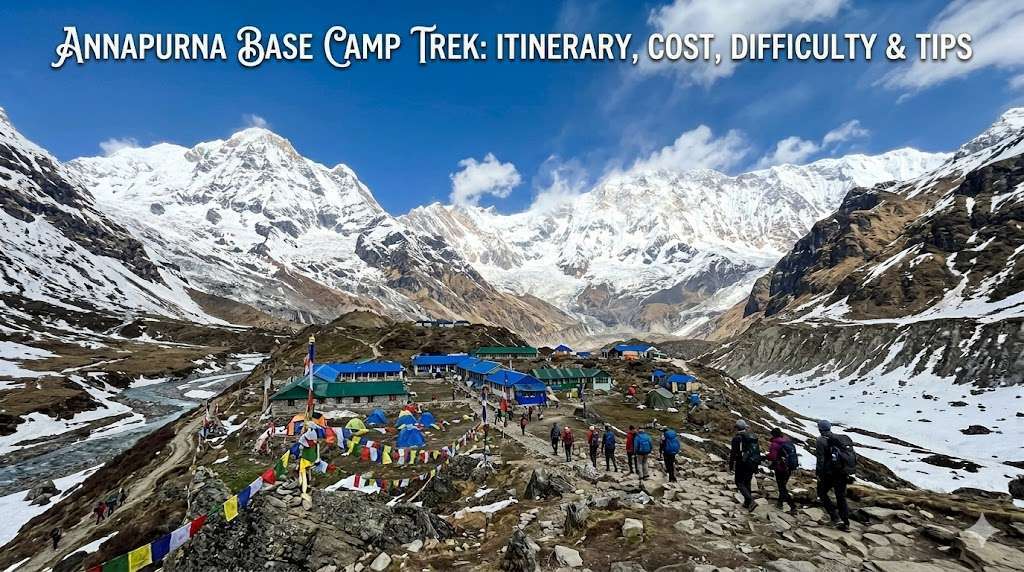
The Annapurna Base Camp trek is a breathtaking high-altitude hike in Nepal that takes you deep into the Annapurna Sanctuary, a massive natural amphitheater surrounded by towering snow-capped peaks. The trail winds through lush green rhododendron forests, terraced farms, and traditional Gurung villages before opening up to an incredible 360-degree mountain panorama at an altitude of 4,130 meters.
Unlike the Everest region, this journey does not require scary flights to extreme altitudes, making it much more accessible for regular hikers. You only need the Annapurna Conservation Area Permit and a TIMS card to walk the trail. The standard itinerary takes about 7 to 11 days, depending on your starting point and walking pace, offering a perfect blend of physical challenge and cultural immersion.
Why Should You Do the Annapurna Base Camp Trek?
You should do the Annapurna Base Camp trek because it offers the most dramatic mountain views in Nepal without pushing your body to dangerous extreme altitudes. Standing at the base of Machapuchare, Annapurna I, and Hiunchuli feels like you are completely swallowed by giant walls of ice and rock. The sunrise hitting the snow peaks here creates a golden glow that will literally give you goosebumps.
Beyond the mountains, the real magic lies in the warm hospitality of the local Gurung and Magar communities. You will sleep in cozy tea houses, eat endless plates of dal bhat, and learn about mountain traditions that have survived for centuries. Walking through the bamboo and moss-covered forests with the sound of bell-wearing mules just adds a surreal, peaceful vibe to the whole adventure.
When is the Best Time for the Annapurna Base Camp Trek?
The best time for the Annapurna Base Camp Trek is during autumn (October and November) and spring (March to May). These seasons offer stable weather, clear mountain views, comfortable temperatures, and the safest trail conditions. Whether you want crystal-clear Himalayan panoramas or blooming rhododendron forests, these months provide the best overall trekking experience.
Although the trek is possible for most of the year, each season has its own advantages and challenges. Choosing the right time depends on your priorities, whether that’s fewer crowds, colorful landscapes, snowy scenery, or the best weather.
Autumn (September–November)
Autumn is the most popular trekking season in Nepal and is widely considered the ideal time for the Annapurna Base Camp Trek. After the monsoon rains, the air becomes clean and dry, creating exceptional visibility of Annapurna I, Machhapuchhre, Hiunchuli, and the surrounding Himalayan peaks.
October and November bring stable weather, comfortable daytime temperatures, and dry trails, making them excellent months for trekking. While nights become colder at higher elevations, the clear skies and reliable conditions make autumn the first choice for many trekkers.
Spring (March–May)
Spring is another outstanding season for the Annapurna Base Camp Trek. The hillsides come alive with blooming rhododendron forests, adding vibrant shades of red, pink, and white to the trail. Pleasant daytime temperatures and generally clear mornings create ideal trekking conditions.
April is often considered the highlight of the spring season because it combines colorful landscapes with excellent mountain views. May remains a great option, although temperatures gradually become warmer as summer approaches.
Monsoon (June–August)
The monsoon season brings frequent rainfall, muddy trails, and reduced mountain visibility. Leeches are common in the lower forested sections, and afternoon showers can make trekking more challenging.
Despite these conditions, the Annapurna region becomes incredibly green and peaceful. Trekkers who don’t mind occasional rain can enjoy fewer crowds, but flexible travel plans are recommended due to changing weather.
Winter (December–February)
Winter offers quiet trails, snow-covered landscapes, and crisp mountain views on clear days. However, temperatures drop well below freezing near Annapurna Base Camp, and snowfall can make higher sections of the trail more challenging.
With proper winter clothing and an experienced guide, many trekkers still complete the route successfully. Those seeking solitude often find winter to be a rewarding time to visit.
Local Guide Recommendation
Our local guides recommend planning your Annapurna Base Camp Trek during April, October, or November for the most reliable weather and the clearest mountain views. These months typically offer stable trail conditions, comfortable daytime temperatures, and excellent visibility of Annapurna I, Machhapuchhre, Hiunchuli, and the surrounding peaks.
If you prefer quieter trails, consider trekking in March, May, or late November, when visitor numbers are lower but conditions remain favorable. Regardless of the season, starting your trek early each morning gives you the best chance of clear skies, while following a gradual pace and staying well hydrated helps you enjoy the journey safely from start to finish.
How Do You Prepare for the Annapurna Base Camp Trek?
You prepare for the Annapurna Base Camp trek by building your cardiovascular endurance and leg strength at least two to three months before your departure. Start doing daily hikes on local hills, walking up stairs, and doing exercises like squats and lunges to strengthen your thighs and calves. Since you will be walking five to six hours a day, getting your feet used to your hiking boots is absolutely crucial.
Mental preparation is just as important because the long days, basic toilets, and cold nights can really test your patience. Practice packing light, because carrying a heavy backpack will drain your energy fast on the steep stone stairs. Many trekkers also read up on altitude sickness prevention, learning to recognize early symptoms like headaches and nausea so they can react properly on the trail.
Where Does the Annapurna Base Camp Trek Start and End?
The Annapurna Base Camp trek starts from Nayapul, which is a scenic one-and-a-half-hour drive from the beautiful lakeside city of Pokhara. From Nayapul, you cross a suspension bridge over the Modi Khola river and begin walking through small villages like Tikhedhunga and Ulleri. The journey slowly climbs through lush valleys until you reach the final destination at the base of Annapurna I.
The trek ends by retracing your steps back down to Nayapul, or alternatively, you can take a longer route down to Jhinu Danda to relax in the natural hot springs. Once you arrive back at the trailhead, a private jeep or local bus takes you back to Pokhara. Most itineraries include a rest day in Pokhara at the end to celebrate with good food.
The Complete 10-Day Itinerary Breakdown
Planning your days properly is the most important part of hiking in the Himalayas. If you rush, you will get sick. If you go too slow, you might run out of vacation days. Here is the most balanced and widely recommended 10-day schedule that gives your body enough time to adapt to the thin air while keeping the daily walking hours totally manageable for a fit beginner.
Day 1: Pokhara to Nayapul, Drive to Tikhedhunga
Your adventure begins with a bumpy but beautiful drive from Pokhara to Nayapul in a private jeep. After sorting out your permits at the checkpoint, you cross the Modi Khola river and start walking. The first day is surprisingly warm as you pass through small roadside shops and waterfalls. You will reach Tikhedhunga in about 3 to 4 hours. It is an easy day, mostly designed to get your legs moving and shake off the travel fatigue. You sleep at a low altitude tonight, so you will feel totally fine.
Day 2: Tikhedhunga to Ghorepani
This is arguably the hardest day of the entire journey because you have to climb the infamous Ulleri stairs. We are talking about 3,000 plus steep stone steps going straight up the mountain. It is brutal on your knees and thighs, and you will definitely need to take a lot of breaks. The trail goes through dense, shaded forests, and when you finally drag yourself into Ghorepani, the cool air and cozy tea houses are a massive relief. Ghorepani is a big village with lots of accommodation options, but it gets very cold at night here.
Day 3: Ghorepani to Poon Hill to Tadapani
You will wake up around 4:00 AM in the pitch dark to hike up to Poon Hill for sunrise. It takes about 45 minutes to reach the top, and it is incredibly crowded, but the view is worth every single step. You can see Dhaulagiri, Annapurna South, Machapuchare, and Hiunchuli all lighting up in shades of orange and pink. After coming back down for breakfast, the real walk begins. You hike up to Deurali pass and then descend through a magical, mossy forest filled with rhododendrons and bamboo before reaching Tadapani.
Day 4: Tadapani to Chhomrong
The walk from Tadapani to Chhomrong is a beautiful ridge walk with glimpses of the mountains peeking through the trees. You will eventually descend down into a deep valley, cross a long suspension bridge, and then climb all the way back up the other side to reach Chhomrong. Chhomrong is the last permanent settlement on the trail and a major gateway to the sanctuary. It is perched on a hillside and offers stunning views of Machapuchare (the fishtail mountain). Make sure to charge your power banks here, as electricity gets very sparse from this point forward.
Day 5: Chhomrong to Bamboo
Today you drop drastically in altitude, which feels weird after climbing for days. You go down, down, down into the deep Chhomrong valley, crossing the river at the very bottom. After crossing the river, the landscape changes completely. You enter a deep, dark, and incredibly lush bamboo forest. The trail is relatively flat but can feel a bit gloomy if it is cloudy. Bamboo is basically a small cluster of tea houses right by the river, and the sound of the rushing water will put you to sleep instantly.
Day 6: Bamboo to Deurali (or Himalaya)
Leaving the bamboo forests behind, the valley starts to narrow dramatically, and the cliffs begin to close in around you. This is where you truly feel like you are entering a secret world. You will pass through a tiny settlement called Himalaya, which has a few basic tea houses. As you climb higher toward Deurali, the vegetation starts to disappear, replaced by rocky terrain and scrubby bushes. The air gets noticeably thinner here, so walk slow and drink plenty of water. This is the point where you really need to start paying attention to how your body feels regarding altitude.
Day 7: Deurali to Machapuchare Base Camp to Annapurna Base Camp
This is the big day. You will wake up early and push toward Machapuchare Base Camp, which is a stunning, flat area right at the foot of the sacred fishtail mountain. After a short rest here, you continue hiking up the lateral moraine of the Annapurna glacier. The trail is rocky and winding, and the altitude makes every step feel heavy. When you finally round the last corner and ABC comes into view, it is literally jaw-dropping. You are surrounded by a massive circle of giant peaks and glaciers. It is freezing cold, but the sheer scale of the mountains makes you forget everything else.
Day 8: Acclimatization and Exploration Day at ABC
Waking up at 4,130 meters is a surreal experience. The sunrise here is legendary. As the sun hits the tent peaks of the surrounding glaciers, the ice turns gold, pink, and then blinding white. Because you spent the energy to get here, it is highly recommended to spend a full day at base camp to let your body adjust and to soak in the views. You can do a short hike up to the actual glacier viewpoint, take a thousand photos, or just sit in the dining hall drinking hot chocolate and talking to other trekkers from around the world.
Day 9: Annapurna Base Camp to Bamboo
After the magical morning, it is time to head back down. Descending is physically easier on your lungs, but it can be absolute torture on your knees and toes. The descent from ABC to Bamboo is long, dropping over 2,500 meters in a single day. You will retrace your steps through the rocky moraine, back into the narrow valley, and finally back into the welcoming green bamboo forests. By the time you reach Bamboo, your legs will be jelly, but the warmer air and thicker oxygen will make you feel incredibly refreshed.
Day 10: Bamboo to Jhinu Danda (Hot Springs)
You have a tough climb out of the bamboo valley back up to Chhomrong, but once you conquer that, the hardest part is officially over. Instead of going back to Nayapul, you take a side trail down to Jhinu Danda. This village is famous for its natural hot springs located a 20-minute hike below the main trail. After 10 days of sweating and not having a proper shower, sitting in these steaming hot pools next to a freezing cold river is the greatest feeling in the world. It is the perfect way to celebrate the end of your journey.
📅 Book Your Annapurna Base Camp Trek Now
How Difficult Is the Annapurna Base Camp Trek?
The Annapurna Base Camp Trek is a moderate trek that most healthy and reasonably fit people can complete with proper preparation. Although the trail does not require technical climbing or mountaineering experience, it includes long days of walking, thousands of stone steps, and a highest elevation of 4,130m. Good fitness, steady pacing, and gradual acclimatization are the keys to enjoying the trek.
Many first-time trekkers successfully complete the Annapurna Base Camp Trek every year. The challenge comes from the combination of daily walking hours, continuous ascents and descents, and higher elevations rather than difficult terrain. With the right mindset and preparation, it is one of Nepal’s most rewarding Himalayan adventures.
Trail Difficulty
The Annapurna Base Camp Trek follows well-marked trails through villages, forests, and mountain valleys, making navigation straightforward. However, the route is physically demanding because of the constant elevation changes and long sections of stone staircases.
One of the toughest sections is the steep climb to Ulleri, where hundreds of stone steps test your endurance early in the trek. Another challenging part is the long ascent and descent around Chhomrong, followed by continuous uphill walking toward Machhapuchhre Base Camp and Annapurna Base Camp. The return journey can also be tiring, as the steep downhill sections put extra strain on your knees and leg muscles.
Fitness Requirements
You do not need to be an athlete to complete the Annapurna Base Camp Trek, but a reasonable level of fitness makes the journey much more enjoyable. Preparing with regular walking, stair climbing, hiking, or cardio exercises for several weeks before your trip will help build the stamina needed for consecutive trekking days.
The trek is suitable for beginners who are active and willing to train, while intermediate and experienced hikers usually find it comfortably manageable. Regardless of your experience, walking at a slow, steady pace and taking regular breaks is the best way to conserve energy and reduce fatigue throughout the trek.
Daily Walking Hours
| Trekking Day | Average Walking Hours |
|---|---|
| Easy | 4–5 Hours |
| Moderate | 5–6 Hours |
| Challenging | 6–8 Hours |
Difficulty Compared to Other Nepal Treks
| Trek | Difficulty |
|---|---|
| Ghorepani Poon Hill Trek | Easy |
| Annapurna Base Camp Trek | Moderate |
| Everest Base Camp Trek | Moderate–Challenging |
| Manaslu Circuit Trek | Challenging |
| Three Passes Trek | Very Challenging |
Day-by-Day Altitude Profile and Acclimatization
Understanding how the altitude changes is critical for your safety. The golden rule of high-altitude hiking is to climb high, but sleep low, and to never sleep more than 500 meters higher than the previous night when you are above 3,000 meters.
- Days 1 to 4 (Pokhara to Chhomrong): You are sleeping at altitudes between 1,500 meters and 2,100 meters. Your body will feel completely fine. The air is thick, and you will hardly notice the elevation.
- Days 5 to 6 (Bamboo to Deurali): You drop down to 2,300 meters at Bamboo, which actually helps your body reset. When you climb to Deurali (3,200 meters), this is where the air starts to thin. You might notice a slight headache or shortness of breath here.
- Day 7 (ABC): You jump from 3,200 meters to 4,130 meters. This is a massive jump and the most dangerous day for altitude sickness. Because you are just going up to sleep, you must pay close attention to your body. If you have a severe headache, vomiting, or loss of balance, you must descend immediately. Do not try to push through it.
Most standard itineraries do not include an extra acclimatization day before ABC, which is why walking at a snail’s pace on Day 7 is non-negotiable. Taking an extra rest day at Chhomrong or Bamboo is a great idea if you have the time and want to be extra safe.
The True Cost Breakdown for 2024
One of the best things about hiking in Nepal is that it can be done on almost any budget. Unlike climbing Kilimanjaro or doing the Inca Trail, where you have to pay thousands for a mandatory guided package, you have the freedom to do this independently or through an agency. Let’s break down the real costs so you know exactly what to expect.
Permits
You absolutely cannot do this hike without two permits. The Annapurna Conservation Area Permit (ACAP) costs about 3,000 Nepali Rupees (roughly $25 USD). The Trekkers’ Information Management System (TIMS) card costs about 2,000 NPR ($15 USD) if you are going independently through the Nepal Tourism Board, or 1,000 NPR if you are going with a registered agency. You must bring cash and passport photos for these.
Food and Accommodation
The tea houses are surprisingly cheap to sleep in, often costing between 200 to 500 NPR ($2 to $4 USD) per night. However, the real cost comes from food. Because everything has to be carried up the trail by porters or mules, the price of food increases the higher you go. A plate of dal bhat (rice and lentils) costs about 500 NPR at the bottom, but can cost up to 1,200 NPR ($10 USD) at base camp. You should budget about $30 to $40 USD per day for three meals and hot drinks.
Guide and Porter Costs
While you can hike alone, hiring help is highly recommended. A licensed guide costs about $25 to $35 USD per day. A porter (who carries up to 18kg of your gear) costs about $20 to $25 USD per day. You also need to pay for their food, accommodation, insurance, and their flights or transport. Tipping is expected at the end of the trip, usually about 10% of their total cost.
Transport and Gear
Getting from Kathmandu to Pokhara costs about $15 for a local bus, $25 for a tourist bus, or $100+ for a flight. From Pokhara to Nayapul, a jeep costs about $15 to $25 shared. If you need to buy or rent gear in Pokhara, a sleeping bag costs about $1 to $2 per day to rent, and a down jacket is about the same.
Total Budget Estimate:
- Budget (Fully independent): $500 – $700 USD
- Standard (Guide + Porter): $800 – $1,200 USD
- Luxury (Private jeep, premium rooms): $1,500+ USD
What Permits Are Required for the Annapurna Base Camp Trek?
The Annapurna Base Camp Trek requires two permits: the Annapurna Conservation Area Permit (ACAP) and the Trekkers’ Information Management System (TIMS) Card, depending on current Nepal Tourism Board regulations. These permits are mandatory for entering the Annapurna Conservation Area and help support conservation efforts, trail maintenance, and trekker safety.
Obtaining your permits before starting the trek is important because there are several checkpoints along the route where officials verify your documents. If you are trekking with a registered company like Wilderway Trekking, we arrange all required permits before your adventure begins, allowing you to focus entirely on enjoying the journey.
Annapurna Base Camp Trek Permit Costs
| Permit | Cost |
|---|---|
| Annapurna Conservation Area Permit (ACAP) | NPR 3,000 (Approx. USD 22–25) |
| TIMS Card* | As per current Nepal Tourism Board regulations |
*TIMS requirements may vary depending on your trekking arrangements and the latest government policies.
Why Is the ACAP Permit Required?
The ACAP permit allows trekkers to enter the Annapurna Conservation Area, Nepal’s largest protected conservation region. Revenue collected from permit fees helps fund trail maintenance, environmental conservation, wildlife protection, waste management, and community development projects throughout the Annapurna region.
Why Is the TIMS Card Required?
The TIMS Card was introduced to improve trekker safety and maintain accurate records of visitors in Nepal’s trekking regions. It helps authorities monitor trekking activity and supports emergency response during natural disasters, severe weather, or rescue operations.
Where Can You Get the Permits?
You can obtain the required permits before your trek at:
- Nepal Tourism Board Office in Kathmandu
- ACAP Office in Pokhara
- Through a registered trekking agency
Most trekkers choose to arrange permits through their trekking company, which saves time and ensures all paperwork is completed correctly before the trek begins.
Documents Required
Before applying for your permits, make sure you have:
- A valid passport
- Passport-sized photographs
- Nepal visa
- Permit application details
- Trekking itinerary (if required)
We recommend arranging all permits before arriving at the trailhead to avoid unnecessary delays. When you book your Annapurna Base Camp Trek with Wilderway Trekking, our team handles the permit process on your behalf, ensuring everything is ready before your Himalayan adventure begins.
Accommodation and Food: What to Really Expect
If you are expecting luxury hotels, you are in for a shock. The accommodation along the route consists of basic tea houses, which are essentially local family homes that have been converted into guesthouses.
The rooms are incredibly basic. You will get a small room with two single beds. The beds usually have a thin foam mattress and a blanket, but you absolutely must bring your own sleeping bag because the blankets are rarely washed and are not warm enough for the freezing nights at base camp. The walls are usually thin plywood, meaning you will hear everything your neighbors are doing. Bathrooms are almost always shared, and they are squat toilets. Toilet paper is rarely provided, so you must bring your own and carry it in a small ziplock bag to throw away later, never throw toilet paper down the holes in the mountains.
When it comes to food, the menus are surprisingly massive, featuring everything from pizza and pasta to momos and spring rolls. But here is the secret: do not order the fancy western food. The ingredients are not fresh, and it will just give you an upset stomach. Stick to the local food. Dal Bhat (lentil soup, rice, vegetable curry, and pickles) is the holy grail of trekking food. It is fresh, it is hygienic, it gives you exactly the carbs and protein you need, and the best part is that you get unlimited refills of the rice and lentil soup.
Hot water is available for drinking, but you have to pay for it by the cup or by the liter. Do not drink tap water anywhere on the trail. Bring water purification tablets or a filter bottle to save money and avoid getting sick. Charging your phone or camera costs money, usually about 200 to 500 NPR per hour, and the sockets are limited. Wi-Fi is available in most places, but it is painfully slow and also costs money. Consider buying a local Nepali SIM card with a data package before you leave Pokhara, as the cell service is surprisingly good in most of the valley.
The Ultimate Packing List for the Annapurna Base Camp Trek
acking for the Annapurna Base Camp Trek is all about finding the right balance. Carry too much, and every uphill climb feels harder than it should. Pack too little, and the cold mornings and freezing nights at higher elevations can quickly become uncomfortable. The secret is to pack light while using layers that you can easily add or remove as the temperature changes throughout the day.
During the trek, you’ll experience a wide range of weather conditions. Warm afternoons in the lower villages can feel like spring, while temperatures near Annapurna Base Camp (4,130m) often fall below freezing after sunset. A well-planned packing list keeps you comfortable, protects you from changing weather, and allows you to enjoy the journey without carrying unnecessary weight.
Clothing (The Layering System)
- Base Layers: 2-3 moisture-wicking t-shirts (do not bring cotton, it stays wet and makes you cold). 1 pair of thermal underwear for sleeping at ABC.
- Mid Layers: 1 lightweight fleece jacket. 1 thick fleece or a lightweight puffy down jacket for the lower elevations.
- Outer Layer: 1 heavy, high-quality down jacket rated for sub-zero temperatures. 1 waterproof and windproof hardshell jacket (Gore-Tex is best).
- Pants: 1 pair of comfortable, quick-drying trekking pants. 1 pair of thermal bottoms for base camp.
- Rain Gear: A lightweight raincoat or poncho. Even in dry seasons, the weather can change in minutes.
Footwear
- Hiking Boots: This is the most important item you will bring. Do not buy cheap boots. Make sure they are waterproof, have good ankle support, and are broken in before you arrive in Nepal.
- Socks: 4-5 pairs of high-quality merino wool socks. Merino wool doesn’t smell and keeps your feet warm even when wet.
- Camp Shoes: A pair of lightweight sandals or crocs. You will want to take your boots off as soon as you reach your tea house, and wearing sandals inside is much more comfortable.
Gear and Accessories
- Sleeping Bag: A comfort-rated bag for -10°C (14°F).
- Backpack: A 30 to 40 liter daypack to carry your water, snacks, rain jacket, and camera during the day.
- Trekking Poles: These are lifesavers. They take about 30% of the pressure off your knees on the downhills.
- Headlamp: Essential for early morning hikes like Poon Hill and for navigating the tea houses at night.
- Sunglasses: UV protection is critical at high altitudes, especially with the snow glare.
Health and Hygiene
- First Aid Kit: Blister plasters (Compeed is the best), ibuprofen, paracetamol, stomach meds (Imodium), rehydration salts, and bandages.
- Water Purification: A SteriPEN, iodine tablets, or a life straw bottle.
- Toiletries: Wet wipes (you won’t shower much), biodegradable soap, toothbrush, toothpaste, and a quick-dry towel.
- Sunscreen and Lip Balm: SPF 50+ sunscreen and a heavy-duty lip balm with SPF. The sun at altitude is brutal and will burn you quickly.
Electronics
- Power Bank: At least 10,000mAh, preferably 20,000mAh. You will be charging your phone every single day.
- Camera: Bring extra memory cards and batteries, as cold weather drains batteries incredibly fast.
How to Reach the Annapurna Base Camp Trek Starting Point
The Annapurna Base Camp Trek usually begins from Pokhara, Nepal’s adventure capital and the main gateway to the Annapurna region. Before starting the trek, you’ll first travel from Kathmandu to Pokhara and then continue by road to the trailhead. Several transportation options are available, allowing you to choose based on your budget, schedule, and comfort level.
Most trekking packages include transportation to and from the trailhead, making the journey smooth and hassle-free. Independent trekkers can also travel easily using domestic flights, tourist buses, or private vehicles.
Transportation Options from Kathmandu to Pokhara
| Transportation | Duration | Estimated Cost (USD) | Best For |
|---|---|---|---|
| Domestic Flight | 25–30 minutes | $100–150 | Fastest option |
| Tourist Bus | 6–8 hours | $15–25 | Budget travelers |
| Private Car/Jeep | 5–6 hours | $120–180 (vehicle) | Families and private groups |
From Pokhara to the Trailhead
After arriving in Pokhara, you’ll travel approximately 1.5–2 hours by road to the trek’s starting point, depending on your itinerary. Many 11-day Annapurna Base Camp itineraries begin from Tikhedhunga, while others may start from Nayapul or Jhinu Danda.
Private jeeps are the most comfortable and convenient option, although local buses are available for budget-conscious trekkers. Most guided trekking packages include this transfer.
Local Guide Recommendation
Our local guides recommend arriving in Pokhara at least one day before your trek begins, especially if you’re flying from Kathmandu. Domestic flights in Nepal can occasionally be delayed due to weather, and an extra day provides flexibility while allowing you to relax before starting the trek. If you’re traveling by road, choosing a tourist bus or private vehicle offers a scenic journey through Nepal’s hills and river valleys before your Himalayan adventure begins.
🥾 Book the Annapurna Base Camp Short Trek (7 Days)
Health, Safety, and Altitude Sickness Prevention
Staying safe on the trail should be your number one priority. The most dangerous thing you will face is not a Yeti, a bear, or a falling rock it is the altitude.Acute Mountain Sickness (AMS) is caused by the lack of oxygen at high elevations. It can affect anyone, regardless of age, fitness level, or previous hiking experience. The symptoms start as a dull headache, loss of appetite, nausea, and fatigue. If you feel these symptoms, the only real cure is to stop ascending and rest.
If the symptoms get worse and turn into High Altitude Cerebral Edema (HACE) or High Altitude Pulmonary Edema (HAPE)-which present as loss of coordination, severe shortness of breath at rest, or confusion you must descend immediately. It is life-threatening. Do not let ego stop you from turning around.
To prevent AMS, hydrate constantly. Aim to drink 3 to 4 liters of water a day. Eat plenty of carbohydrates, even if you lose your appetite. Avoid alcohol and sleeping pills, as they slow down your breathing at night. Many doctors recommend taking Acetazolamide (Diamox) to help your body acclimatize faster. If you plan to take it, consult your doctor before your trip and start taking it a day before you ascend above 3,000 meters.
Other safety tips include always telling your guide or tea house owner where you are going if you step away from the trail, keeping your daypack secured so monkeys don’t steal your snacks at lower elevations, and watching your step on the narrow trails after rain, as they become incredibly slippery.
Cultural Tips for Trekkers
The Annapurna Base Camp Trek is more than a walk through the mountains. It also takes you through traditional Gurung and Magar villages where people have lived for generations. Spending time with local families, staying in teahouses, and learning about their way of life makes the journey even more rewarding.
You don’t need to know every local tradition before you arrive. Being kind, respectful, and open to new experiences is enough. Small gestures of respect are always appreciated and help create meaningful connections with the people you meet along the trail.
Simple Cultural Tips
- Say “Namaste” when greeting local people. A smile and a friendly greeting are always welcome.
- Remove your shoes before entering homes, monasteries, or teahouses unless you’re told otherwise.
- Walk clockwise around stupas, chortens, and mani walls as a sign of respect for Buddhist traditions.
- Ask for permission before taking close-up photos of local people, especially monks, elderly residents, and children.
- Wear comfortable but respectful clothing when walking through villages or visiting monasteries.
- Buy local products, stay in family-run teahouses, and hire local guides and porters to support the community.
- Avoid giving money or sweets directly to children. Supporting local schools or community projects is a more helpful way to contribute.
Local Guide Recommendation
Our local guides encourage trekkers to slow down and enjoy the local culture as much as the mountain views. Take time to chat with teahouse owners, learn a few Nepali words, and enjoy traditional meals along the way. Many visitors leave with lasting memories not only of the Himalayas but also of the warmth and kindness of the people they meet.
Conclusion
The Annapurna Base Camp Trek is more than reaching a destination-it’s about enjoying every step of the journey. From peaceful mountain villages and rhododendron forests to breathtaking views of the Annapurna range, each day offers something new to discover. While the trek can be physically challenging, the experience, scenery, and sense of achievement make every climb worthwhile.
Reaching the base of Annapurna is not just a hike; it is a deeply emotional journey that pushes you out of your comfort zone and into the heart of the Himalayas. The burning muscles, the chilly mornings, and the rugged stone steps all fade away the second the clouds part to reveal those massive, glowing peaks. It is a raw adventure that humbles you and fills your soul with a rare kind of peace. If you are ready to experience this magical sanctuary, finding the affordable company for Annapurna Base Camp trek will ensure your journey is safe and unforgettable. Take the first step today, and let the mountains change your life forever.
FAQ about Annapurna Base Camp
Can I do this trek solo?
Yes, the trail is incredibly safe, and you will rarely be alone. There are thousands of trekkers on the path, and the tea houses are well-marked. However, hiring a guide is still recommended for safety, educational purposes, and to help with language barriers if you get sick.
Do I need to carry a tent?
No. The entire trail is supported by a network of tea houses. You just need to carry your personal gear for the day, while a porter carries your main bag from tea house to tea house.
Is Wi-Fi available at Annapurna Base Camp?
Yes. Most teahouses along the Annapurna Base Camp Trek offer paid Wi-Fi, including at Annapurna Base Camp. However, connections are often slow and unreliable, especially during bad weather or peak trekking seasons. Expect to pay around NPR 200–500 per device where Wi-Fi is available.
How much money should I carry in cash?
Carry approximately NPR 30,000–40,000 (USD 225–300) per person for a 10-day trek if your package does not include meals and extras. Bring small denominations to pay for food, drinks, hot showers, charging devices, Wi-Fi, and personal expenses, as card payments are generally unavailable on the trail.
What happens if I get sick?
If you get a standard stomach bug or a cold, the tea house owners can usually help you with basic medicine. If you get severe altitude sickness, the only option is to descend. Helicopter rescue is available, but you absolutely must have specific high-altitude travel insurance that covers helicopter evacuations, otherwise you will be stuck with a bill upwards of $5,000 to $10,000.
Are the toilets really that bad?
They are basic. At lower elevations, you will find western-style sitting toilets, but above Chhomrong, it is almost entirely squat toilets. Bring your own toilet paper and hand sanitizer. The toilets can be smelly and dirty, but it is just part of the rugged mountain experience.
Can I charge my drone?
No. Drones are strictly banned in the Annapurna Conservation Area without a very difficult-to-obtain permit from the government. If you bring a drone, it will likely be confiscated at a checkpoint.
Can children do the Annapurna Base Camp Trek?
Yes. Children with good physical fitness and previous hiking experience can complete the Annapurna Base Camp Trek. Families should choose a slower itinerary with adequate acclimatization and consult their trekking company to ensure the route is suitable for younger trekkers.
Is travel insurance mandatory?
Although not legally mandatory, comprehensive travel insurance is strongly recommended. Your policy should cover high-altitude trekking up to at least 4,500m, emergency medical treatment, and helicopter evacuation, which can be extremely expensive without insurance.
Can vegetarians trek comfortably?
Yes. Vegetarian meals are widely available throughout the Annapurna region. Popular options include dal bhat, vegetable fried rice, noodles, soups, potatoes, pasta, pancakes, and porridge. Vegetarian food is often the safest and freshest choice at higher elevations.
Is Annapurna Base Camp harder than Everest Base Camp?
No. The Annapurna Base Camp (4,130m / 13,550 ft) Trek is generally considered easier than the Everest Base Camp Trek (5,364m / 17,598 ft). ABC reaches a lower altitude, has a shorter itinerary, and does not require a mountain flight to Lukla. However, the route includes thousands of stone steps and steep ascents, making it physically demanding.
What is the highest elevation of the Annapurna Base Camp Trek?
The highest point of the Annapurna Base Camp Trek is Annapurna Base Camp at 4,130 meters (13,550 feet) above sea level. From the base camp, trekkers enjoy spectacular 360-degree views of Annapurna I (8,091m), Machhapuchhre (6,993m), Hiunchuli (6,441m), and other snow-capped peaks within the Annapurna Sanctuary. Despite reaching over 4,000 meters, the trek is considered moderate with proper acclimatization.


