
- 33 Views
- 20 Min Read
- (0) Comment
Ever wondered if you can really trek the Annapurna Circuit alone as a woman? The answer is yes, but the Himalayas are not a place where you should take safety lightly. The Annapurna Circuit is a popular trekking route with villages, teahouses, local guides, and other trekkers, but high altitude, changing weather, long walking days, and the Thorong La Pass can make the journey challenging.
In this blog, we cover solo female trekking on Annapurna Circuit, including the main safety concerns, altitude sickness, Thorong La Pass, staying in teahouses, walking alone, hiring a guide, choosing the right season, and preparing for the trail. You will also find practical tips to help you feel more confident before starting the trek.
Why Do Many Female Trekkers Choose the Annapurna Circuit?
The Annapurna Circuit is popular among female trekkers because it combines mountain scenery, local culture, villages, changing landscapes, and established trekking facilities. You are not spending the entire journey in an isolated wilderness. Along much of the route, you will find teahouses, local communities, guides, porters, and other trekkers.
Another reason is the variety of the trek. The landscape changes noticeably as you move through lower valleys, forests, villages, dry mountain areas, and high-altitude terrain. For a solo traveler, meeting other trekkers along the way can also make the experience more social than expected.
The route still demands respect, particularly at higher elevations. A trekker who is comfortable walking for several hours at lower altitude may find the same distance much harder after gaining thousands of meters in elevation. This is why preparation should focus on both physical fitness and altitude awareness.
What Are the Main Safety Risks on Annapurna Circuit?
The main safety concerns on the Annapurna Circuit are altitude, changing mountain weather, difficult trail conditions, long walking days, and the remote nature of some sections. Road sections are another factor because parts of the Circuit share space with local vehicles and transportation.
Understanding these risks before the trek makes it easier to make sensible decisions on the trail. You do not need to be afraid of the route, but you should avoid treating it like an ordinary countryside hike.
| Safety Concern | Why It Matters | What You Can Do |
| High altitude | The route reaches about 5,416 meters at Thorong La | Acclimatize gradually and monitor symptoms |
| Weather | Conditions can change quickly in the mountains | Check forecasts and ask locals or guides about conditions |
| Thorong La Pass | The crossing involves high altitude, cold, wind, and a long walking day | Start early and avoid crossing in unsuitable conditions |
| Remote sections | Immediate help may not always be available | Share your route and avoid isolated walking |
| Long walking days | Fatigue can affect concentration and physical ability | Maintain a comfortable pace and take regular breaks |
| Road sections | Vehicles operate on some parts of the Circuit | Stay alert and follow local advice |
| Limited connectivity | Phone signals may not work everywhere | Download maps and carry a power bank |
| Cold conditions | Temperatures can drop sharply at higher elevations | Carry suitable layers and warm clothing |
Is Altitude Sickness a Serious Risk on Annapurna Circuit?
Yes, altitude sickness is one of the most important risks on the Annapurna Circuit because the route reaches a high elevation, with Thorong La Pass at approximately 5,416 meters. Your body needs time to adjust as you gain altitude, so rushing through the route can increase the chance of altitude-related problems.
Common symptoms can include headache, dizziness, nausea, unusual tiredness, and loss of appetite. Mild symptoms should not simply be ignored, especially if they continue or become worse. If you start feeling unwell, tell your guide or trekking partner and avoid continuing higher until you understand what is happening.
The safest approach is to gain altitude gradually, walk at a comfortable pace, drink enough safe water, eat regularly, and allow enough time for acclimatization. If symptoms become serious or continue to worsen, descending to a lower elevation may be necessary. Finishing the itinerary is never more important than your health.
Is Thorong La Pass Safe for Solo Female Trekkers?
Thorong La Pass can be crossed safely when weather conditions are suitable and you are properly acclimatized, but it is one of the most demanding sections of the Annapurna Circuit. At around 5,416 meters, the combination of low oxygen, cold temperatures, strong winds, snow, and a long walking day can make the crossing physically difficult.
Most trekkers begin the crossing early in the morning. This gives them more time to reach the pass and descend before weather conditions become less favorable later in the day. Starting early also helps reduce the chance of finishing the descent too late.
Do not feel pressured to cross the pass simply because it is written in your itinerary. If weather conditions are poor, you are feeling sick, or local guides advise against crossing, changing your plan is the safer choice. Mountain conditions can change quickly, and flexibility is part of responsible trekking.
Is It Safe to Walk Alone on the Annapurna Circuit?
Walking alone is possible on some busier sections of the Annapurna Circuit, but completely isolated walking should be avoided where possible. Some sections have regular trekkers and villages nearby, while others can be quieter, particularly depending on the season and time of day.
If you are trekking independently, tell your accommodation or someone you trust where you are going and where you plan to stay. Stay on the established trail and avoid shortcuts unless you know the route well. It is also better to finish your walking before darkness rather than taking unnecessary risks to reach a particular village.
One practical benefit of having a guide is that you do not need to make every route decision alone. A local guide understands the trail, weather patterns, accommodation options, and common problems much better than someone visiting the region for the first time.
Are the Roads on Annapurna Circuit Safe?
Road sections are an important part of the Annapurna Circuit and something trekkers should consider when planning their journey. Some parts of the region have roads used by buses, jeeps, trucks, and other local vehicles, so you may share sections of the route with traffic.
This does not mean the Annapurna Circuit is unsafe, but it does mean you need to stay alert. When walking beside a road, keep an eye on approaching vehicles and follow the advice of your guide or local residents. Dust and poor road conditions can also make some sections less enjoyable on foot.
Depending on current trail and road conditions, some trekkers choose to use local transportation for selected sections. Your trekking company can help you decide which sections are better suited for walking and which may be more practical by vehicle.
Should Solo Female Trekkers Hire a Guide for Annapurna Circuit?
Hiring a guide is a sensible choice for solo female trekkers, especially if you are new to high-altitude trekking in Nepal. A good guide can assist with navigation, accommodation, weather information, altitude monitoring, communication, and unexpected situations along the trail.
A guide does not mean you lose your independence. You can still walk at a comfortable pace, take photographs, meet other travelers, and enjoy quiet moments on the trail. The main benefit is having someone with local experience when you need help or when conditions become difficult.
Before booking, choose a reliable trekking agency and confirm that the guide is properly licensed. Nepal’s trekking rules and requirements can change, so check the latest official requirements before departure rather than relying on old travel information.
Can Women Trek the Annapurna Circuit Without Joining a Large Group?
Yes, you do not have to join a large group to trek the Annapurna Circuit. You can choose a private guide, a small group, or another arrangement that suits your travel style and experience.
A private guide can be a good middle option for solo women who want flexibility but do not want to handle every part of the trek alone. You can discuss your walking pace, rest days, accommodation preferences, and daily plans directly with your guide.
A small group is another good option if you enjoy meeting people during travel. You may begin the trek with strangers but often end up sharing meals, walking sections together, and helping each other along the route.
How Can Solo Female Trekkers Stay Safe on Annapurna Circuit?
The best way to stay safe is to prepare before reaching the mountains. Most safety measures are simple, but they become important when you are several hours away from the nearest major town or medical facility.
| Safety Tip | Why It Matters |
| Check current trekking requirements | Rules and permit requirements can change, so confirm the latest information before departure. |
| Choose a reliable trekking agency | A reputable company can provide dependable guides and emergency support. |
| Hire a licensed guide | A guide can help with navigation, altitude, weather, accommodation, and communication. |
| Share your itinerary | Someone at home should know your planned route and accommodation. |
| Keep your phone charged | Your phone is useful for communication, maps, and emergency contacts. |
| Start early | Early starts give you more time on long and high-altitude trekking days. |
| Stay on the established trail | Unknown shortcuts can increase the chance of getting lost or injured. |
| Carry enough safe water | Hydration is important during long walking days and at higher elevations. |
| Check weather conditions | Mountain weather can change quickly, particularly near high passes. |
| Watch for altitude symptoms | Early action can prevent a manageable problem from becoming more serious. |
| Avoid unnecessary night walking | Visibility and trail conditions become more difficult after dark. |
| Keep valuables secure | Carry important documents and valuables carefully during the trek. |
These steps may look basic, but they are the habits that make a difference on a long Himalayan trek. You do not need to worry about every possible problem. You simply need to prepare for the situations that are most likely to affect your journey.
Is It Safe for Solo Female Trekkers to Stay in Teahouses?
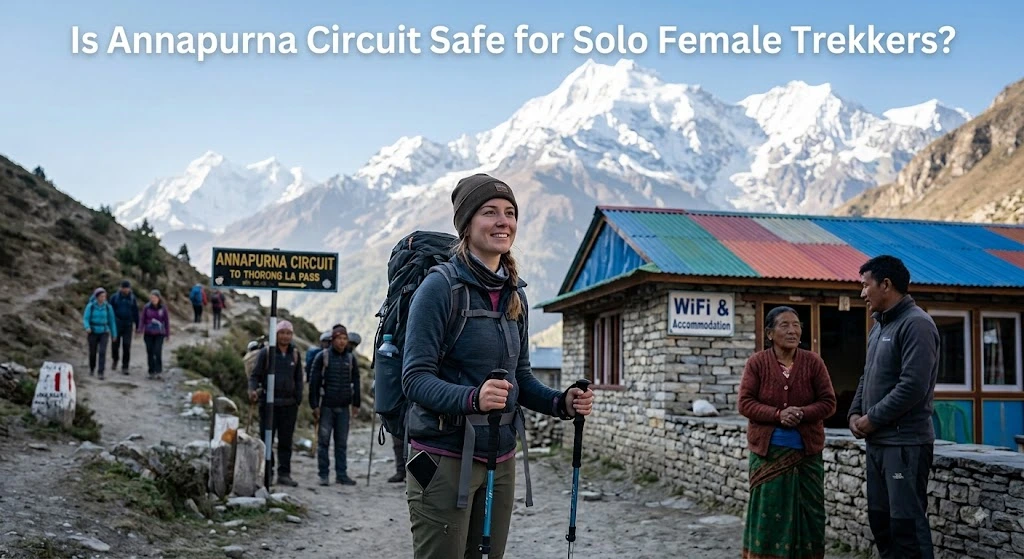
Yes, teahouses are the standard accommodation option along much of the Annapurna Circuit, and solo female trekkers regularly use them. Facilities vary between villages, especially as you move into higher areas, but teahouses generally provide basic rooms, meals, and other essential services.
When you reach a village, choose an established teahouse and ask about the room, bathroom facilities, food, charging options, and other services before settling in. Keep your valuables secure and let someone know where you are staying if you are traveling independently.
Teahouses can also make solo travel more enjoyable because they are social places. You may arrive alone and end up having dinner with trekkers from different countries. This is one of the nice parts of trekking in Nepal that you do not always expect before starting the trip.
Is There Mobile Network on Annapurna Circuit?
Mobile connectivity varies across the Annapurna Circuit. Some villages have mobile coverage and internet access, while signal strength can become unreliable in higher and more remote sections of the route.
Before leaving a village with a good connection, download maps and save important information on your phone. Carry a power bank because charging facilities may be limited or less convenient at higher elevations.
Your phone is useful for navigation and communication, but it should not be your only safety plan. Having a guide, knowing your route, carrying important information offline, and sharing your itinerary are still important when network coverage disappears.
What Should Solo Female Trekkers Pack for Annapurna Circuit?
The right packing list should prepare you for cold temperatures, changing weather, long walking days, and high-altitude conditions. At the same time, you should avoid carrying unnecessary items because a heavy backpack can make the trek much harder, especially during the higher sections.
| Item | Why You Need It |
| Trekking boots | Provide grip and support on uneven mountain trails |
| Trekking poles | Reduce pressure on your knees during climbs and descents |
| Thermal base layers | Help retain body heat in colder areas |
| Fleece jacket | Adds warmth without taking up too much space |
| Down or insulated jacket | Important for cold conditions at higher elevations |
| Waterproof jacket | Protects against rain, wind, and changing weather |
| Trekking trousers | Comfortable for long walking days |
| Warm gloves and hat | Protect your hands and head from cold temperatures |
| Sunglasses | Protect your eyes from strong sunlight and snow glare |
| Sunscreen | Important because UV exposure increases at higher altitude |
| Headlamp | Useful for early starts and unexpected late arrivals |
| Water bottles | Allow you to carry enough drinking water |
| Water purification | Useful where treated or bottled water is not available |
| Sleeping bag | Provides extra warmth in cold teahouses |
| Power bank | Keeps your phone and other devices charged |
| Personal medicines | Important for your own medical needs |
| Basic first-aid kit | Useful for minor injuries and common trekking problems |
| Hygiene products | Helps maintain personal comfort throughout the trek |
| Document copies | Useful if original documents are lost or required |
| Travel insurance details | Important if medical treatment or evacuation is required |
For the higher sections near Thorong La, warm and wind-resistant clothing becomes especially important. Conditions can feel very different from the lower valleys, so do not pack based only on the weather you experience when you first arrive in Nepal.
What Is the Best Time for Solo Female Trekking on Annapurna Circuit?
Spring and autumn are generally the most popular seasons for the Annapurna Circuit because weather conditions are usually more favorable for trekking. March to May and September to November are the main trekking periods, although exact conditions can vary from year to year.
Autumn often brings clearer mountain views and relatively stable conditions. Spring is also a good period, with warmer conditions at lower elevations and blooming vegetation in many parts of the route.
| Season | General Conditions | Consideration for Solo Trekkers |
| Spring | Generally mild with good trekking conditions | A good choice for comfortable trekking and mountain views |
| Summer/Monsoon | Rain, muddy trails, landslide risks in some areas | More difficult due to wet conditions and road problems |
| Autumn | Generally clearer and more stable | One of the best choices for first-time solo trekkers |
| Winter | Very cold with possible snow at higher elevations | Requires more preparation and flexibility |
Winter can bring snow and freezing temperatures around high sections, while monsoon can create rain, muddy trails, landslides, and difficult road conditions. If you are traveling alone, these conditions require more planning and local information.
What Should You Do If You Feel Sick at High Altitude?
If you begin feeling unwell at high altitude, stop and tell your guide or trekking partner. Symptoms such as headache, dizziness, nausea, unusual tiredness, and loss of appetite can indicate that your body is struggling with the elevation.
Do not continue climbing simply because you have already planned to reach a particular village. If symptoms become worse, descending to a lower altitude may be necessary. It is much better to change your plan than to turn a mild problem into a serious emergency.
Adding some flexibility to your trekking schedule can help. The mountains do not always follow your itinerary, and having an extra day available can make it easier to respond to weather, health problems, or unexpected trail conditions.
What Should You Do in an Emergency on Annapurna Circuit?
If an emergency happens, contact your guide, trekking agency, teahouse staff, or appropriate local support as quickly as possible. A guide can help communicate with local people and coordinate the next steps, which can be difficult when you do not speak the local language.
Travel insurance is also important for a high-altitude trek. Before leaving home, check whether your policy covers trekking at the elevation included in your itinerary and whether it provides suitable emergency evacuation coverage.
| Emergency Preparation | What to Do |
| Travel insurance | Confirm high-altitude trekking and emergency evacuation coverage |
| Emergency contacts | Save important numbers both online and offline |
| Passport details | Keep copies in a secure place |
| Trekking agency details | Save the company’s contact information |
| Medical information | Carry details of important medicines or conditions |
| Phone | Keep it charged whenever possible |
| Power bank | Carry backup power for communication |
| Itinerary | Share your route and accommodation with someone you trust |
Keep important information easy to access rather than buried at the bottom of your backpack. In an emergency, you do not want to spend ten minutes searching for your insurance details.
What Mistakes Should Solo Female Trekkers Avoid?
Many problems on the Annapurna Circuit happen because trekkers underestimate the mountain rather than because the route itself is unsafe. Rushing the itinerary, ignoring health symptoms, or attempting a high pass in poor weather can quickly turn a manageable situation into a serious one.
| Common Mistake | Why You Should Avoid It |
| Rushing the itinerary | Your body needs time to adjust to altitude |
| Ignoring altitude symptoms | Symptoms can become more serious if you keep ascending |
| Crossing Thorong La too late | Weather and visibility can become more difficult later in the day |
| Walking alone in isolated areas | Help may not be immediately available |
| Taking unknown shortcuts | You can become lost or encounter unsafe terrain |
| Trekking after dark | Visibility and navigation become more difficult |
| Ignoring weather warnings | Mountain conditions can change quickly |
| Packing too little warm clothing | Higher elevations can be extremely cold |
| Depending completely on mobile coverage | Some sections have weak or no signal |
| Traveling without suitable insurance | Emergency treatment and evacuation can be expensive |
| Choosing an unreliable trekking operator | Poor planning can create avoidable problems |
| Not sharing your daily plan | Others may not know where to look if something goes wrong |
A little extra planning can save you from a lot of trouble later. The goal is not to remove every risk from the trek because that is impossible in the mountains. The goal is to understand the risks and make sensible choices.
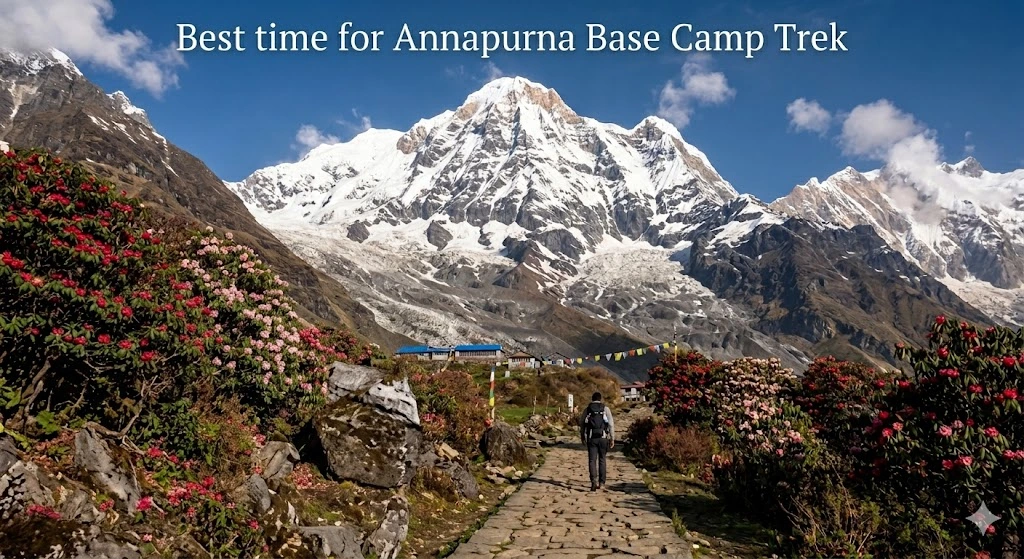
Is Annapurna Circuit Different From Annapurna Base Camp Trek?
Yes, Annapurna Circuit Trek and Annapurna Base Camp Trek are different trekking routes. The Annapurna Circuit travels around the Annapurna region and includes the crossing of Thorong La Pass, while the Annapurna Base Camp Trek follows a separate route toward the base camp of the Annapurna massif.
The two routes also have different elevations, landscapes, walking patterns, and overall experiences. This difference is important when researching safety because advice for one trek should not automatically be applied to the other.
| Feature | Annapurna Circuit Trek | Annapurna Base Camp Trek |
| Route type | Circuit around the Annapurna region | Trek toward Annapurna Base Camp |
| Main highlight | Thorong La Pass and changing landscapes | Annapurna Base Camp and mountain amphitheater |
| Highest point | Thorong La, about 5,416 m | Annapurna Base Camp, about 4,130 m |
| Trek character | Long and varied | More focused route |
| Main altitude challenge | Crossing a high mountain pass | Reaching high-altitude base camp |
| Route environment | Valleys, villages, mountain terrain, and road sections | Forests, villages, mountain trails, and high-altitude terrain |
Therefore, if you are planning solo female trekking on the Annapurna Circuit, make your preparation based on the Circuit itself rather than general information about Annapurna trekking.
Is Annapurna Base Camp Also Safe for Solo Female Trekkers?
Annapurna Base Camp can also be suitable for solo female trekkers with proper preparation, but it should be treated as a separate trek from the Annapurna Circuit. The route, maximum elevation, terrain, and daily walking pattern are different.
This question is still relevant because many travelers compare trekking options in the Annapurna region before choosing their route. However, if your plan is the Annapurna Circuit, your main preparation should focus on its longer route, high altitude, Thorong La Pass, and changing trail conditions.
Which Is More Challenging, Annapurna Circuit or Annapurna Base Camp?
The Annapurna Circuit is generally more demanding overall because it covers a longer route and reaches Thorong La Pass at approximately 5,416 meters. Annapurna Base Camp reaches around 4,130 meters and follows a different route with its own physical challenges.
That does not mean Annapurna Base Camp is easy or that the Circuit is unsafe. Your fitness, previous trekking experience, itinerary, acclimatization, and weather conditions all affect how difficult the trek feels. The better choice is the route that matches your experience and the amount of time you have available.
What Are the Best Safety Tips for Women Trekking Annapurna Circuit?
The best safety advice is simple: prepare well, walk at a comfortable pace, and do not ignore what your body is telling you. You do not need to be an experienced mountaineer to trek the Annapurna Circuit, but you do need to respect altitude and changing mountain conditions.
| Practical Tip | How It Helps |
| Choose a suitable season | Better weather can make the route more comfortable |
| Plan gradual altitude gain | Gives your body more time to adjust |
| Allow acclimatization time | Reduces the pressure to keep climbing when you feel unwell |
| Start early | Gives you more time for demanding sections |
| Consider a licensed guide | Provides local knowledge and emergency support |
| Stay on established trails | Reduces navigation problems |
| Check weather conditions | Helps you avoid dangerous conditions |
| Carry suitable warm clothing | Protects you during cold high-altitude sections |
| Keep your phone charged | Helps with communication and navigation |
| Carry travel insurance | Provides financial protection during emergencies |
| Share your itinerary | Someone knows where you should be each day |
| Take altitude symptoms seriously | Early action can prevent serious problems |
| Be flexible | You can change plans when weather or health conditions require it |
The biggest lesson for a solo female trekker is that independence does not mean doing everything alone. Knowing when to ask for help, changing your plan when conditions are bad, and listening to local advice are all signs of good trekking judgment.
Conclusion
So, is solo female trekking on Annapurna Circuit safe? Yes, it can be a safe and rewarding experience when you prepare properly and respect the conditions of the Himalayas. The Annapurna Circuit is an established trekking route, but its high altitude, Thorong La Pass, changing weather, long walking days, and remote sections should never be underestimated.
If you are trekking in the Himalayas for the first time, having a licensed guide or joining a small group can make the journey more comfortable. Choose the right season, allow enough time for acclimatization, carry suitable equipment, and be willing to change your plan when the mountain conditions demand it.
Most importantly, do not measure a successful trek only by whether you reached the final destination. Getting through the Annapurna Circuit safely, enjoying the villages and mountains, and returning home with good memories is what really matters.
Frequently Asked Questions
Is Annapurna Circuit safe for solo female trekkers?
Yes, Annapurna Circuit can be safe for solo female trekkers with proper preparation. The main concerns are altitude, weather, trail conditions, and remote sections. A licensed guide or small group is a sensible option for women who are new to high-altitude trekking.
Can a woman trek Annapurna Circuit alone?
Yes, women can travel independently on the Annapurna Circuit, but completely trekking alone has additional risks. A private guide or small group provides support with navigation, altitude, accommodation, weather, and emergencies while still allowing you to enjoy the journey independently.
Do I need a guide for Annapurna Circuit Trek?
Trekking requirements can change, so check the latest rules before your trip. Even when independent arrangements are possible, a licensed guide can be useful for navigation, altitude monitoring, local communication, accommodation, weather information, and emergency support.
Is Thorong La Pass safe for solo female trekkers?
Thorong La Pass can be crossed safely when weather and trail conditions are suitable and you are properly acclimatized. At approximately 5,416 meters, it is one of the hardest parts of the Circuit. Starting early and having experienced local support can make the crossing safer.
What is the biggest safety concern on Annapurna Circuit?
Altitude is one of the biggest concerns because the trek reaches a very high elevation at Thorong La. Weather, long walking days, difficult terrain, and road sections are other factors. A gradual itinerary, proper acclimatization, and suitable preparation can reduce unnecessary risks.
Is Annapurna Circuit suitable for first-time trekkers?
Yes, physically fit beginners can complete the Annapurna Circuit with proper preparation, but it is not an easy trek. The route is long and reaches a high elevation at Thorong La, so first-time trekkers should prepare physically and allow enough time for acclimatization.
What is the best season for solo female trekking on Annapurna Circuit?
Spring and autumn are generally the best seasons. March to May and September to November are popular because conditions are usually more favorable. Autumn often provides clear mountain views, while spring brings warmer temperatures and blooming vegetation at lower elevations.
Is Annapurna Base Camp the same as Annapurna Circuit?
No. Annapurna Base Camp Trek and Annapurna Circuit Trek are separate routes. ABC takes trekkers to Annapurna Base Camp, while the Annapurna Circuit follows a longer route around the Annapurna region and crosses Thorong La Pass.
What should I do if I get altitude sickness on Annapurna Circuit?
Stop ascending and tell your guide or trekking partner if you develop altitude symptoms. If symptoms become worse, descending to a lower elevation may be necessary. Never continue climbing simply to stay on your planned schedule when your health is getting worse.