
- 197 Views
- 43 Min Read
- (0) Comment
Choosing between the Annapurna Circuit and the Annapurna Base Camp Trek can be difficult because both offer unforgettable Himalayan experiences. While the Annapurna Circuit is known for its diverse landscapes and the high Thorong La Pass (5,416m), the Annapurna Base Camp Trek takes you into the heart of the Annapurna Sanctuary, surrounded by some of Nepal’s highest peaks. The best trek depends on your time, fitness, budget, and the type of adventure you’re looking for.
This comparison guide is designed for first-time visitors, experienced trekkers, and anyone planning a trek in Nepal. We’ll compare the two routes side by side, covering difficulty, itinerary, cost, altitude, scenery, permits, accommodation, best time to visit, and who each trek is best suited for. By the end, you’ll have all the information you need to choose the trek that matches your travel style and trekking goals.
Annapurna Circuit vs Annapurna Base Camp: Quick Comparison
The Annapurna Circuit Trek is best for trekkers looking for a longer adventure, diverse landscapes, and a challenging high-altitude pass. The Annapurna Base Camp Trek is better for those with limited time who want spectacular mountain views, comfortable teahouses, and a moderate trekking experience. Both treks offer incredible Himalayan scenery but suit different travel styles and fitness levels.
Annapurna Circuit vs Annapurna Base Camp at a Glance
| Feature | Annapurna Circuit Trek | Annapurna Base Camp Trek |
| Duration | 12–18 Days | 7–11 Days |
| Highest Elevation | Thorong La Pass (5,416m) | Annapurna Base Camp (4,130m) |
| Difficulty | Moderate to Challenging | Moderate |
| Trek Distance | 160–230 km | Approximately 115 km |
| Landscapes | Forests, rivers, alpine valleys, high desert | Forests, villages, rivers, alpine valley |
| Mountain Views | Annapurna, Dhaulagiri, Manaslu, Tilicho | Annapurna I, Machhapuchhre, Hiunchuli |
| Accommodation | Well-developed teahouses | Comfortable teahouses |
| Crowds | Moderate to High | High during peak season |
| Permits | ACAP & TIMS (subject to regulations) | ACAP & TIMS (subject to regulations) |
| Best For | Adventure and variety | Classic Himalayan experience |
Which Trek Should You Choose?
Choosing between the Annapurna Circuit and the Annapurna Base Camp Trek depends on your available time, trekking experience, fitness level, and the type of journey you want. While both routes showcase the beauty of the Annapurna region, they offer very different experiences on the trail.
If you’re looking for a challenging adventure across changing landscapes, the Annapurna Circuit is an excellent choice. If your goal is to reach a Himalayan base camp while enjoying shorter trekking days and easier logistics, the Annapurna Base Camp Trek is likely the better option.
Choose Annapurna Circuit If…
- You have at least two weeks for trekking.
- You want to cross the famous Thorong La Pass (5,416m).
- You enjoy changing landscapes, from green valleys to high-altitude deserts.
- You prefer a longer and more adventurous trekking experience.
- You want to explore both Hindu and Tibetan-influenced villages.
Choose Annapurna Base Camp If…
- You have one to two weeks available.
- You prefer a moderate trek with less altitude exposure.
- You want to stand beneath the Annapurna Massif at Annapurna Base Camp.
- You enjoy well-established teahouses and straightforward logistics.
- You’re planning your first Himalayan trekking adventure.
Which Trek Offers Better Value?
Both treks offer excellent value, but the right choice depends on your priorities. The Annapurna Base Camp Trek is generally more affordable because it requires fewer trekking days and lower overall expenses. It is ideal for trekkers seeking a shorter adventure without missing spectacular Himalayan scenery.
The Annapurna Circuit costs slightly more due to its longer itinerary, but it rewards trekkers with greater landscape diversity, a higher mountain pass, and a broader cultural experience. If you have the time and budget, it offers one of Nepal’s most complete trekking journeys.
Understanding Both Treks
The Annapurna Circuit Trek and the Annapurna Base Camp Trek are two of Nepal’s most popular Himalayan adventures, but they offer very different experiences. While both are located in the Annapurna region and pass through beautiful mountain villages, each trek has its own route, scenery, altitude, and level of challenge.
Understanding how these treks differ will help you choose the one that best matches your fitness level, travel schedule, and trekking goals. Here’s a closer look at what makes each route unique.
What Is the Annapurna Circuit Trek?
The Annapurna Circuit Trek is a classic long-distance trek that circles the Annapurna Massif through diverse landscapes and traditional mountain villages. Depending on the itinerary, the trek usually takes 12 to 18 days and reaches its highest point at Thorong La Pass (5,416m), one of the highest trekking passes in the world.
Along the way, you’ll walk through subtropical forests, terraced farmland, alpine meadows, and the dry landscapes of the Mustang region. The trek also offers rich cultural experiences as you pass through Gurung, Thakali, and Tibetan-influenced villages, making it one of Nepal’s most varied trekking routes.
What Is the Annapurna Base Camp Trek?
The Annapurna Base Camp Trek is a shorter journey that leads directly into the heart of the Annapurna Sanctuary. Most itineraries take 7 to 11 days and finish at Annapurna Base Camp (4,130m), surrounded by towering peaks including Annapurna I, Machhapuchhre, Hiunchuli, and Annapurna South.
The trail passes through rhododendron forests, rivers, waterfalls, and traditional Gurung villages before opening into a breathtaking natural amphitheater of snow-covered mountains. It is a great choice for trekkers who want a classic Himalayan experience without committing to a longer expedition.
Key Differences Between the Two Treks
The biggest difference is the type of experience each trek offers. The Annapurna Circuit is longer, reaches a higher altitude, and showcases a wider variety of landscapes, while the Annapurna Base Camp Trek focuses on reaching one spectacular destination in a shorter time.
Another major difference is the level of difficulty. Crossing Thorong La Pass makes the Annapurna Circuit more physically demanding, whereas the Annapurna Base Camp Trek is generally considered moderate and suitable for most active beginners with basic fitness.
Trek Overview Comparison Table
| Feature | Annapurna Circuit Trek | Annapurna Base Camp Trek |
| Duration | 12–18 Days | 7–11 Days |
| Highest Elevation | Thorong La Pass (5,416m) | Annapurna Base Camp (4,130m) |
| Trek Distance | 160–230 km | Approximately 115 km |
| Difficulty | Moderate to Challenging | Moderate |
| Best For | Long adventure and diverse scenery | Shorter Himalayan experience |
| Main Highlight | Crossing Thorong La Pass | Annapurna Sanctuary |
| Accommodation | Teahouses | Teahouses |
| Region | Around the Annapurna Massif | Annapurna Sanctuary |
| Suitable for Beginners | With preparation | Yes |
| Typical Duration from Pokhara | 12–18 Days | 7–11 Days |
Route, Itinerary, and Distance Comparison
The Annapurna Circuit and Annapurna Base Camp follow completely different routes, even though both are located in Nepal’s Annapurna region. The Circuit takes you around the Annapurna Massif, while the Base Camp trek leads directly into the heart of the Annapurna Sanctuary. Understanding each route will help you choose the trek that matches your interests and available time.
Both treks pass through traditional mountain villages and offer incredible Himalayan scenery, but they differ in distance, elevation, and daily walking hours. Here’s how the two routes compare.
Annapurna Circuit Route Overview
The Annapurna Circuit Trek is a longer route that circles the Annapurna Massif through changing landscapes, mountain villages, and the famous Thorong La Pass (5,416m). The trail connects lush valleys, alpine forests, high mountain deserts, and Tibetan-influenced settlements, making it one of Nepal’s most diverse trekking experiences.
Starting Point
Most modern Annapurna Circuit itineraries begin from Dharapani after driving from Kathmandu or Pokhara. Some longer itineraries start lower down, but road access has shortened the traditional route.
Major Villages
Popular overnight stops include Chame, Pisang, Manang, Yak Kharka, Thorong Phedi, Muktinath, Jomsom, and Tatopani. Each village offers unique landscapes, local culture, and comfortable teahouse accommodation.
Thorong La Pass
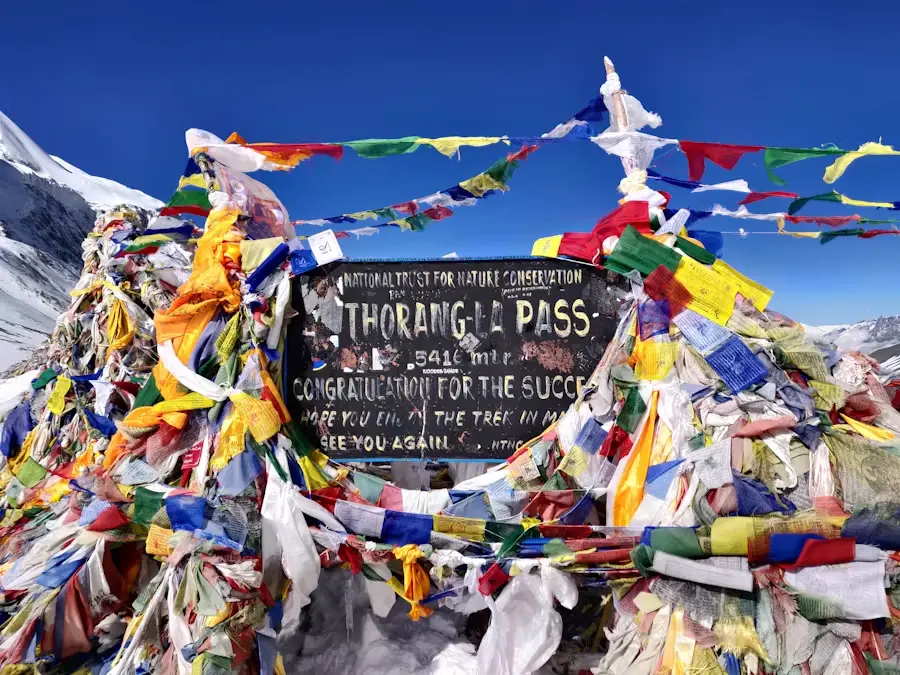
Thorong La Pass (5,416m) is the highest point of the trek and one of Nepal’s most famous mountain passes. Crossing the pass is the highlight of the Annapurna Circuit and rewards trekkers with spectacular panoramic views of the Annapurna and Dhaulagiri ranges.
Ending Point
Most itineraries finish in Jomsom or Tatopani before driving back to Pokhara. Some trekkers continue through Ghorepani and Poon Hill for an extended Annapurna experience.
Annapurna Base Camp Route Overview
The Annapurna Base Camp Trek follows a direct route into the Annapurna Sanctuary, passing through traditional Gurung villages, dense rhododendron forests, and scenic river valleys before reaching Annapurna Base Camp (4,130m).
Starting Point
Most itineraries begin with a drive from Pokhara to Tikhedhunga, Nayapul, or Jhinu Danda, depending on the trekking itinerary and road conditions.
Major Villages
The route passes through Ulleri, Ghorepani (on selected itineraries), Chhomrong, Bamboo, Dovan, Himalaya, Deurali, and Machhapuchhre Base Camp before reaching Annapurna Base Camp.
Machhapuchhre Base Camp
Located at 3,700m, Machhapuchhre Base Camp is the final overnight stop before Annapurna Base Camp. It offers incredible views of Machhapuchhre (Fishtail), Hiunchuli, Annapurna South, and the surrounding snow-covered peaks.
Annapurna Base Camp
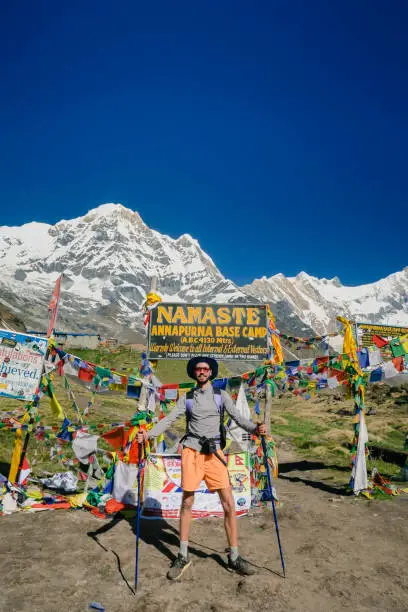
At 4,130m, Annapurna Base Camp sits in the center of the Annapurna Sanctuary, surrounded by towering Himalayan peaks on nearly every side. Watching sunrise from the base camp is one of the most unforgettable moments of the trek.
Day-by-Day Itinerary Comparison
| Day | Annapurna Circuit Trek | Annapurna Base Camp Trek |
| 1 | Drive to Dharapani | Drive to Tikhedhunga / Trek Begins |
| 2–4 | Chame – Pisang – Manang | Ulleri – Ghorepani / Chhomrong |
| 5–7 | Acclimatization & Yak Kharka | Bamboo – Deurali – Machhapuchhre Base Camp |
| 8 | Cross Thorong La Pass | Annapurna Base Camp |
| 9–12 | Muktinath – Jomsom | Return via Bamboo & Jhinu Danda |
| Final Day | Drive to Pokhara | Return to Pokhara |
Trek Distance Comparison
| Trek | Approximate Distance |
| Annapurna Circuit Trek | 160–230 km |
| Annapurna Base Camp Trek | Approximately 115 km |
Daily Walking Hours Comparison
| Trek | Average Walking Hours |
| Annapurna Circuit Trek | 6–8 Hours |
| Annapurna Base Camp Trek | 5–7 Hours |
Elevation Gain and Descent Comparison
| Feature | Annapurna Circuit Trek | Annapurna Base Camp Trek |
| Highest Elevation | Thorong La Pass (5,416m) | Annapurna Base Camp (4,130m) |
| Maximum Altitude Gain | Higher | Moderate |
| Long Climbs | Multiple | Mostly to Chhomrong and ABC |
| Long Descents | After Thorong La Pass | Return from ABC to Jhinu Danda |
| Altitude Sickness Risk | Higher | Moderate |
Difficulty and Physical Challenge
The Annapurna Circuit Trek and the Annapurna Base Camp Trek are both rewarding Himalayan adventures, but they differ in terms of physical effort and altitude. The Annapurna Circuit is generally more challenging because it is longer, reaches a higher elevation, and includes crossing Thorong La Pass (5,416m). The Annapurna Base Camp Trek is shorter and lower in altitude, making it a better choice for most first-time trekkers.
Your experience on either trek depends on your fitness, preparation, and walking pace. Both routes require several days of trekking, but neither involves technical climbing or mountaineering skills.
Which Trek Is More Difficult?
The Annapurna Circuit Trek is more difficult than the Annapurna Base Camp Trek. The longer itinerary, greater distance, and higher altitude make it physically more demanding. Crossing Thorong La Pass requires an early morning start, careful pacing, and good acclimatization due to the thinner air above 5,000 meters.
The Annapurna Base Camp Trek is considered moderately difficult. Although you’ll still face steep climbs and long walking days, the lower maximum altitude of 4,130m reduces the risk of altitude-related problems and makes the trek more manageable for beginners.
Trail Conditions
Both treks use well-established mountain trails, but the terrain changes throughout the journey. You’ll encounter forests, stone staircases, suspension bridges, rivers, and rocky mountain paths.
The Annapurna Circuit offers greater variety, while the Annapurna Base Camp Trek focuses more on forest trails and traditional villages before entering the Annapurna Sanctuary.
Stone Staircases
The Annapurna Base Camp Trek includes thousands of stone steps, especially around Ulleri and Chhomrong. These long climbs and descents can be tiring on your legs and knees, particularly on the return journey.
The Annapurna Circuit also has stone staircases in some sections, but they are less continuous than those on the Annapurna Base Camp route.
Suspension Bridges
Both treks cross several suspension bridges over fast-flowing Himalayan rivers. These bridges are well maintained and safe, adding a memorable part to the trekking experience.
The Annapurna Circuit generally includes more river crossings because of its longer route through multiple valleys.
High Mountain Passes
The biggest physical challenge on the Annapurna Circuit is crossing Thorong La Pass (5,416m), one of Nepal’s highest trekking passes. The crossing involves several hours of uphill walking in thin air before a long descent to Muktinath.
The Annapurna Base Camp Trek does not cross any high mountain passes. Instead, it gradually climbs into the Annapurna Sanctuary, making altitude easier to manage.
Forest Trails
Both treks pass through beautiful forests filled with rhododendrons, oak, bamboo, and pine trees. During spring, colorful rhododendron blooms make these sections especially scenic.
The Annapurna Base Camp Trek spends more time walking through forests, while the Annapurna Circuit gradually changes into alpine valleys and dry mountain landscapes.
Fitness Requirements
Both treks require a good level of fitness, but the Annapurna Circuit demands greater endurance because of its longer duration and higher altitude. Preparing with regular walking, hiking, stair climbing, or cardio training before your trip will make the journey much more enjoyable.
The Annapurna Base Camp Trek is suitable for active beginners who are willing to train before their adventure. The Annapurna Circuit is better suited to trekkers with previous multi-day hiking experience or strong physical fitness.
Trekking Experience Needed
Previous trekking experience is helpful for both routes but is not essential. Many first-time trekkers successfully complete the Annapurna Base Camp Trek with proper preparation, a steady pace, and guidance from experienced local guides.
The Annapurna Circuit is more suitable for trekkers who are comfortable walking for longer hours over consecutive days and can adapt to higher elevations. Good preparation and proper acclimatization are important for a safe and enjoyable experience.
Mental Challenge
Long trekking days, changing weather, and several nights at high altitude make both treks mentally rewarding as well as physically demanding. Staying positive, walking at your own pace, and enjoying the journey are just as important as physical fitness.
The Annapurna Circuit requires more patience because of its longer itinerary and the challenge of crossing Thorong La Pass. The Annapurna Base Camp Trek is shorter but still demands determination during steep climbs and descents.
Difficulty Comparison Table
| Feature | Annapurna Circuit Trek | Annapurna Base Camp Trek |
| Overall Difficulty | Moderate to Challenging | Moderate |
| Highest Elevation | 5,416m | 4,130m |
| Duration | 12–18 Days | 7–11 Days |
| Average Walking Hours | 6–8 Hours | 5–7 Hours |
| Long Stone Staircases | Moderate | Extensive |
| High Mountain Pass | Thorong La Pass | None |
| Altitude Sickness Risk | Higher | Moderate |
| Best for Beginners | With good preparation | Yes |
| Physical Challenge | Higher | Moderate |
| Mental Challenge | High | Moderate |
Altitude and Altitude Sickness Comparison
Altitude is one of the biggest differences between the Annapurna Circuit Trek and the Annapurna Base Camp Trek. While both routes take you above 4,000 meters, the Annapurna Circuit reaches a much higher elevation at Thorong La Pass (5,416m), increasing the risk of altitude sickness. The Annapurna Base Camp Trek reaches a maximum altitude of 4,130m, making it a safer choice for many first-time trekkers.
No matter which trek you choose, understanding the symptoms of Acute Mountain Sickness (AMS), following a gradual ascent, and listening to your body are essential for a safe and enjoyable journey in the Himalayas.
Annapurna Circuit Trek
Highest Altitude Reached
The Annapurna Circuit reaches its highest point at Thorong La Pass (5,416m), one of Nepal’s highest trekking passes. At this altitude, oxygen levels are significantly lower than at sea level, making proper acclimatization extremely important before crossing the pass.
The Annapurna Base Camp Trek reaches a maximum elevation of 4,130m at Annapurna Base Camp. Although this is lower than the Circuit, some trekkers may still experience mild altitude sickness, especially if they ascend too quickly.
Sleeping Elevation Comparison
Sleeping altitude plays an important role in how well your body adapts to higher elevations. On the Annapurna Circuit, trekkers usually spend a night at Thorong Phedi or High Camp before crossing Thorong La Pass, allowing for better acclimatization.
On the Annapurna Base Camp Trek, the highest overnight stay is at Annapurna Base Camp (4,130m). The gradual ascent through villages such as Chhomrong, Bamboo, Deurali, and Machhapuchhre Base Camp helps reduce the risk of altitude-related illness.
AMS Risk on Both Treks
The Annapurna Circuit has a higher risk of Acute Mountain Sickness because it climbs above 5,000 meters. Trekkers spend more time at high altitude, and crossing Thorong La Pass requires careful planning and proper acclimatization.
The Annapurna Base Camp Trek has a moderate risk of AMS. While most trekkers complete the trek without serious problems, headaches, fatigue, or shortness of breath can still occur near Machhapuchhre Base Camp and Annapurna Base Camp.
Symptoms of Altitude Sickness
Watch for these common symptoms during either trek:
- Headache
- Loss of appetite
- Nausea
- Dizziness
- Unusual tiredness
- Difficulty sleeping
- Shortness of breath while resting
How to Prevent AMS
The best way to prevent altitude sickness is to give your body enough time to adjust as you gain elevation. Walking slowly, drinking plenty of water, and avoiding unnecessary physical strain are simple but effective ways to reduce your risk.
Our local guides also recommend:
- Walk at a steady, comfortable pace.
- Drink 3–4 liters of water each day.
- Avoid alcohol and smoking at higher elevations.
- Eat regular meals even if your appetite decreases.
- Listen to your guide if acclimatization is needed.
- Never ignore early symptoms of AMS.
When You Should Descend
Mild symptoms often improve with rest, but worsening symptoms should never be ignored. Descending to a lower altitude is the safest treatment if your condition does not improve.
Descend immediately if you experience:
- Severe headache that doesn’t improve
- Repeated vomiting
- Difficulty walking normally
- Confusion or unusual behavior
- Difficulty breathing while resting
Altitude Comparison Table
| Feature | Annapurna Circuit Trek | Annapurna Base Camp Trek |
| Highest Elevation | Thorong La Pass (5,416m) | Annapurna Base Camp (4,130m) |
| Highest Sleeping Point | High Camp (Approx. 4,900m) | Annapurna Base Camp (4,130m) |
| Maximum Elevation Gain | Higher | Moderate |
| AMS Risk | Higher | Moderate |
| Acclimatization Required | Essential | Recommended |
| Suitable for Beginners | With preparation | Yes |
Acclimatization Strategy Comparison
| Strategy | Annapurna Circuit Trek | Annapurna Base Camp Trek |
| Scheduled Acclimatization Day | Yes (Manang) | Usually Not Required |
| Gradual Altitude Gain | Yes | Yes |
| Pace | Slow and steady | Slow and steady |
| Hydration | 3–4 liters daily | 3–4 liters daily |
| Guide Monitoring | Highly Recommended | Recommended |
| Descent if Symptoms Worsen | Immediate | Immediate |
Mountain Scenery and Landscape Comparison
Both the Annapurna Circuit Trek and the Annapurna Base Camp Trek reward trekkers with breathtaking Himalayan scenery, but the landscapes are very different. The Annapurna Circuit is known for its ever-changing terrain, from lush green valleys to dry alpine deserts, while the Annapurna Base Camp Trek offers a close-up experience of the Annapurna Sanctuary surrounded by towering snow-covered peaks.
If you’re looking for the greatest variety of landscapes, the Annapurna Circuit is hard to beat. If your dream is to stand beneath some of the world’s highest mountains, the Annapurna Base Camp Trek delivers one of Nepal’s most spectacular mountain settings.
Mountain Views on Annapurna Circuit
The Annapurna Circuit offers panoramic views of some of Nepal’s highest mountains throughout the journey. As you gain altitude, you’ll see Annapurna II, Annapurna III, Annapurna IV, Gangapurna, Tilicho Peak, Dhaulagiri, Manaslu, and many other Himalayan giants from different angles.
The highlight comes while crossing Thorong La Pass (5,416m), where wide-open mountain views stretch in every direction. Because the trail circles the Annapurna Massif, the scenery changes almost every day, making each section feel unique.
Mountain Views on Annapurna Base Camp
The Annapurna Base Camp Trek leads directly into the Annapurna Sanctuary, where towering peaks surround you from almost every side. The closer you get to base camp, the more dramatic the scenery becomes, with Annapurna I, Machhapuchhre (Fishtail), Annapurna South, Hiunchuli, and Gangapurna dominating the skyline.
Sunrise at Annapurna Base Camp is one of the biggest highlights of the trek. As the first light touches the snow-covered peaks, the entire sanctuary glows with golden colors, creating an unforgettable Himalayan experience.
Landscape Diversity
The Annapurna Circuit passes through a remarkable variety of landscapes during one trek. You’ll walk through subtropical forests, terraced farmland, alpine meadows, rocky mountain valleys, and the dry, desert-like landscapes of the Mustang region.
The Annapurna Base Camp Trek offers less geographical variety but makes up for it with a gradual journey through forests, rivers, waterfalls, and finally into the spectacular Annapurna Sanctuary. The scenery becomes more dramatic as you gain elevation.
Forests, Rivers, and Waterfalls
Both treks pass through beautiful forests filled with rhododendron, oak, bamboo, and pine trees. During spring, blooming rhododendrons add vibrant colors to the lower sections of both trails.
The Annapurna Base Camp Trek includes more river crossings, waterfalls, and dense forests, creating a peaceful atmosphere before reaching the high mountains. The Annapurna Circuit gradually leaves the forests behind as it climbs into higher alpine landscapes.
Glacier and Icefall Views
The Annapurna Circuit provides distant views of glaciers and snow-covered peaks, especially near Thorong La Pass and the higher valleys around Manang. These alpine landscapes create a dramatic Himalayan setting.
The Annapurna Base Camp Trek offers closer views of glaciers and ice-covered slopes inside the Annapurna Sanctuary. From Annapurna Base Camp, you’ll be surrounded by massive ice walls and towering peaks rising directly above the valley.
Sunrise and Sunset Viewpoints
Both treks offer incredible sunrise and sunset views, but the experiences are different. On the Annapurna Circuit, sunrise from Thorong La Pass and the villages around Manang creates unforgettable mountain panoramas.
On the Annapurna Base Camp Trek, sunrise at Annapurna Base Camp is the highlight of the entire journey. Watching the first sunlight illuminate Annapurna I and Machhapuchhre is one of Nepal’s most memorable trekking moments.
Photography Opportunities
The Annapurna Circuit is perfect for photographers who enjoy capturing changing landscapes, mountain villages, high passes, colorful prayer flags, and wide Himalayan panoramas. Every day offers a different backdrop for landscape photography.
The Annapurna Base Camp Trek is ideal for close-up mountain photography, sunrise shots, waterfalls, forests, suspension bridges, and traditional Gurung villages. The Annapurna Sanctuary itself is one of the best photography locations in Nepal.
Scenic Comparison Table
| Feature | Annapurna Circuit Trek | Annapurna Base Camp Trek |
| Mountain Views | Excellent | Excellent |
| Landscape Variety | Outstanding | Very Good |
| Snow-Capped Peaks | Excellent | Outstanding |
| Forest Scenery | Very Good | Excellent |
| Rivers & Waterfalls | Good | Excellent |
| Glacier Views | Good | Excellent |
| Sunrise Experience | Thorong La & Manang | Annapurna Base Camp |
| Photography Opportunities | Diverse landscapes | Close-up Himalayan scenery |
| Overall Scenic Experience | Diverse and ever-changing | Dramatic mountain amphitheater |
Culture and Local Experience
Both the Annapurna Circuit Trek and the Annapurna Base Camp Trek offer more than spectacular mountain views. They also provide an opportunity to experience the traditions, hospitality, and daily life of the people who have lived in the Himalayas for generations. While both routes pass through welcoming villages, the cultures and traditions along each trail have their own unique character.
If learning about local communities is an important part of your adventure, either trek will leave you with lasting memories. From ancient monasteries and traditional stone houses to home-cooked meals and local festivals, every day brings a chance to connect with the people of the Annapurna region.
Ethnic Communities
The Annapurna Circuit passes through several ethnic communities, including Gurung, Thakali, and Tibetan-influenced villages. As you move from lower valleys to higher elevations, you’ll notice changes in architecture, language, clothing, and local traditions.
The Annapurna Base Camp Trek mainly travels through Gurung and Magar villages. These communities are known for their warm hospitality, rich traditions, and strong connection to the mountains. Staying in family-run teahouses gives trekkers a closer look at everyday village life.
Buddhist Heritage
Buddhist culture becomes more visible as you gain elevation on the Annapurna Circuit. Prayer flags, mani walls, chortens, and spinning prayer wheels are common, especially around Manang and the villages closer to Thorong La Pass.
The Annapurna Base Camp Trek also has Buddhist influences, although Hindu traditions are equally present in many villages. Along the trail, you’ll find small shrines, prayer flags, and peaceful monasteries that reflect the spiritual life of the local communities.
Monasteries and Temples
The Annapurna Circuit includes several important monasteries where trekkers can experience traditional Buddhist culture. Braga Monastery near Manang is one of the oldest and most well-known monasteries on the route.
The Annapurna Base Camp Trek features smaller monasteries, temples, and village shrines along the trail. Although they are less famous, they offer a quiet and authentic glimpse into the daily religious life of the local people.
Traditional Villages
Traditional villages are a highlight of both treks. On the Annapurna Circuit, villages such as Manang, Pisang, and Marpha showcase beautiful stone houses, narrow streets, and centuries-old mountain traditions.
The Annapurna Base Camp Trek passes through charming villages like Ghandruk, Chhomrong, and Sinuwa. These villages are known for their welcoming teahouses, stone pathways, and stunning mountain views that create a peaceful trekking atmosphere.
Local Food Experience
Both treks offer similar menus in most teahouses, with Dal Bhat, noodles, fried rice, soups, momos, and Tibetan bread being popular choices. Fresh local ingredients and warm meals help trekkers stay energized during long walking days.
The Annapurna Circuit offers a slightly wider variety of regional dishes, especially in Thakali villages, where traditional Thakali meals are a local specialty. The Annapurna Base Camp Trek focuses more on classic Nepali home-style cooking served by local families.
Festivals and Daily Life
If your trek coincides with local festivals, you’ll have the chance to witness colorful celebrations, traditional music, dances, and religious ceremonies. Major festivals such as Dashain, Tihar, and Lhosar are celebrated in many villages along both routes.
Daily life in the mountains is simple and closely connected to farming, livestock, and tourism. Watching local families work in the fields, care for animals, or welcome trekkers into their teahouses adds a meaningful cultural dimension to both trekking experiences.
Cultural Comparison Table
| Feature | Annapurna Circuit Trek | Annapurna Base Camp Trek |
| Main Ethnic Communities | Gurung, Thakali, Tibetan | Gurung, Magar |
| Buddhist Influence | Strong | Moderate |
| Monasteries | Many | Several small monasteries |
| Traditional Villages | Manang, Pisang, Marpha | Ghandruk, Chhomrong |
| Local Hospitality | Excellent | Excellent |
| Traditional Food | Thakali, Nepali, Tibetan | Gurung, Magar, Nepali |
| Cultural Diversity | Higher | Moderate |
| Overall Cultural Experience | Rich and diverse | Warm and authentic |
Wildlife and Nature
Both the Annapurna Circuit Trek and the Annapurna Base Camp Trek pass through protected landscapes rich in biodiversity. As you climb through different elevations, you’ll notice changing forests, alpine meadows, and rugged mountain terrain that support a wide variety of plants and wildlife. Nature lovers will enjoy both routes, although the Annapurna Circuit covers a wider range of ecosystems.
Whether you’re interested in colorful rhododendron forests, Himalayan wildlife, or peaceful birdwatching, both treks provide excellent opportunities to experience Nepal’s natural beauty beyond its famous mountains.
Flora
The Annapurna Circuit passes through several climate zones, from subtropical forests to alpine grasslands and high-altitude deserts. Lower elevations are covered with rhododendron, oak, pine, bamboo, and maple forests, while higher areas feature juniper shrubs and hardy alpine vegetation.
The Annapurna Base Camp Trek is especially beautiful during spring when rhododendron forests bloom with vibrant red, pink, and white flowers. Dense forests, moss-covered trails, and bamboo groves create a peaceful setting before the landscape opens into the Annapurna Sanctuary.
Wildlife
Wildlife sightings are never guaranteed, but both treks pass through habitats that support many Himalayan species. Lucky trekkers may spot Himalayan thar grazing on steep slopes, langur monkeys in forested areas, or musk deer moving quietly through the trees.
The Annapurna Circuit covers a larger range of habitats, giving slightly better opportunities to encounter wildlife. The Annapurna Base Camp Trek is more commonly associated with birds, smaller mammals, and forest wildlife.
Protected Areas
Both treks are located within the Annapurna Conservation Area, Nepal’s largest protected conservation area. The region protects mountain ecosystems, forests, wildlife, and traditional villages while promoting sustainable tourism.
Conservation fees collected through trekking permits help maintain trails, protect wildlife habitats, and support local communities living throughout the Annapurna region.
Bird Watching
Bird enthusiasts can enjoy excellent birdwatching opportunities on both routes. The forests are home to colorful pheasants, Himalayan monals, eagles, woodpeckers, and many other native bird species.
Early mornings are usually the best time for birdwatching, especially in the lower forest sections where bird activity is highest before the trekking trails become busy.
Biodiversity Comparison
| Feature | Annapurna Circuit Trek | Annapurna Base Camp Trek |
| Forest Diversity | Excellent | Excellent |
| Alpine Vegetation | Excellent | Good |
| Wildlife Viewing | Very Good | Good |
| Bird Watching | Excellent | Very Good |
| Rhododendron Forests | Very Good | Outstanding |
| Protected Area | Annapurna Conservation Area | Annapurna Conservation Area |
| Overall Biodiversity | Higher | High |
Best Time to Trek
The Annapurna Circuit and Annapurna Base Camp Trek can both be completed during most months of the year, but weather and trail conditions vary significantly by season. Spring and autumn are widely considered the best times because they offer stable weather, comfortable temperatures, and excellent mountain visibility.
Choosing the right season can greatly improve your trekking experience, so refer to our guide on the best time for annapurna base camp to plan effectively. Factors such as snowfall, rainfall, temperatures, and crowd levels all affect trail conditions and mountain views.
Spring (March–May)
Spring is one of the most popular seasons for both treks. Warm daytime temperatures, blooming rhododendron forests, and generally clear mornings create ideal trekking conditions throughout the Annapurna region.
This season is especially beautiful on the Annapurna Base Camp Trek, where colorful forests contrast with snow-covered peaks. On the Annapurna Circuit, comfortable temperatures make crossing Thorong La Pass more enjoyable.
Summer / Monsoon (June–August)
The monsoon season brings frequent rainfall, muddy trails, and reduced mountain visibility. Leeches are common in lower forest sections, particularly on the Annapurna Base Camp route.
The Annapurna Circuit receives slightly less rainfall in the rain-shadow areas around Manang and Mustang, but landslides and transportation delays remain possible. This season is generally recommended only for experienced trekkers.
Autumn (September–November)
Autumn is the busiest trekking season in Nepal. After the monsoon ends, the skies become crystal clear, temperatures remain comfortable, and mountain views are often at their best.
Both treks offer outstanding conditions during autumn. Dry trails, stable weather, and excellent visibility make this the preferred season for first-time visitors to Nepal.
Winter (December–February)
Winter offers peaceful trails and beautiful snow-covered landscapes, but temperatures drop well below freezing at higher elevations. Heavy snowfall may temporarily close Thorong La Pass on the Annapurna Circuit.
The Annapurna Base Camp Trek usually remains accessible during much of winter, although snow near the base camp can make the final section more challenging.
Month-by-Month Comparison
| Month | Annapurna Circuit | Annapurna Base Camp |
| January | Good | Good |
| February | Good | Good |
| March | Excellent | Excellent |
| April | Excellent | Excellent |
| May | Excellent | Excellent |
| June | Fair | Fair |
| July | Poor | Poor |
| August | Poor | Poor |
| September | Good | Good |
| October | Excellent | Excellent |
| November | Excellent | Excellent |
| December | Good | Good |
Seasonal Weather Comparison Table
| Season | Annapurna Circuit Trek | Annapurna Base Camp Trek | Recommendation |
| Spring (March–May) | Warm, clear skies, blooming forests | Rhododendrons, pleasant weather | Excellent |
| Summer / Monsoon (June–August) | Rain, occasional landslides | Rain, muddy trails, leeches | Fair to Poor |
| Autumn (September–November) | Stable weather, best visibility | Clear skies, dry trails | Excellent |
| Winter (December–February) | Cold, snow at Thorong La | Cold with possible snow near ABC | Good |
Accommodation, Food, and Facilities
Both the Annapurna Circuit Trek and the Annapurna Base Camp Trek are well supported by teahouses that provide food, accommodation, and basic facilities throughout the journey. While both routes offer comfortable places to stay, the Annapurna Base Camp Trek generally has slightly better infrastructure due to its popularity and shorter route.
As you gain altitude, facilities become more basic on both treks. Attached bathrooms, reliable WiFi, and hot showers are common in lower villages but may be limited or available for an additional charge at higher elevations.
Tea House Accommodation
Both treks rely on traditional teahouses run by local families. Rooms are usually simple, with twin beds, blankets, pillows, and shared dining halls where trekkers gather to eat and stay warm during the evenings.
The Annapurna Base Camp Trek generally offers more modern teahouses with attached bathrooms in lower villages. On the Annapurna Circuit, accommodation remains comfortable, although villages beyond Manang and near Thorong La Pass have more basic facilities.
Food Options
Both trekking routes offer similar menus with plenty of filling meals to keep you energized during long walking days. Dal Bhat remains the most popular choice because it provides unlimited refills in many teahouses and is rich in carbohydrates and protein.
Common menu items include Tibetan bread, porridge, eggs, pancakes, fried rice, noodles, pasta, momos, soups, pizza, and seasonal vegetables. Vegetarian meals are widely available, while vegan options can usually be arranged with advance notice.
Drinking Water
Safe drinking water is available throughout both treks, but tap water should not be consumed without proper treatment. Most trekkers refill reusable bottles at teahouses and purify the water using purification tablets, filters, or UV purifiers.
Bottled water is available in many villages but becomes more expensive as altitude increases. Carrying a reusable water bottle is both economical and environmentally responsible.
Electricity
Electricity is available in most villages on both routes, allowing trekkers to charge phones, cameras, and other electronic devices. Charging is often free in lower villages but usually requires a small fee at higher elevations.
Power cuts can occasionally occur, particularly during bad weather, so carrying a power bank is recommended for longer trekking days.
Internet and Mobile Network
WiFi is available in many teahouses along both treks, although connection speeds vary depending on the location and weather. Internet access usually becomes slower and less reliable at higher elevations.
Mobile coverage is generally good in lower villages but becomes limited in remote sections. Nepal Telecom (NTC) and Ncell provide the best coverage, although signal strength cannot be guaranteed throughout the trek.
Hot Showers
Hot showers are available at most teahouses, particularly in lower elevations. They are usually powered by gas or solar heating and may require an additional payment.
As you climb higher, hot showers become less frequent and may not always be available due to weather conditions and limited water supplies.
Accommodation Comparison Table
| Feature | Annapurna Circuit Trek | Annapurna Base Camp Trek |
| Teahouse Quality | Good to Very Good | Very Good |
| Attached Bathrooms | Available in lower villages | More common in lower villages |
| Shared Bathrooms | Common at higher elevations | Common near Base Camp |
| Food Variety | Excellent | Excellent |
| Vegetarian Options | Widely Available | Widely Available |
| Drinking Water | Available with treatment | Available with treatment |
| Electricity | Available (fees may apply) | Available (fees may apply) |
| WiFi | Available in most villages | Available in most villages |
| Mobile Network | Good in lower sections | Good in lower sections |
| Hot Showers | Available (extra charge) | Available (extra charge) |
| Overall Comfort | Very Good | Excellent |
Cost Breakdown and Budget Planning
The Annapurna Circuit Trek and the Annapurna Base Camp Trek are both excellent value compared to trekking destinations around the world. Your total cost depends on the itinerary, trekking style, group size, and whether you travel independently or with a local trekking company. Planning your budget in advance helps you avoid unexpected expenses on the trail.
The Annapurna Base Camp Trek is generally the more affordable option because it is shorter and requires fewer trekking days. The Annapurna Circuit costs more due to its longer itinerary, additional accommodation, meals, and transportation.
Permit Costs
Both treks require the same trekking permits, making permit expenses almost identical. These permits support conservation efforts, trail maintenance, and sustainable tourism within the Annapurna region.
| Permit | Cost |
| Annapurna Conservation Area Permit (ACAP) | NPR 3,000 (Approx. USD 22) |
| TIMS Card | Subject to current government regulations |
TIMS requirements may vary depending on the latest Nepal Tourism Board regulations and trekking arrangements.
Transportation Costs
Transportation costs vary depending on your starting point and preferred travel method. Tourist buses are the most economical option, while private vehicles offer greater comfort and flexibility.
| Transportation | Annapurna Circuit | Annapurna Base Camp |
| Tourist Bus | USD 15–35 | USD 15–35 |
| Private Jeep | USD 180–300 (shared or private) | USD 80–150 |
| Domestic Flight | Not Required | Optional (Kathmandu–Pokhara) |
Accommodation Costs
Teahouse accommodation is affordable on both routes. Basic twin rooms are inexpensive, especially when meals are purchased at the same lodge.
| Accommodation | Estimated Cost (USD/Night) |
| Basic Teahouse | 5–10 |
| Attached Bathroom (Lower Villages) | 10–20 |
Food Costs
Meals become slightly more expensive as altitude increases because supplies are carried by porters, mules, or yaks.
| Meal | Estimated Cost (USD) |
| Breakfast | 4–8 |
| Lunch | 5–9 |
| Dinner | 6–10 |
| Tea & Hot Drinks | 2–5 |
Guide and Porter Costs
Hiring experienced local staff improves safety, supports local communities, and allows you to enjoy the trek without worrying about logistics.
| Service | Estimated Cost (USD/Day) |
| Licensed Guide | 30–40 |
| Porter | 25–30 |
Equipment Rental
If you don’t own trekking equipment, most essential gear can be rented in Kathmandu or Pokhara before your trek.
| Equipment | Rental Cost (USD/Day) |
| Sleeping Bag | 2–4 |
| Down Jacket | 2–4 |
| Trekking Poles | 1–2 |
| Crampons (Winter) | 2–5 |
Miscellaneous Expenses
Small daily expenses can add up during your trek, so it’s wise to carry some extra cash.
| Expense | Estimated Cost |
| Phone Charging | USD 1–3 |
| WiFi | USD 2–5 |
| Hot Shower | USD 2–5 |
| Drinking Water | USD 1–4 |
| Snacks | USD 2–6 |
| Tips | Optional |
Total Budget Comparison
The Annapurna Base Camp Trek usually costs less because it takes fewer days to complete. The Annapurna Circuit requires a slightly larger budget but offers a longer adventure with greater landscape diversity.
| Trek | Estimated Total Budget |
| Annapurna Base Camp Trek | USD 700–1,200 |
| Annapurna Circuit Trek | USD 900–1,500 |
Cost Comparison Table
| Expense Category | Annapurna Circuit | Annapurna Base Camp |
| Permits | Similar | Similar |
| Transportation | Higher | Lower |
| Accommodation | Higher (more nights) | Lower |
| Food | Higher | Lower |
| Guide & Porter | Higher | Lower |
| Equipment Rental | Similar | Similar |
| Overall Budget | Higher | More Budget-Friendly |
Permits and Trekking Regulations
Before starting either trek, you’ll need the required permits issued by the Nepal government. These permits help protect the Annapurna Conservation Area, support local communities, and allow authorities to monitor trekking activities. Carry printed or digital copies of your permits, as they are checked at several points along the trail.
If you book with a registered trekking company like Wilderway Trekking, the permit process is usually handled for you before your trek begins, saving time and ensuring everything is arranged correctly.
Annapurna Conservation Area Permit (ACAP)
The Annapurna Conservation Area Permit (ACAP) is mandatory for both the Annapurna Circuit Trek and the Annapurna Base Camp Trek. The permit helps fund conservation projects, trail maintenance, and environmental protection throughout Nepal’s largest protected area.
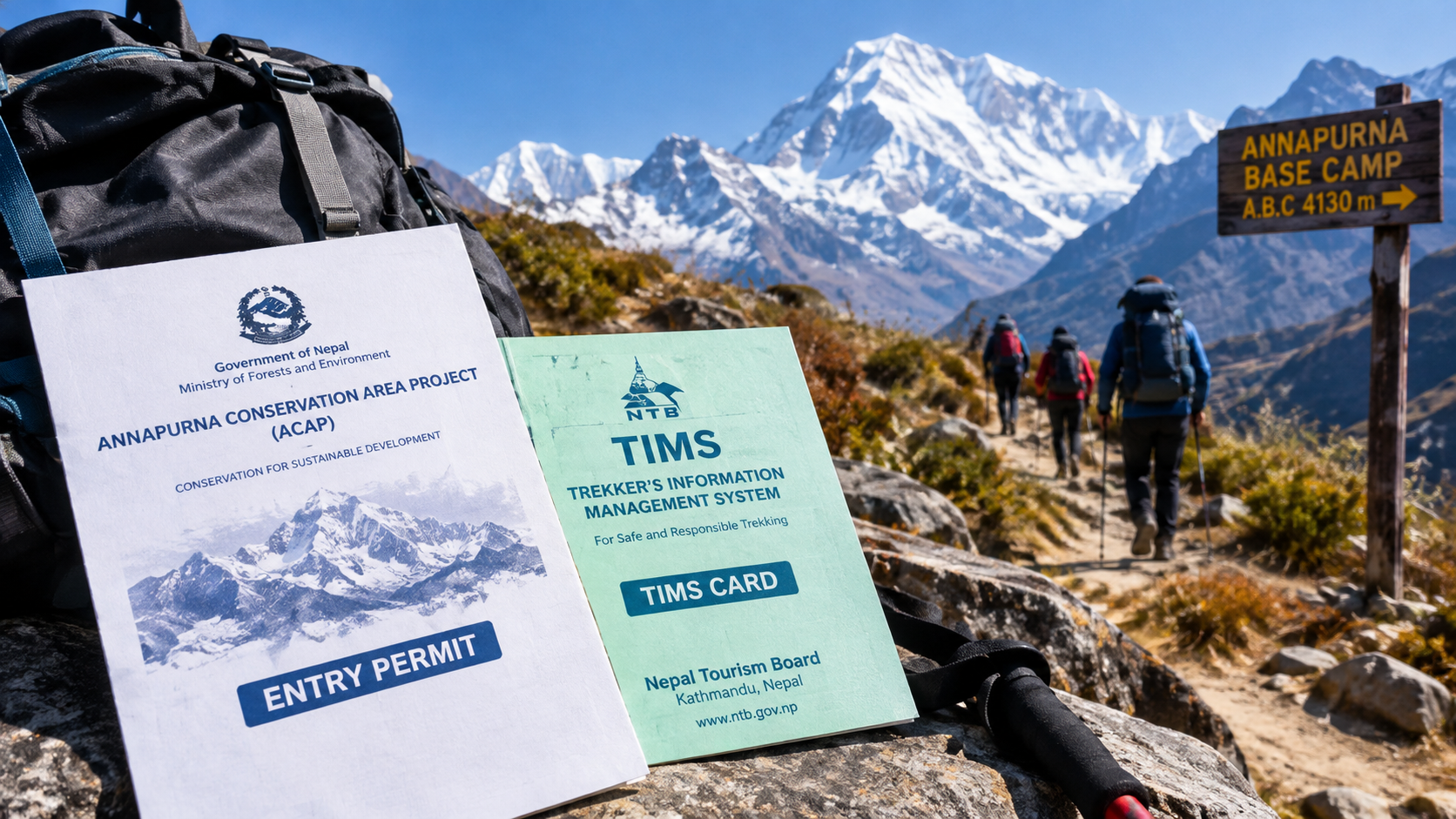
Foreign trekkers currently pay NPR 3,000 (approximately USD 22) for the ACAP permit.
TIMS Card Requirements
Depending on current Nepal Tourism Board regulations, trekkers may also need a TIMS (Trekkers’ Information Management System) card. The requirements have changed in recent years, so it’s important to check the latest rules before your trip or confirm them through your trekking agency.
Registered trekking agencies stay updated with the latest regulations and can arrange any required documents on your behalf.
Guide Regulations
Current trekking regulations require many popular trekking routes in Nepal to be completed with a licensed guide through a registered trekking agency. Hiring a guide not only helps meet government requirements but also improves safety, navigation, and the overall trekking experience.
Local guides provide valuable knowledge about the trail, weather, mountain culture, and altitude management while supporting local employment in the region.
Required Documents
Before applying for trekking permits, make sure you have the following:
- Valid passport
- Nepal visa
- Passport-sized photographs (if required)
- Travel insurance covering high-altitude trekking
- Emergency contact information
- Trekking itinerary (if requested)
Permit Comparison Table
| Permit / Requirement | Annapurna Circuit Trek | Annapurna Base Camp Trek |
| ACAP Permit | Required | Required |
| TIMS Card* | Subject to current regulations | Subject to current regulations |
| Licensed Guide | Follow current Nepal regulations | Follow current Nepal regulations |
| Passport | Required | Required |
| Nepal Visa | Required | Required |
| Travel Insurance | Strongly Recommended | Strongly Recommended |
Always confirm the latest permit and guide requirements before your trek, as government regulations may change.
Safety and Emergency Planning
Safety should always come first, regardless of which trek you choose. Both the Annapurna Circuit Trek and the Annapurna Base Camp Trek are well-established routes, but mountain weather, high altitude, and changing trail conditions can present unexpected challenges. Trekking with a licensed local guide, preparing properly, and following safety advice greatly reduce the risks.
Planning ahead also means having the right travel insurance, understanding emergency procedures, and knowing how to respond if conditions change. A little preparation can make a big difference during your Himalayan adventure.
Common Trekking Risks
Both treks involve long walking days, uneven trails, and high-altitude environments. Fatigue, dehydration, blisters, and altitude sickness are among the most common issues trekkers experience.
The Annapurna Circuit has a slightly higher risk due to its longer duration and the high-altitude crossing of Thorong La Pass (5,416m). The Annapurna Base Camp Trek is shorter but still requires proper preparation and steady pacing.
Weather Hazards
Mountain weather can change quickly at any time of year. Clear mornings may turn into cloudy afternoons, while rain, snow, or strong winds can affect trail conditions without much warning.
Spring and autumn usually offer the most stable weather, but trekkers should always carry warm clothing and waterproof gear regardless of the season.
Landslides
Landslides are more common during the monsoon season, particularly on roads and lower trail sections. Heavy rainfall can temporarily block trails and delay transportation.
Following your guide’s instructions and avoiding unnecessary trekking during severe weather helps reduce the risk of encountering hazardous conditions.
River Crossings
Both treks cross several rivers using well-maintained suspension bridges. These crossings are generally safe and regularly inspected, although caution is always recommended during heavy rain or strong winds.
Always cross bridges one at a time if instructed and avoid stopping in the middle for extended periods when large groups are crossing.
Emergency Evacuation
In the event of serious altitude sickness, injury, or medical emergencies, helicopter evacuation is available when weather conditions allow. Your guide and trekking agency will coordinate emergency assistance if needed.
Knowing your insurance policy, emergency contacts, and evacuation procedures before starting the trek provides extra peace of mind.
Travel Insurance
Comprehensive travel insurance is strongly recommended for both treks. Your policy should include high-altitude trekking, emergency medical treatment, and helicopter evacuation coverage.
Before purchasing insurance, check the maximum altitude covered by your policy, especially if you’re trekking on the Annapurna Circuit, where elevations exceed 5,000 meters.
Safety Comparison Table
| Feature | Annapurna Circuit Trek | Annapurna Base Camp Trek |
| Overall Safety | Very Good | Excellent |
| Altitude Risk | Higher | Moderate |
| Weather Challenges | Higher | Moderate |
| Landslide Risk | Moderate | Moderate |
| River Crossings | Several | Several |
| Emergency Evacuation | Available | Available |
| Travel Insurance | Highly Recommended | Highly Recommended |
Which Trek Is Better for Different Types of Trekkers?
There is no single “best” trek in the Annapurna region. The right choice depends on your experience, fitness level, available time, and what you want from your Himalayan adventure. Some trekkers prefer long, challenging journeys, while others value comfort, shorter itineraries, or cultural experiences.
For help deciding, you can explore our guide to the best treks in Nepal to see which journey is better suited to your travel style.
Beginners
The Annapurna Base Camp Trek is generally the better choice for first-time trekkers. Its moderate difficulty, lower altitude, and shorter itinerary make it easier to prepare for while still offering incredible Himalayan scenery.
The Annapurna Circuit is better suited to beginners who already have good fitness and enough time to complete a longer, higher-altitude trek.
Solo Trekkers
Due to current trekking regulations, both routes are best completed with a licensed guide arranged through a registered trekking agency. Joining a small group is an excellent option for solo travelers looking to share costs and meet other trekkers.
Both treks provide safe and welcoming environments with plenty of teahouses along the route.
Couples
Both treks are excellent choices for couples. The Annapurna Base Camp Trek offers a shorter and more relaxed adventure, while the Annapurna Circuit provides a longer shared journey through changing landscapes and diverse mountain cultures.
Couples looking for comfort often prefer the Base Camp route, while adventurous pairs may enjoy the challenge of the Circuit.
Families
Families with older children generally find the Annapurna Base Camp Trek more suitable because of its shorter duration and lower altitude. Daily walking distances are easier to manage, and accommodation is widely available.
The Annapurna Circuit may be appropriate for active families with previous trekking experience and older teenagers.
Senior Trekkers
Many senior trekkers successfully complete both routes with proper preparation. The Annapurna Base Camp Trek is usually the more comfortable option due to its lower elevation and shorter itinerary.
Choosing a slower pace, additional rest days, and experienced local guides can make either trek more enjoyable.
Adventure Seekers
If you’re looking for a bigger challenge, the Annapurna Circuit is the clear winner. Crossing Thorong La Pass, trekking through diverse landscapes, and spending more days in the mountains create a true expedition feel.
The Annapurna Base Camp Trek offers adventure as well but focuses more on scenic beauty than endurance.
Photographers
Both treks provide outstanding photography opportunities. The Annapurna Circuit captures dramatic landscape changes, remote villages, and wide mountain panoramas throughout the journey.
The Annapurna Base Camp Trek is perfect for sunrise photography, close-up mountain views, waterfalls, forests, and the spectacular Annapurna Sanctuary.
Budget Travelers
The Annapurna Base Camp Trek is generally the more budget-friendly option. Fewer trekking days mean lower costs for accommodation, meals, guides, and transportation.
The Annapurna Circuit requires a larger overall budget but offers a longer and more varied trekking experience.
Luxury Trekkers
Luxury services are more widely available on the Annapurna Base Camp route, especially in the lower villages and around Pokhara. Comfortable lodges, private transportation, and customized itineraries are easier to arrange.
Luxury options also exist on parts of the Annapurna Circuit, although facilities become much more basic at higher elevations.
Pros and Cons
Both treks offer unforgettable Himalayan experiences, but each has its own strengths and limitations. Comparing the advantages and challenges can help you decide which route best matches your expectations.
Annapurna Circuit Pros
- Incredible landscape diversity
- Crosses the famous Thorong La Pass (5,416m)
- Rich cultural experiences
- Longer adventure
- Excellent mountain panoramas
- Less repetitive scenery
- Ideal for experienced trekkers
Annapurna Circuit Cons
- Longer itinerary
- Higher overall cost
- Greater altitude sickness risk
- More physically demanding
- Weather can affect Thorong La crossing
- Longer transportation time
Annapurna Base Camp Pros
- Shorter itinerary
- Moderate difficulty
- Lower altitude
- Outstanding mountain amphitheater
- Comfortable teahouses
- Better for beginners
- More affordable overall
Annapurna Base Camp Cons
- More crowded during peak seasons
- Steep stone staircases
- Return follows much of the same trail
- Less landscape diversity than the Circuit
- Limited high-altitude adventure compared to Thorong La
Final Verdict: Which Trek Should You Choose?
Both the Annapurna Circuit Trek and the Annapurna Base Camp Trek are among Nepal’s finest trekking adventures, but they suit different types of travelers. The Annapurna Circuit offers a longer and more challenging journey through diverse landscapes, while the Annapurna Base Camp Trek provides a shorter route with breathtaking mountain views inside the Annapurna Sanctuary.
If you’re still undecided, think about your available time, fitness level, budget, and what you want to experience most. Whether you choose the Circuit or Base Camp, both treks promise unforgettable scenery, rich local culture, and memories that will last a lifetime.
If You Want More Adventure
Choose the Annapurna Circuit Trek if you’re looking for a bigger challenge. Crossing Thorong La Pass (5,416m), trekking through multiple climate zones, and spending two weeks in the Himalayas create a true adventure that’s difficult to match.
It’s the better choice for experienced trekkers or anyone who wants to explore remote mountain villages, diverse landscapes, and one of Nepal’s most iconic long-distance trekking routes.
If You Want Better Mountain Views
Choose the Annapurna Base Camp Trek if your priority is standing close to Nepal’s highest peaks. The Annapurna Sanctuary surrounds you with Annapurna I, Machhapuchhre, Hiunchuli, and Annapurna South, creating one of the most spectacular mountain panoramas in the Himalayas.
The Annapurna Circuit offers incredible views throughout the journey, but the dramatic setting at Annapurna Base Camp provides a more immersive mountain experience.
If You Have Limited Time
Choose the Annapurna Base Camp Trek if you have only one to two weeks available. Most itineraries can be completed in 7–11 days, making it ideal for travelers with limited vacation time.
The Annapurna Circuit generally requires 12–18 days, making it better suited for those who can spend longer exploring the mountains.
If You’re a Beginner
The Annapurna Base Camp Trek is usually the better option for first-time trekkers. Its moderate difficulty, lower altitude, and shorter itinerary make it more accessible while still delivering an authentic Himalayan adventure.
If you’re physically fit and have previous hiking experience, the Annapurna Circuit is also achievable with proper preparation and guidance from experienced local guides.
If You’re Looking for Cultural Immersion
Choose the Annapurna Circuit Trek if experiencing different mountain cultures is one of your main goals. The route passes through Gurung, Thakali, and Tibetan-influenced villages, each with its own traditions, architecture, and way of life.
The Annapurna Base Camp Trek also offers wonderful cultural experiences, especially in Gurung and Magar villages, but the Annapurna Circuit provides greater cultural diversity over its longer route.
Decision Matrix
| If Your Priority Is… | Best Choice |
| Short Trek | Annapurna Base Camp Trek |
| Long Himalayan Adventure | Annapurna Circuit Trek |
| First-Time Trekking | Annapurna Base Camp Trek |
| High Mountain Pass | Annapurna Circuit Trek |
| Lower Altitude | Annapurna Base Camp Trek |
| Diverse Landscapes | Annapurna Circuit Trek |
| Close-Up Mountain Views | Annapurna Base Camp Trek |
| Rich Cultural Experience | Annapurna Circuit Trek |
| Budget-Friendly Trek | Annapurna Base Camp Trek |
| Challenging Trek | Annapurna Circuit Trek |
| Family-Friendly Adventure | Annapurna Base Camp Trek |
| Photography | Both (ABC for mountain close-ups, Circuit for landscape diversity) |
Local Guide Recommendation
If this is your first trek in Nepal, we generally recommend the Annapurna Base Camp Trek because it offers an excellent balance of scenery, culture, comfort, and moderate difficulty. If you’ve already completed a few multi-day hikes and want a more challenging Himalayan adventure, the Annapurna Circuit Trek is the natural next step.
At Wilderway Trekking, our local guides have led both routes many times and can help you choose the trek that best matches your experience, fitness level, travel dates, and expectations.
Conclusion
Choosing between the Annapurna Circuit Trek and the Annapurna Base Camp Trek ultimately comes down to your goals, available time, and trekking experience. Both routes showcase the breathtaking beauty of the Annapurna region, welcoming mountain villages, and unforgettable Himalayan landscapes. Whether you prefer crossing a high mountain pass or standing beneath the towering Annapurna Massif, either trek promises a rewarding adventure.
Key Takeaways
The Annapurna Circuit Trek is the better choice if you’re looking for a longer journey, greater landscape diversity, and the challenge of crossing Thorong La Pass (5,416m). It combines remote mountain scenery, diverse cultures, and one of Nepal’s most iconic trekking experiences.
The Annapurna Base Camp Trek is ideal for trekkers with limited time or those seeking a moderate adventure without sacrificing spectacular mountain views. Its shorter itinerary, comfortable teahouses, and stunning Annapurna Sanctuary make it one of Nepal’s most popular trekking routes for both beginners and experienced hikers.
Recommended Trek Based on Your Travel Style
Choose the Annapurna Circuit Trek if you enjoy longer adventures, higher altitudes, changing landscapes, and exploring traditional Himalayan villages over two weeks or more. It’s an excellent option for experienced trekkers and those looking for a classic Himalayan expedition.
Choose the Annapurna Base Camp Trek if you want a shorter, more accessible trek with incredible mountain scenery, comfortable accommodation, and a rewarding experience in just one week. It is particularly well suited to first-time trekkers, couples, families, and travelers with limited holiday time.
Plan Your Annapurna Adventure with Wilderway Trekking & Expedition
At Wilderway Trekking & Expedition, we believe the best trek is the one that matches your interests, fitness level, and travel goals. Our experienced local guides, carefully designed itineraries, and personalized service ensure every trek is safe, enjoyable, and memorable from start to finish.
Whether you’re planning the Annapurna Circuit Trek or the Annapurna Base Camp Trek, our team is here to help you prepare every step of the way. Contact Wilderway Trekking & Expedition today to find the perfect itinerary and begin your next Himalayan adventure with confidence.
Frequently Asked Questions
Which trek is better: Annapurna Base Camp or Annapurna Circuit?
Neither trek is objectively better-it depends on your travel style. The Annapurna Base Camp (4,130 m / 13,550 ft) trek is ideal for trekkers seeking close-up mountain views in a shorter itinerary, while the Annapurna Circuit offers greater landscape diversity, cultural experiences, and the challenge of crossing Thorong La Pass (5,416 m / 17,769 ft).
Is the Annapurna Circuit harder than Annapurna Base Camp?
Yes. The Annapurna Circuit is generally more challenging because it reaches a much higher elevation at Thorong La Pass (5,416m), covers a longer distance, and typically requires 12–18 trekking days. Annapurna Base Camp is shorter and reaches a maximum altitude of 4,130m, making it more suitable for first-time high-altitude trekkers.
Which trek has better mountain views?
Both treks offer spectacular Himalayan scenery but in different ways. Annapurna Base Camp provides close-up views of Annapurna I (8,091m), Machhapuchhre (6,993m), and the surrounding Annapurna Sanctuary, while the Annapurna Circuit showcases a wider range of peaks, including Annapurna, Dhaulagiri (8,167m), Manaslu (8,163m), and the dramatic landscapes around Thorong La Pass.
Which trek is better for beginners?
The Annapurna Base Camp Trek is generally better for beginners. Its lower altitude, shorter duration, and well-established teahouse network make it easier than the Annapurna Circuit. Beginners should still prepare physically and trek with a licensed guide.
How many days do the two treks take?
The Annapurna Base Camp Trek usually takes 7–12 days, depending on the itinerary. The Annapurna Circuit Trek typically requires 12–18 days, although shorter versions are possible using road access in certain sections.
Which trek has a higher risk of altitude sickness?
The Annapurna Circuit has a higher risk of altitude sickness because it crosses Thorong La Pass at 5,416m, over 1,200 meters higher than Annapurna Base Camp. Proper acclimatization is essential on both treks, but it is especially important on the Circuit.
Which trek is more crowded?
Annapurna Base Camp is generally busier during the spring and autumn trekking seasons due to its shorter duration and popularity. The Annapurna Circuit is longer and more spread out, so crowds are usually dispersed, although busy sections can still occur around Manang, Thorong Phedi, and Muktinath.
Which trek is more affordable?
The Annapurna Base Camp Trek is usually more affordable because it is shorter and requires fewer trekking days. The Annapurna Circuit generally costs more due to its longer itinerary, additional accommodation, meals, and transportation expenses.
Can I combine the Annapurna Circuit and Annapurna Base Camp Treks?
Yes. Many trekkers combine both routes into the Annapurna Circuit with Annapurna Base Camp Trek, a comprehensive itinerary lasting 18–22 days. This combination includes crossing Thorong La Pass and visiting Annapurna Base Camp, offering one of Nepal’s most complete trekking experiences.
Which trek should I choose?
Choose the Annapurna Base Camp Trek if you want a shorter, moderate trek with close-up Himalayan scenery and excellent value. Choose the Annapurna Circuit Trek if you prefer a longer adventure featuring diverse landscapes, high mountain passes, rich cultural experiences, and one of Nepal’s most iconic trekking routes.