

- 285 Views
- 7 Min Read
- (0) Comment
Manaslu Circuit Trek The Ultimate Off- the- Beaten- Path Adventure in Nepal.

Have you formerly completed the popular Annapurna and Everest treks? Looking for a more grueling and unique trekking experience in Nepal? The Manaslu Circuit Trek is the perfect adventure for you! Known as one of the stylish off- the- beaten- path treks in Nepal, it offers a combination of stirring Himalayan views, rich artistic gests , and the exhilaration of crossing high- altitude mountain passes.
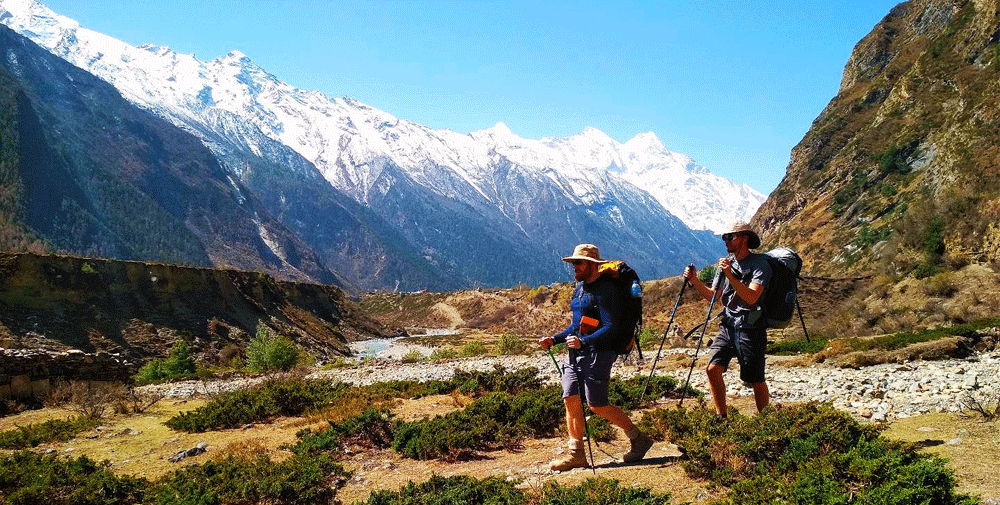
The Manaslu Circuit is snappily getting a favorite among adventure campaigners who crave commodity remote and grueling . This journey takes you through untouched nature, thick timbers, and roaring gutters, leading up to the iconic Larkya La Pass at over 5,100 measures.
Along the trail, you will witness a fascinating artistic transition. Starting from the lower regions, you will witness Hindu townlets, while the advanced elevations introduce you to Buddhist communities with Tibetan influences. This unique artistic mix makes the Manaslu journey a trip through time and tradition.
Breathe in the fresh mountain air, enjoy the serene sounds of nature, and immerse yourself in the diurnal lives of locals in remote townlets. Interact with townies to learn about their culture, traditions, and way of life high in the Himalayas.
Still, this blog reveals the top 8 reasons to journey the Manaslu Circuit and 8 fascinating data about this inconceivable route, If you’re ready for a formerly- by-a-lifetime journey. Let’s dive into why the Manaslu Circuit Trek is a must- do for any true adventurer!

- Off- the- Beaten- Path Trek Less Crowded and Remote.
Still, the Manaslu Circuit Trek is the ideal choice, If you’re seeking a grueling journey down from Nepal’s more crowded trails. This isolated route lets you enjoy the pristine beauty of the Himalayas without the hustle and bustle of busy touring capitals. For utmost of the days, you’ll feel like you have the trail entirely to yourself, girdled by unspoiled geographies and tranquility.Still, don’t be surprised if you encounter mule trains along the way, as they’re the lifeline for transporting goods to these remote regions. The rugged and uneven terrain enhances the feeling of touring in a away, untouched land, adding an redundant sense of adventure to your trip.
Unlike the popular Annapurna Circuit or Everest Base Camp Trek, the Manaslu Round Trek remains significantly less crowded. While the trail is peaceful, you can still meet fellow pedestrians at guesthouses or lodges where people gather for refections or an late stay, offering openings to partake stories and bond over the experience.
- Passing Diverse. Culture and Lifestyle.

One of the most enriching aspects of the Manaslu Circuit Trek is its artistic diversity. As you lift from the lower regions to the advanced mound, you’ll substantiation a remarkable transition in both culture and life.
In the lower elevations, the townlets are generally told by Hindu culture, with communities inhabited by ethnical groups similar as the Gurungs, Ghale, Sunar, and Damai people. These townlets offer a regard into Nepal’s pastoral life, where ancient traditions are still a part of everyday actuality.
As you gain elevation, the artistic geography shifts dramatically to reflect strong Tibetan Buddhist influences. Advanced- altitude agreements are home to Buddhist communities with customs, practices, and armature evocative of Tibet. Prayer bus, mani walls, chortens, and ancient cloisters line the trails, creating a spiritual air that adds depth to your journey.
The occasion to immerse yourself in these different artistic gests , interact with locals, and substantiation their way of life makes the Manaslu Circuit Trek not just a physical trip but also a artistic and spiritual adventure.
- Immerse Yourself in Local Culture and Ancient Traditions.
One of the highlights of the Manaslu Circuit Trek is the occasion to interact with locals and gain a deeper sapience into their culture and way of life. As you journey to advanced mound, the artistic geography transforms, and you’ll encounter the Buddhist culture along with traces of the ancient Bon culture, which predates Buddhism.
Throughout the trail, you’ll see Mani walls adorned with sacred eulogies, slush- erected chortens, and various prayer flags fluttering in the wind — symbols of the deep spiritual connection the locals have with their faith. The peaceful presence of ancient cloisters along the route adds a spiritual dimension to the trip, creating a serene discrepancy to the rugged terrain.In Lho vill, you’ll come across the emotional Ribum Gompa, a large Buddhist friary that offers a regard into the monastic life and traditions.

On your adaptation day in Sama Gaon, the artistic experience deepens. Explore thousands of intricately sculpted Mani monuments, inscribed or painted with Buddhist prayers and textbooks. A short hike to the Pungyen Gompa, an old and historically significant friary, offers an excellent occasion to observe the unique Himalayan Buddhist culture while taking in the stirring views of towering glaciers and snow- limited peaks.Immersing yourself in the culture, traditions, and spiritual heritage of the region turns your journey into a meaningful disquisition of both the natural world and the lives of the people who call this remote and beautiful place home.
- Explore the Place of Origin of Shah Autocrats and Brave Gurkha Dogfaces.

Your Manaslu Circuit Trek begins in the major hills of Gorkha, a region deeply intertwined with Nepal’s history and pride. Gorkha is the motherland of the Shah autocrats who unified Nepal. Before the 18th century, Nepal was disintegrated into multitudinous small fiefdoms. It was King Prithivi Narayan Shah, a native of Gorkha, who initiated the junction process and established the Shah dynasty, which ruled Nepal for over 200 times until the monarchy was abolished in 2008.
Gorkha is also the land of the fabulous Gurkha dogfaces, known encyclopedically for their frippery and fearlessness. During the Anglo- Nepalese War( 1814 – 1816), the British East India Company faced heavy casualties due to the fierce resistance by Gorkha dogfaces. Their unmatched courage left a lasting print, leading to a peace convention in 1815 and the addition of Gurkhas in the British Army.The word Gurkha originates from the city of Gorkha and has come synonymous with redoubtable soldiers. Gurkha dogfaces, primarily from the Gurung, Magar, Rai, and Limbu ethnical groups, have fought in wars worldwide, earning prestigious accolades similar as the Victoria Cross for gallantry. moment, the Gurkha Brigade remains a symbol of honor and fidelity.
- Witness the life of Bhotias Untouched by Modernization.
As you journey through the remote trails of the Manaslu Circuit, you’ll enter townlets inhabited by the Bhotias, a community nearly related to Tibetan Buddhists. Nestled in the Nubri Valley, this region remains remarkably untouched by modernization, conserving its ancient traditions and way of life.
The people of Nubri Valley primarily depend on beast husbandry and husbandry for their livelihood. You’ll see locals cultivating crops similar as potatoes, barley, sludge, and apples in terraced fields. The simplicity of their lives reflects a harmonious relationship with nature, offering pedestrians a regard into a dateless actuality.The Bhotia people are distinguishable by their unique traditional apparel and language. rather of the common Nepali chatting “ Namaste, ” you’ll hear locals saying “ Tashi Delek ”, a Tibetan expression wishing good fortune. The ascendance of Tibetan Buddhism in the Nubri Valley is apparent in the region’s vibrant culture and religious structures.
While touring, you’ll pass beautifully drafted chortens( Buddhist sanctuaries) and long stretches of Mani walls inscribed with sacred textbooks. Circumnavigate these structures in a clockwise direction as a sign of respect and devotion. You’ll also have openings to visit ancient cloisters, where monks and nuns lead spiritual lives amidst the serene mountains.The simplicity, adaptability, and artistic uproariousness of the Bhotia people make the Manaslu Circuit Trek not just a physical challenge but also a deep artistic disquisition.
- Crossing Larkya La Pass.

Larkya La Pass( 5,106 m), one of Nepal’s most dramatic and longest passes, offers stunning glacier views and panoramic lookouts of Manaslu, Annapurna II, and Lamjung Himal.
- Extend to Tsum Valley.

Discover Tsum Valley’s pictorial culture, sacred Buddhist grottoes , and ancient cloisters amid striking geographies of Ganesh Himal and Sringi Himal.
- Pass Through the 2015 Earthquake Affected Area.

Your Manaslu Circuit Trek begins in Barpak, Gorkha, a vill that was devastated by the disastrous 2015 earthquake. As the center of the earthquake, Barpak endured severe destruction, with recreating foreshocks continuing to shake the region. Of the 1,200 houses in the vill, only a many remained standing, and numerous lives were lost during this woeful event.
Before the earthquake, Barpak was a fascinating hillside vill dotted with traditional thatched roof houses, offering stunning views of the girding geography. moment, the vill is gradationally rebuilding, and touring through this area not only allows you to witness the adaptability of the original community but also contributes directly to their recovery and profitable support. The trip through this earthquake- affected region offers a poignant memorial of Nepal’s strength and the significance of community rebuilding sweats.
Leave a comment: