
- 5 Views
- 19 Min Read
- (0) Comment
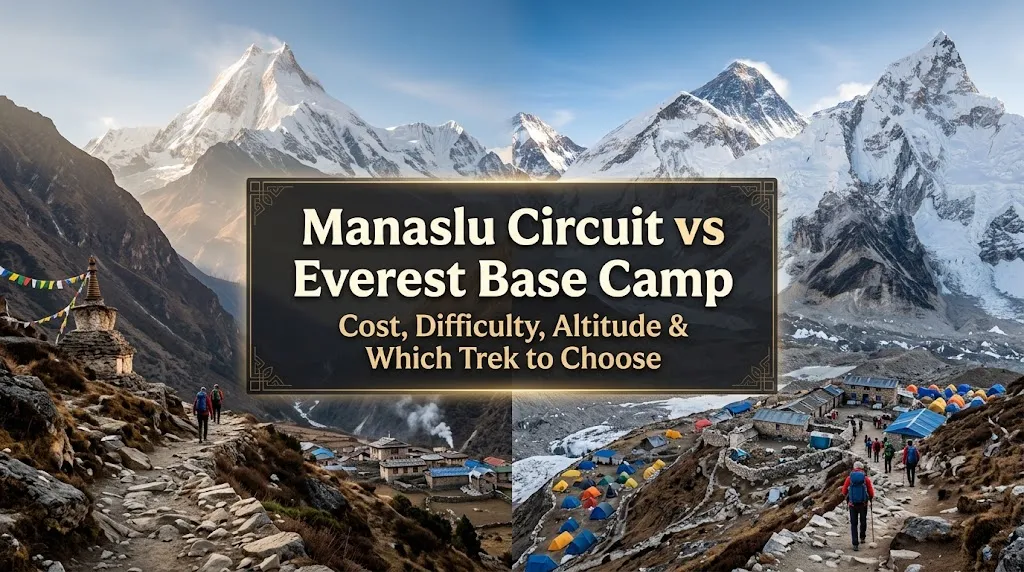
The Manaslu Circuit and Everest Base Camp (EBC) treks offer two different ways to experience the Nepal Himalaya. The Manaslu Circuit is ideal for trekkers seeking a quieter, more remote journey with a high mountain pass, while Everest Base Camp appeals to those who want to walk through the famous Khumbu region and reach the foot of Mount Everest, which stands at 8,848m.
Neither trek is automatically better for everyone. Your decision should depend on your fitness, available time, budget, experience at altitude, and preferred trekking environment. This guide compares the routes by difficulty, cost, duration, altitude, scenery, culture, permits, accommodation, and seasonal conditions so you can choose the trek that fits your plans.
Manaslu Circuit vs Everest Base Camp: Quick Comparison
The main difference is the experience each route provides. Manaslu offers a remote circuit journey that crosses Larkya La Pass, while Everest Base Camp follows an established trail through Sherpa communities toward one of the world’s best-known mountaineering destinations.
| Comparison factor | Manaslu Circuit Trek | Everest Base Camp Trek |
| Typical duration | Around 14–16 days, depending on itinerary | Around 12–14 trekking days, depending on itinerary |
| Highest point | Larkya La Pass, 5,106 m | Kala Patthar, 5,545 m, if included |
| Main destination | Manaslu region and Larkya La Pass | Everest Base Camp, 5,364 m |
| Difficulty | Challenging due to remoteness, sustained walking and pass crossing | Challenging due to altitude, long walking days and elevation gain |
| Trekking environment | Generally quieter and more remote | Generally busier on the classic route |
| Scenery | Forests, river valleys, traditional settlements and high alpine landscapes | Khumbu valleys, glaciers and panoramic views of Everest and neighboring peaks |
| Cultural experience | Tibetan-influenced communities and traditional mountain villages | Sherpa communities, monasteries and Namche Bazaar |
| Accommodation | Teahouses and locally available lodges | Teahouses and lodges along an established route |
| Permit arrangements | Restricted-area permit and applicable conservation-area permits | Khumbu Pasang Lhamu Rural Municipality and Sagarmatha National Park permits, as applicable |
| Best suited to | Trekkers seeking a remote circuit and high-pass crossing | Trekkers seeking the iconic Everest region and base camp experience |
Actual costs, distances, and walking days vary by itinerary, transportation, acclimatization schedule, guide and porter services, and accommodation choices. Also, Everest Base Camp is not the highest point on the standard EBC itinerary if Kala Patthar is included.
Quick answer: Choose Manaslu if you value remoteness, varied landscapes, and a high mountain pass. Choose Everest Base Camp if reaching the Everest region is your priority and you want an established trekking route with a strong mountaineering history.
Which Trek Is Harder: Manaslu Circuit or Everest Base Camp?
Both treks are physically demanding and require preparation. Manaslucan feel harder because of its remote sections, variable trail conditions and the crossing of Larkya La Pass. Everest Base Camp is also challenging because trekkers spend several days gaining altitude and may experience fatigue, cold and altitude-related symptoms.
There is no universal answer to which trek is harder. Your experience depends on fitness, acclimatization, walking pace, weather, itinerary design and how well you respond to altitude.
Manaslu Circuit Trek difficulty
The Manaslu Circuit involves consecutive days of walking through changing terrain, including forest trails, rocky paths, river valleys, mountain villages, and high-altitude landscapes. The crossing of Larkya La Pass at 5,106 m is a major challenge. The approach can involve cold temperatures, snow, or ice, depending on the season.
The route’s relative remoteness adds to the difficulty. Services and emergency assistance may be less accessible in some sections than on more established trekking routes. Trekkers need a sensible itinerary, appropriate clothing, suitable footwear and enough time to adjust to increasing altitude.
A guided itinerary can help with route planning, local logistics, and monitoring how trekkers are coping with the elevation. See the Manaslu Circuit Trek – 16 Days for an example of a planned itinerary.
Everest Base Camp trek difficulty
The Everest Base Camp trek follows a well-established trail, but that does not make it easy. Trekkers face long walking days, steep climbs and descents, stone steps, suspension bridges, and several nights at high altitude. The ascent through the Khumbu region requires a gradual pace and a suitable acclimatization schedule.
Many itineraries also include Kala Patthar, which rises to approximately 5,545 m and provides wide views of Everest and surrounding peaks. This additional climb can be tiring because it takes place at very high altitude, often with an early start in cold conditions.
For a closer look at the physical demands, read the guide to Everest Base Camp trek difficulty.
Which trek is harder for beginners?
Neither trek should be treated as an easy first hike. Beginners with good fitness may prepare for Everest Base Camp, but they should understand the altitude, training requirements and length of the journey. The Manaslu Circuit requires additional consideration because of the high pass and more remote trail sections.
Before choosing either route, build walking endurance, practise hiking on uneven terrain, and train with a loaded daypack. Choose an itinerary that allows adequate acclimatization rather than trying to complete the trek in the fewest possible days.
| Difficulty factor | Manaslu Circuit | Everest Base Camp |
| Sustained walking | High | High |
| High-altitude exposure | High | High |
| Main altitude challenge | Larkya La Pass crossing | Several days at altitude; Kala Patthar if included |
| Remoteness | Greater on many sections | More established trail and services |
| Technical climbing | Not normally required on the standard trek | Not normally required on the standard trek |
| Key preparation | Endurance, altitude awareness and pass-crossing readiness | Endurance, gradual ascent and altitude awareness |
Both routes are trekking journeys rather than technical mountaineering expeditions under normal conditions. However, weather, snow and trail conditions can make sections more demanding, and conditions should be checked before departure.
Manaslu Circuit vs Everest Base Camp Cost and Budget
The total cost of either trek depends on the season, itinerary length, transport, permits, accommodation, meals, guide and porter services, and what is included in a package. A lower advertised price may not cover every expense, so compare inclusions rather than package totals alone.
How much does the Manaslu Circuit trek cost?
The Manaslu Circuit requires restricted-area permits and travel arrangements suited to a remote trekking region. A guided package may include permits, a licensed guide, accommodation, meals during the trek and ground transportation, but inclusions differ by operator.
Other potential expenses include personal snacks, hot showers, device charging, Wi-Fi, drinks, tips, travel insurance and equipment. Ask whether the quoted price covers transportation to and from the trailhead, permit processing, meals, accommodation and emergency arrangements.The route’s restricted-area status and logistics can affect the total budget. Compare the package itinerary with the services listed in the quotation before booking.
How much does the Everest Base Camp trek cost?
Everest Base Camp expenses can include flights to and from Lukla or alternative ground transportation, accommodation, meals, permits, guide services, porter services and insurance. Flight costs and logistics can change by season and weather conditions, so allow some flexibility in your budget.
A guided package may simplify planning by coordinating permits, accommodation, trekking staff and transportation. If you compare packages, check whether airport transfers, Lukla flights, meals, porter services, accommodation in Kathmandu and contingency arrangements are included or charged separately.You can review the planned services and duration of the Everest Base Camp trek for 14 days when comparing guided itinerary options.
Which trek is cheaper overall?
There is no fixed winner on price. The total depends on the package level and how you arrange transportation, accommodation, meals and trekking support. Manaslu has restricted-area permit and logistical costs, while Everest Base Camp can involve significant flight and high-season expenses.
Use the following checklist when comparing prices:
- Confirm the full itinerary and number of trekking days.
- Check which permits are included.
- Verify whether meals and accommodation are covered.
- Ask whether guide and porter services are included.
- Check transportation and flight arrangements.
- Review costs for insurance, personal purchases, tips and contingency days.
The most useful comparison is the total expected trip cost, not just the initial package price.
Altitude, Acclimatization and Safety
Altitude is one of the most important factors when comparing Manaslu Circuit vs Everest Base Camp. Manaslu reaches 5,106 m at Larkya La Pass, while the classic EBC itinerary reaches 5,364 m at base camp and may include Kala Patthar at 5,545 m. These elevations can cause altitude-related illness, even in fit trekkers.
The risk of acute mountain sickness (AMS) depends on how quickly you ascend, how high you sleep, your individual response to altitude and your acclimatization schedule. Neither route can be considered risk-free, and reaching a high point does not mean every trekker will experience the same symptoms.
Altitude comparison
| Altitude factor | Manaslu Circuit | Everest Base Camp |
| Highest main route point | Larkya La Pass, 5,106 m | Everest Base Camp, 5,364 m |
| Optional high viewpoint | Depends on the itinerary | Kala Patthar, 5,545 m |
| Main concern | High pass crossing and remote sections | Sustained exposure to high altitude |
| Acclimatization | Essential | Essential |
| Emergency access | More limited in some remote sections | More established in many parts of the route, but still limited at altitude |
How to reduce altitude-related risks
- Follow an itinerary that allows gradual ascent and acclimatization.
- Walk at a comfortable pace, especially as elevation increases.
- Drink fluids regularly and eat enough to maintain energy.
- Tell your guide or trekking companions if you develop symptoms.
- Do not ascend to a higher sleeping altitude when experiencing symptoms that may indicate altitude sickness.
- Descend promptly if symptoms worsen or serious warning signs develop.
A headache, nausea, dizziness, unusual fatigue or loss of appetite can indicate AMS. Confusion, difficulty walking straight or breathlessness at rest are serious warning signs that require urgent action and descent with appropriate assistance. Do not rely on fitness alone to protect against altitude sickness.
Which trek has a higher risk of altitude sickness?
Both routes carry a meaningful risk because they involve high elevations. Everest Base Camp reaches a higher maximum elevation if Kala Patthar is included, but the overall risk cannot be judged by maximum altitude alone. The ascent profile, sleeping elevations, acclimatization days and individual response all matter.
Manaslu’s remoteness can make planning and access to assistance more complicated in certain sections. For either trek, choose an itinerary that prioritizes acclimatization over speed and make sure your travel insurance covers high-altitude trekking and emergency evacuation where needed.
Scenery, Culture and Trekking Experience
The two treks offer excellent Himalayan scenery, but their landscapes and cultural experiences differ. Manaslu takes trekkers through varied terrain and traditional settlements on a circuit route. Everest Base Camp focuses on the Khumbu region, with iconic mountain views, Sherpa communities and the approach to Everest Base Camp.
Your preference may come down to whether you want a quieter journey with a sense of remoteness or a classic route connected to the history of Himalayan mountaineering.
Manaslu Circuit scenery and culture
The Manaslu Circuit passes through river valleys, forests, cultivated slopes, traditional villages and increasingly rugged alpine terrain. As the route climbs, the landscape becomes more open and severe, leading toward the high mountain environment around Larkya La Pass. Views of Mount Manaslu and surrounding peaks are a major part of the experience.
The route also passes through communities with strong Tibetan cultural influences, including traditional architecture, Buddhist monasteries, prayer flags and local customs. The experience varies by village and season, and respectful behavior is important when visiting religious and cultural sites.
Manaslu is a strong choice for trekkers who value a circuit journey and quieter stretches of trail. However, fewer crowds also mean fewer services in some areas, so logistical planning matters.
Everest Base Camp scenery and Sherpa culture
The Everest Base Camp route travels through the Khumbu region, known for dramatic mountain scenery, glacier views and Sherpa cultural heritage. Namche Bazaar is a major settlement along the trail, while monasteries and villages provide opportunities to learn about local traditions.
As trekkers gain elevation, the landscape transitions from forested valleys to more exposed alpine terrain. Reaching Everest Base Camp is a major milestone for many hikers because of its connection to expeditions on Mount Everest. The view from Kala Patthar, if included, offers a prominent perspective of Everest and neighboring peaks.
The route has more established trekking infrastructure than many remote Himalayan trails, although accommodation can be busy during peak seasons and weather can disrupt travel.
Which trek is less crowded?
The Manaslu Circuit is generally quieter on many sections than the classic Everest Base Camp route. EBC attracts a large number of trekkers during popular spring and autumn windows because of its international recognition and established services.
Crowds vary with departure dates, weather, and the specific itinerary. Manaslu’s relative quiet should not be confused with an easier trip: remoteness can make logistics more demanding, while EBC’s popularity does not remove its altitude challenges.
| Experience | Manaslu Circuit | Everest Base Camp |
| Overall atmosphere | More remote on many sections | Popular, established trekking corridor |
| Landscape | Forests, river valleys, alpine terrain and high pass | Khumbu valleys, glaciers and high mountain scenery |
| Cultural highlights | Traditional settlements and Tibetan-influenced heritage | Sherpa communities, monasteries and Namche Bazaar |
| Signature experience | Crossing Larkya La Pass | Reaching Everest Base Camp and optionally Kala Patthar |
| Infrastructure | More limited in some areas | More developed along the main trail |
Best Time to Trek, Weather and Trail Conditions
Spring and autumn are generally the most popular seasons for both routes because conditions often offer a useful balance of visibility, temperatures and trail access. However, the weather varies by elevation and year, and conditions can change quickly in the mountains.
The best departure window depends on your priorities. Trekkers planning Manaslu should pay particular attention to snow and weather conditions around Larkya La Pass. Those planning EBC should consider trail conditions, visibility, temperatures and possible flight disruption around Lukla.
Best time for the Manaslu Circuit trek
Spring, from roughly March to May, brings milder conditions at lower elevations and changing mountain scenery. Autumn, particularly October and November, is also popular because the monsoon has usually passed and visibility can be good. High-altitude sections may still be cold, and snow can affect the pass.
Winter brings colder conditions and can increase the difficulty of crossing Larkya La. During the monsoon, rain, cloud, wet trails and landslide-related disruptions can affect lower sections. Conditions vary, so a seasonal label alone cannot guarantee that the route or pass will be safe.
Check the detailed guide to the best time to trek the Manaslu Circuit before choosing dates.
Best time for the Everest Base Camp trek
Spring and autumn are also the main trekking seasons for Everest Base Camp. Spring is popular with trekkers and climbers visiting the Khumbu region, while autumn often brings favorable visibility after the monsoon. Nights remain cold at higher elevations, even during the main seasons.
The monsoon can bring cloud, rain and flight disruption, while winter can mean very cold temperatures, snow and more difficult trail conditions. Lukla flights are weather-sensitive, so allow flexibility in your schedule instead of planning a tight connection immediately after the trek.
For seasonal planning, see the guide to the best time to visit Everest Base Camp.
When is it best to cross Larkya La Pass?
The safest time to cross Larkya La depends on the weather, snow conditions and the trekker’s condition on the day. Spring and autumn are commonly chosen, but neither season guarantees clear weather or a straightforward crossing. Heavy snowfall, strong winds or poor visibility can change the plan.
Trekkers should follow local guidance and be prepared to delay or change the itinerary if conditions are unsuitable. Read about the best time to cross Larkya La Pass when planning the Manaslu route.
Permits, Guides, Accommodation and Logistics
Both treks require advance planning, but the permit systems and logistical demands are different. Manaslu is a restricted trekking region, so permits and guide arrangements must follow the applicable rules. Everest Base Camp requires the relevant local and protected-area permits for the planned route.
Permit rules, fees and entry procedures can change. Verify current requirements before travel and confirm that your trekking operator has arranged the permits required for your specific itinerary.
Manaslu Circuit permits and guide requirements
The Manaslu Circuit requires a Restricted Area Permit (RAP), along with the applicable conservation-area permits. Restricted-area trekking rules generally require trekkers to arrange the trip through an authorized trekking agency and travel with a licensed guide; permit applications are also subject to group requirements under current rules.
Costs can vary by season and duration of stay in the restricted area. Do not rely on an old fee table without checking the current rules. The agency should explain which permits are included, how the application will be handled, and what documents are needed.
Use the guide to Nepal trekking permit requirements for broader permit-planning information, then confirm Manaslu-specific rules before departure.
Everest Base Camp permits and guide requirements
The standard Everest Base Camp route commonly involves the Khumbu Pasang Lhamu Rural Municipality entry permit and Sagarmatha National Park entry permit. Requirements may differ if the route is extended or changed, so the permit list should match the actual itinerary.
Guides are useful for route planning, local communication, cultural understanding and support when conditions change. Requirements for guides and independent trekking can vary by route and current regulation, so confirm the rules before booking rather than assuming the arrangements are identical across Nepal.
If you are weighing guided support against independent planning, read about trekking with a guide in Nepal.
Accommodation, food and transportation
Both routes use teahouses and lodges, but the available facilities depend on the settlement, season and altitude. Rooms are generally simpler at higher elevations, and facilities such as hot showers, charging and internet may cost extra or be limited.
Manaslu logistics commonly involve ground transportation to the trailhead and coordination through more remote areas. Everest Base Camp itineraries often use flights to and from Lukla, although road-based alternatives or changes may apply depending on current conditions and the chosen route. Flight delays can happen, so leave buffer days where possible.
Before booking either trek, check:
- Whether transport to and from the trailhead is included.
- Whether meals and accommodation are included during trekking days.
- Whether guide and porter services are included.
- Which permits are covered by the package.
- What happens if weather disrupts transport or the itinerary.
- Whether your insurance covers trekking at the route’s maximum altitude and emergency evacuation.
Which Trek Should You Choose?
The better trek is the one that matches your fitness, available time, budget and preferred style of adventure. Manaslu is a strong option if you want a remote circuit, varied landscapes and a high-pass crossing. Everest Base Camp is a better fit if reaching the iconic Everest region is your main goal and you prefer an established trekking corridor.
Choose the Manaslu Circuit if you want:
- A quieter trekking experience on many sections of the route.
- A circuit journey through diverse landscapes and traditional mountain settlements.
- The challenge of crossing Larkya La Pass at 5,106 m.
- A trekking experience that requires careful logistics and preparation for remote areas.
- A chance to explore Tibetan-influenced cultural traditions in the Manaslu region.
Manaslu is best suited to trekkers who are comfortable with consecutive walking days and understand the demands of high-altitude trekking. A suitable itinerary, licensed guide and adequate acclimatization are important.
Choose Everest Base Camp if you want:
- To reach the famous Everest Base Camp at 5,364 m.
- To experience the Khumbu region and its Sherpa communities.
- To walk a well-established route with teahouses and trekking services along the way.
- The option of adding Kala Patthar for a high viewpoint of Everest.
- A trek closely connected to the history of Himalayan mountaineering.
Everest Base Camp is a worthwhile goal for prepared first-time Himalayan trekkers, but it should not be treated as an easy walk. The altitude, duration and daily effort require training and a gradual ascent.
What should you consider before booking?
Before making a decision, compare the complete itinerary rather than the destination name alone. Check the number of trekking days, planned acclimatization, highest sleeping altitude, permit requirements, transport arrangements and what the package includes.
Consider your previous hiking experience and whether you are comfortable with limited facilities, cold conditions and possible itinerary changes. For either trek, choose an operator that explains the route, costs, safety arrangements and permit process clearly.
Conclusion: Manaslu Circuit vs Everest Base Camp
There is no universal winner in the Manaslu Circuit vs Everest Base Camp comparison. Manaslu offers a remote Himalayan circuit, cultural encounters and the challenge of crossing Larkya La Pass. Everest Base Camp delivers the experience of trekking through the Khumbu region toward one of the world’s most recognized mountain destinations.
Choose Manaslu if remoteness and a varied circuit journey matter most. Choose Everest Base Camp if your main goal is to reach the foot of Everest and experience the established Khumbu trekking route. In either case, prioritize preparation, acclimatization, suitable insurance and an itinerary that gives you enough time to trek responsibly.
Plan Your Himalayan Trek with Local Guidance
The right trekking plan starts with understanding your priorities, available days, fitness and budget. Before booking, compare the itinerary, included services, permit arrangements and contingency plans so you know what to expect on the trail.
Wilderway Trekking & Expedition is a Nepal-based trekking company that can help you review route options and plan your journey around your schedule and experience. Explore the Manaslu Circuit Trek – 16 Days or visit Wilderway Trekking & Expedition to learn more about trekking options in Nepal.
FAQs: Manaslu Circuit vs Everest Base Camp
Is the Manaslu Circuit harder than Everest Base Camp?
The Manaslu Circuit is generally more challenging in terms of remoteness and high-pass logistics, while Everest Base Camp involves sustained high-altitude walking and greater maximum elevation if Kala Patthar is included.
Which trek is better, Manaslu Circuit or Everest Base Camp?
Manaslu is better for trekkers seeking remote trails, quieter villages and a high mountain pass, while Everest Base Camp suits those seeking iconic Everest views and the famous Khumbu trekking experience.
Which trek is cheaper, Manaslu Circuit or Everest Base Camp?
Neither trek is consistently cheaper because total costs depend on permits, transportation, accommodation, meals, guide services, itinerary length and package inclusions.
Is the Manaslu Circuit suitable for beginners?
The Manaslu Circuit is better suited to fit trekkers with some hiking experience because its remote sections, high altitude and Larkya La Pass crossing require careful preparation.
Can beginners complete the Everest Base Camp trek?
Yes, beginners with good fitness can complete Everest Base Camp with adequate training, gradual acclimatization, a suitable itinerary and awareness of altitude sickness symptoms.
Which trek reaches a higher altitude, Manaslu Circuit or Everest Base Camp?
Everest Base Camp reaches 5,364 m, compared with Larkya La Pass at 5,106 m on the Manaslu Circuit; adding Kala Patthar raises the EBC itinerary’s maximum altitude to approximately 5,545 m.
Which trek has a higher risk of altitude sickness?
Both treks carry a risk of altitude sickness, and the likelihood depends on ascent rate, sleeping altitude, acclimatization and individual susceptibility rather than maximum elevation alone.
Is a guide mandatory for Manaslu Circuit and Everest Base Camp?
A licensed guide arranged through an authorized agency is required for the Manaslu Circuit under restricted-area trekking rules, while Everest Base Camp follows different requirements that should be verified before departure.