- 77 Views
- 17 Min Read
- (0) Comment
On August 26, 2026, a devastating flash flood struck northern Nepal, changing the lives of families and communities within hours. Homes, roads, bridges and other infrastructure were damaged, while rescue teams faced difficult weather and difficult access. For travelers watching the news from abroad, another question quickly followed: Is Nepal still safe to visit?
The honest answer is that Nepal cannot be described with one simple yes or no. The country is geographically diverse, and the disaster has had a much greater impact on some corridors than others. The Rasuwa and northern border areas require particular caution, while travel to other destinations must be assessed according to current roads, flights, weather and local conditions.
This Nepal Flood 2026 travel update explains what happened, where conditions are most serious, how travelers should assess their plans and why responsible tourism can still matter during recovery. It also highlights the humanitarian work of Community Development Center Nepal (CDC Nepal), an organization aligned with the wider Wilderway family that is supporting flood-affected families with essential relief.
The goal is not to sell a trek during a disaster. It is to help travelers make informed decisions while remembering the people whose homes, livelihoods and daily lives have been disrupted.
What Happened During the Nepal Flood of August 2026?
The August 26, 2026 disaster began with a sudden flood surge entering Nepal from the Tibet side and moving through the Bhotekoshi river system in Rasuwa before affecting downstream areas.
The disaster caused severe destruction around parts of Rasuwa and neighbouring districts. Roads, bridges, settlements, markets and hydropower infrastructure were damaged, while communications were disrupted in several areas. Search-and-rescue operations were launched, but bad weather and damaged infrastructure made access difficult.
Initial technical assessments reported that an ice avalanche and the formation and later bursting of a debris-dammed lake may have contributed to the sudden flood. Reuters later reported that the disaster was linked to a glacier collapse and that rescue and recovery operations remained active on August 29. Because investigations and damage assessments are still developing, early explanations should not be treated as the final scientific account.
Nepal Flood 2026 Timeline
| Date | What happened |
| August 26, 2026 | A catastrophic flood surge entered northern Nepal and struck communities along the Bhotekoshi corridor. |
| August 26–27 | Search-and-rescue operations expanded while communication and transportation problems complicated access. |
| August 27–28 | Authorities continued rescue, assessment and recovery work while additional flood and secondary hazard concerns remained. |
| August 29 onward | Rescue, relief and infrastructure assessment continued, with longer-term reconstruction needs becoming clearer. |
The disaster was not simply a tourism disruption. It was first and foremost a humanitarian emergency affecting residents, workers, travelers and families.
The Rasuwa corridor was especially important because it carries communities, trade, tourism and cross-border travel. The Kathmandu Post reported that the road between Betrawati and Rasuwagadhi suffered extensive damage, with bridges washed away and further damage reported toward Syabrubesi.
The flood also affected travelers and pilgrims who were in the northern border corridor. This is one reason travelers should not assume that an itinerary remains possible simply because a destination appears open on an old website or social media post.
The situation is changing quickly. Check current local information before travelling into affected mountain corridors.
Which Areas of Nepal Are Most Affected?
The most important point for travelers is simple: the flood did not affect every part of Nepal in the same way.
The worst-known impacts have been concentrated around Rasuwa and the Bhotekoshi–Trishuli corridor, with damage also reported in parts of Nuwakot and downstream areas. The exact condition of individual roads, bridges and settlements can change as assessment and repair work continues.
| Region | Travel guidance |
| Rasuwa | Avoid affected locations until authorities indicate that access is appropriate. |
| Timure & Rasuwagadhi | Severe flood impact; do not treat this as a normal travel corridor. |
| Syabrubesi | Important gateway area affected by the disaster; verify conditions before travel. |
| Dhunche | Check current road and local access conditions before departure. |
| Gosaikunda access | Confirm the current trekking route and local guidance before travelling. |
| Nuwakot | Some riverside areas were affected; check road conditions. |
| Dhading | Monitor local transport and weather conditions where routes pass through affected corridors. |
| Kathmandu | The capital is separate from the disaster epicentre, but travelers should still monitor transport and weather information. |
| Pokhara | Conditions should be checked locally rather than assumed from reports about northern Nepal. |
| Annapurna | Route-specific verification remains important because access differs by trail and road. |
| Everest | Check flights, weather and current trail information before departure. |
| Manaslu | Verify access roads and current trekking conditions before travelling. |
This distinction matters because a traveler going to Kathmandu, Pokhara, Chitwan or another part of Nepal may have a very different situation from someone attempting to enter an affected Rasuwa corridor.
The right question is therefore not simply “Is Nepal safe?”
A better question is:
“Is the exact place I want to visit, and the route I need to take to get there, currently accessible and appropriate?”
Key Takeaway: The August 2026 disaster has severely affected specific areas rather than making the whole of Nepal one uniform disaster zone. Travel decisions should be made route by route.
Langtang and Gosaikunda Travel Update
Langtang and Gosaikunda require special attention because the routes commonly used to reach these destinations connect with the Rasuwa transport network.Syabrubesi is an important gateway for the Langtang region, while Dhunche is also a major access point for trekking routes toward Gosaikunda. Damage to roads, bridges and riverside infrastructure therefore has implications for trekkers even when the actual mountain destination is far from the most heavily damaged settlement.
At this stage, travelers should not assume normal access to Langtang or Gosaikunda simply because trekking itself takes place away from the main flood zone. The approach route matters just as much as the trail.The Kathmandu Post reported extensive damage along the Betrawati–Rasuwagadhi road and damage in Syabrubesi and Timure.For anyone considering a Langtang Valley Trek or Gosaikunda Trek, the sensible approach is to wait for clear route information or have a Nepal-based trekking operator verify the current road and trail situation before departure.
Travelers planning a Langtang Trek should check current access conditions before setting out, as the recent disaster has affected roads and other infrastructure along the Rasuwa route.
Langtang travel currently requires special caution because access infrastructure in the Rasuwa corridor has been affected by the disaster.
The same principle applies to Gosaikunda.
Is Nepal Safe to Visit After the Flood?
Nepal cannot currently be labelled simply as either “safe” or “unsafe” for every traveler because conditions differ substantially between destinations and routes.
A responsible travel decision should consider the exact destination, the transportation route, current weather, local warnings, road and trail conditions, and whether emergency access is functioning. This is particularly important in mountain areas where one damaged bridge or road section can change an entire itinerary.
Four Questions Every Traveler Should Ask
1. Where exactly am I travelling?
Kathmandu, Pokhara, Chitwan and Rasuwa are not interchangeable destinations. Identify the exact district, village, trekking gateway and route.
2. How will I reach the destination?
A trekking trail may be open while the road leading to its starting point is damaged. Similarly, a destination may be accessible by air but not by road.
3. Are roads, flights and trekking routes operating?
Do not rely only on information from booking websites or old travel blogs. Conditions can change after heavy rainfall, landslides or infrastructure damage.
4. Has a local operator confirmed current conditions?
A reputable Nepal-based trekking company can often verify local access more effectively than a traveler trying to interpret distant online reports.
What Should You Check?
- Current weather
- Road conditions
- Flight operations
- Landslide risk
- River crossings
- Local administration notices
- Trekking route status
- Permit requirements
- Emergency access
- Accommodation availability
This approach is more useful than searching only for “Is Nepal safe?”
Nepal is a country of enormous geographic variation. One district can experience a serious flood emergency while another tourism region continues normal activity.
Nepal Travel Conditions by Region
Kathmandu Valley
Kathmandu remains the country’s main international arrival point and a major centre for hotels, restaurants, cultural tourism and trekking preparation.
Travelers arriving in Kathmandu should still monitor weather and transport updates, especially if their onward journey involves mountain roads. The capital should not automatically be treated as equivalent to the flood-affected Rasuwa corridor.
For travelers who are already in Nepal, Kathmandu can also serve as a practical place to reassess plans before entering a mountain region.
Pokhara
Pokhara is the gateway to several major Himalayan trekking routes and remains one of Nepal’s most important tourism centres.
Travelers planning Annapurna journeys should check the specific route they intend to use rather than making assumptions based on reports from Rasuwa. Weather, road access and trail conditions can change independently between regions.
Annapurna Region
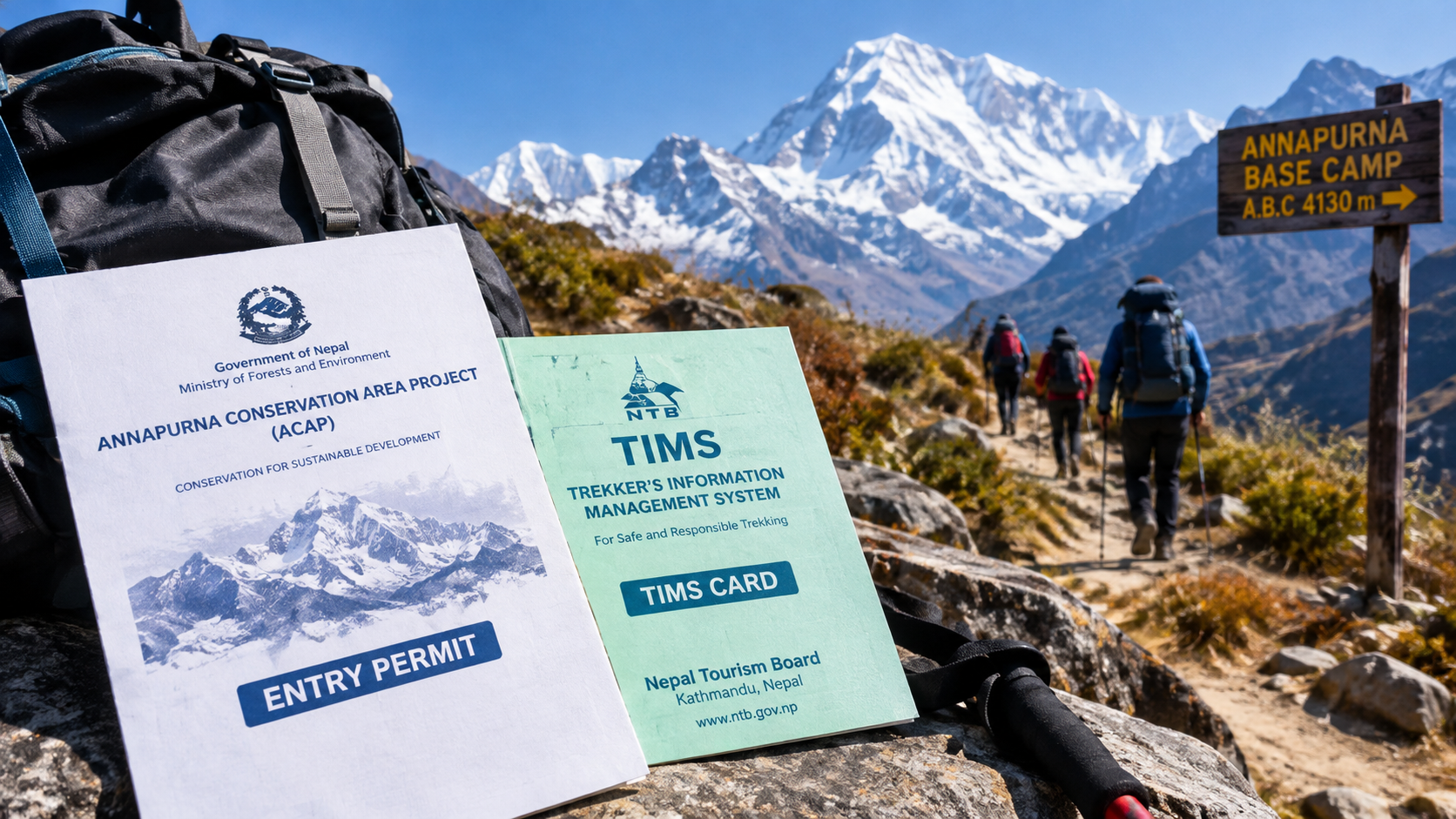
The Annapurna region includes several different trekking routes, including the Annapurna Circuit, Annapurna Base Camp and Tilicho Lake routes.
These journeys are geographically separate from the main Rasuwa disaster corridor. However, that does not mean conditions should be assumed without checking. Road access, monsoon weather, landslides and trail conditions can affect individual routes.
Before departure, verify the current approach road, trekking trail and accommodation situation.
Everest Region
The Everest region has its own access system, with most trekkers travelling through the Lukla air route before beginning the trek.
That means the main question is different from an Annapurna or Langtang trip. Travelers should check flight operations, weather and trail conditions rather than using the Rasuwa situation as a direct measure of Everest conditions.
Manaslu Region
Manaslu is a remote trekking area with restricted sections and more complicated logistics than many popular Nepal treks.
Travelers should pay particular attention to road access, weather, local trail conditions and permit arrangements. Because the region is remote, a problem on the approach route can have a greater impact on the itinerary.
Mustang and Dolpo
Mustang and Dolpo offer more remote Himalayan experiences, but remoteness also means that logistics need careful planning.
Road access, flights, weather and limited infrastructure should all be considered before travel. These destinations should never be presented as automatically safe simply because they are geographically distant from Rasuwa.
Chitwan and Lumbini
Travelers who want to visit Nepal without immediately entering a high mountain region can also consider cultural and wildlife destinations such as Chitwan and Lumbini.
Chitwan offers a very different experience through its forests and wildlife, while Lumbini is one of South Asia’s major Buddhist pilgrimage destinations.
The wider lesson is important:
Nepal has many tourism experiences beyond the areas directly affected by the August flood.
Why Nepal Is Still Worth Visiting
Nepal is more than its trekking routes.
The country is known for Himalayan landscapes, ancient cities, religious traditions, wildlife, food and the everyday hospitality of communities that have welcomed travelers for generations.
The Himalayas
From Everest and Annapurna to Manaslu and countless smaller peaks, Nepal’s mountain landscape remains one of the country’s greatest attractions.
Ancient Heritage
Kathmandu Valley’s historic cities, temples, courtyards and monuments show a cultural history that cannot be reduced to trekking tourism.
Wildlife
Chitwan and other protected areas provide opportunities to experience Nepal’s forests, wildlife and lower-elevation landscapes.
Spiritual Journeys
Nepal’s religious heritage includes Hindu temples, Buddhist monasteries, pilgrimage destinations and sacred Himalayan lakes.
Nepali Culture and Food
Travel creates opportunities to experience local food, village life, traditional crafts and the many cultures that make Nepal distinctive.
Local Communities
Tourism also supports guides, porters, lodge owners, drivers, cooks, small restaurants, artisans and family businesses.
This is where responsible tourism matters.
Nepal is not defined by one disaster. It is defined by its communities, landscapes, culture and resilience. But responsible tourism does not mean ignoring disaster conditions. It means travelling where it is appropriate, respecting restrictions where it is not, and allowing affected communities the time and space they need to recover.
CDC Nepal Stands With Flood-Affected Families
While travelers are checking roads and changing itineraries, thousands of families affected by the flood are dealing with much more immediate needs: food, drinking water, clothing, shelter, hygiene supplies and the difficult task of recovering from sudden loss.
This is where humanitarian support becomes more important than tourism.
Community Development Center Nepal (CDC Nepal) is an aligned humanitarian organization working to support communities in need. Its current emergency relief initiative for Nepal flood survivors is documented through GlobalGiving.
According to the published project information, the emergency response is designed to help families affected by the August 26, 2026 flash floods with essential supplies. These include food, clean drinking water, hygiene items, warm clothing, temporary shelter materials and other urgent necessities. The project states that vulnerable families who have lost basic necessities are a priority.
GlobalGiving currently lists the initiative as “Emergency Relief for Nepal Flood Survivors”, operated by Community Development Center Kathmandu. The project is listed as vetted by GlobalGiving and has a stated goal of $10,000.
The need is immediate because families recovering from a major flood may lose more than their homes. Food stores, clothing, household supplies, documents, work equipment and access to clean water can all be affected.
Relief is therefore not only about rebuilding infrastructure. It is also about helping families get through the first difficult days with dignity.
What the Relief Initiative Focuses On
- Emergency food
- Clean drinking water
- Hygiene and sanitation supplies
- Warm clothing
- Temporary shelter materials
- Essential household items
- Support for vulnerable families
The public GlobalGiving page provides the project description, organization information and donation options.
Stand With Nepal
If you want to help, use a verified humanitarian channel rather than sending money through unverified social media accounts.
CDC Nepal Emergency Relief Initiative on GlobalGiving
Wilderway Trekking is sharing this relief initiative because CDC Nepal is an aligned organization actively involved in supporting affected families. The purpose of this section is humanitarian awareness and community support, not the promotion of trekking services.
How Readers Can Support Nepal’s Recovery
There are several useful ways travelers and readers can support Nepal without putting themselves or affected communities at additional risk.
1. Support Verified Relief Campaigns
If you want to donate, choose a documented relief initiative with clear information about the organization and intended use of funds.
CDC Nepal’s GlobalGiving project identifies the organization, project purpose and relief categories publicly.
2. Share Verified Information
Disasters create a fast-moving stream of rumours, outdated photographs and unverified casualty figures.
Before sharing information, check whether it comes from an established news organization, government authority, humanitarian organization or verified local source.
3. Support Local Communities Through Responsible Travel
When a destination is appropriate to visit, tourism can support local livelihoods.
Choose locally owned accommodation where possible, use licensed guides, eat at local businesses and purchase services from communities rather than treating Nepal only as a backdrop for adventure.
4. Respect Disaster Zones
Do not enter restricted areas simply to photograph destruction.
Rescue workers, residents and relief teams need roads, bridges and public spaces to remain usable. Curiosity should never interfere with emergency work.
How to Travel Responsibly During Nepal’s Recovery
Responsible travel during recovery begins with flexibility.
Do
- Check current official updates.
- Confirm trekking routes before departure.
- Verify road conditions with a local operator.
- Keep extra days in your itinerary.
- Use experienced local guides.
- Support family-owned businesses.
- Respect local instructions.
- Carry suitable travel insurance.
- Be prepared for itinerary changes.
- Ask before photographing affected communities.
Don’t
- Enter restricted flood zones.
- Cross damaged bridges.
- Ignore weather warnings.
- Treat old route information as current.
- Spread unverified casualty reports.
- Photograph victims without permission.
- Pressure guides to continue an unsafe journey.
- Assume another region has identical conditions.
- Travel into affected areas simply to see the damage.
A responsible traveler understands that an itinerary is never more important than safety.
If a road is closed, change the plan. If a trail is restricted, wait. If local authorities advise against travel, respect that decision.
Before You Travel to Nepal: Safety Checklist
Before leaving for Nepal during the recovery period, use this simple checklist:
- Check current Nepal travel and local authority updates.
- Confirm the exact route you will take.
- Verify road access.
- Verify flight operations if flying.
- Check the weather forecast.
- Ask your trekking operator for current trail information.
- Confirm accommodation availability.
- Keep one or two flexible days in your itinerary.
- Carry suitable travel insurance.
- Keep emergency contact information available.
- Carry enough emergency cash.
- Respect all road and trail closures.
- Do not enter disaster areas without authorization.
The most useful preparation is not simply packing the right gear. It is knowing when your original plan needs to change.
Mountain travel has always required flexibility. After a major disaster, that flexibility becomes even more important.
Travel With Knowledge, Stand With Nepal
Nepal’s recovery will take time.
For families who have lost homes, belongings, livelihoods or loved ones, the August 2026 flood is not a headline that disappears when international attention moves elsewhere. Recovery will continue long after roads are repaired and news coverage slows.
Travelers can play a meaningful role by making informed decisions.
That means respecting affected regions, checking conditions before travelling, accepting itinerary changes when necessary and supporting local businesses when responsible tourism is appropriate.
It also means remembering the people behind the destination.Nepal is a country where mountain tourism supports thousands of families, but those communities are more than tourism workers. They are parents, farmers, guides, shopkeepers, teachers, drivers and neighbours building their lives in some of the world’s most beautiful and challenging landscapes.
Through its aligned humanitarian work, CDC Nepal is contributing to emergency relief efforts for flood-affected families, with its current public initiative focused on essential support such as food, clean water, hygiene supplies, clothing and temporary shelter materials.Wilderway Trekking remains committed to helping travelers approach Nepal with accurate local information, flexibility and respect for communities.
Before planning your Nepal journey, check the latest route conditions and speak with a reliable local operator.
If you want to stand with families affected by the flood, consider supporting a verified relief initiative.
Travel responsibly. Give responsibly. And when the time is right, keep Nepal on your journey.
Nepal Flood 2026 FAQ
Is Nepal safe to visit after the flood?
Nepal cannot be classified as completely safe or unsafe as a whole because conditions differ significantly by region. The Rasuwa and Bhotekoshi corridor has suffered severe damage and requires particular caution. Travelers to other destinations should verify local road, flight, weather and trekking conditions before travelling.
Which areas were affected by the Nepal flood?
The most severe reported impacts have been concentrated in Rasuwa and along the Bhotekoshi and Trishuli river corridors, with damage also reported in parts of Nuwakot and downstream communities. Rasuwa locations including Timure and Syabrubesi were among the areas heavily affected.
Is Kathmandu affected by the flood?
The main disaster epicentre was in northern Nepal rather than central Kathmandu. However, travelers should still monitor weather, transport and road conditions because Nepal’s transportation network connects different regions. Kathmandu should not automatically be treated as having the same conditions as the Rasuwa flood zone.
Is the Annapurna region affected?
The Annapurna region is geographically separate from the main Rasuwa disaster area. However, individual trekking routes can experience their own road, weather and landslide issues. Travelers planning Annapurna Circuit, Annapurna Base Camp or Tilicho Lake should verify their specific route before departure.
Is Everest affected?
The Everest region has a separate access system and should not automatically be considered affected simply because Rasuwa has experienced severe flooding. Travelers should check Lukla flight operations, weather, trail conditions and current local information before beginning an Everest trek.
Can I trek in Nepal now?
Some trekking destinations may be possible while others may require postponement or route verification. The decision should depend on the exact trekking region, access route, weather, trail conditions and current local advice. A Nepal-based trekking operator can help verify conditions before departure.
Is Langtang open?
Langtang requires particular caution because the main approach through the Rasuwa corridor has been affected. Travelers should not assume normal access until current road and local conditions have been verified. The condition of the approach route is especially important even when the mountain trail itself has not been directly damaged.
Is Gosaikunda accessible?
Gosaikunda access should be checked before travel because routes commonly pass through the Rasuwa area. Dhunche and other access points may be affected by road or weather conditions. Do not rely on an old itinerary or assume that a normal route is currently operating.
How can I donate to Nepal flood relief?
You can support flood-affected families through Nepal’s Prime Minister’s Disaster Relief Fund or verified humanitarian initiatives such as CDC Nepal’s Emergency Relief for Nepal Flood Survivors through GlobalGiving. Always donate through official or verified channels to avoid fraudulent fundraising.
Should I postpone my trek?
If your route enters a disaster-affected area or depends on damaged infrastructure, postponement may be the responsible choice until authorities and local operators confirm access. For destinations elsewhere in Nepal, make the decision using current route-specific information rather than cancelling every Nepal trip automatically.