- 135 Views
- 28 Min Read
- (0) Comment
Have you ever stared at those epic pictures of massive snowy mountains and thought to yourself, “I wish I could do that, but I am definitely not a mountaineer?” You are not alone in thinking that trekking in Nepal is only for super athletes with giant calves and fancy expensive gear. Honestly, the Himalayas can be totally accessible for normal people if you just pick the right trail and give yourself enough time to actually enjoy it without rushing.
In this blog, we are breaking down the Annapurna Base Camp itinerary 10 days to show you exactly how a regular person can reach the base camp safely. We will walk you through the daily walking hours, altitude gains, and the easiest possible route designed specifically for beginners so you can avoid burnout and altitude sickness.
What is the 10-Day ABC Trek Plan?
The annapurna base camp itinerary 10 days is a carefully paced hiking schedule that takes you from the lakeside city of Pokhara all the way to the 4,130-meter base camp and back. This specific plan includes an extra acclimatization day compared to rushed versions, ensuring beginners can adapt to the thin air without pushing their bodies too hard. It avoids the common beginner mistake of sprinting straight up the mountain.
By spreading the journey over ten days, this plan breaks up the massive elevation gain into highly manageable daily chunks. You will walk through beautiful Gurung villages, lush rhododendron forests, and rocky glacier paths while sleeping at moderate altitudes. It is the most balanced way to experience the Annapurna sanctuary without risking your health or hating the trail.
Why is This 10-Day Plan Best for Beginners?
This annapurna base camp itinerary 10 days is ideal for first-timers because it adds a rest day and features shorter walking hours of four to five hours. Beginners often underestimate how much the altitude slows them down, so having manageable days prevents complete physical exhaustion. It gives your lungs and heart the exact time they desperately need to adjust to the lack of oxygen.
Furthermore, a slower pace means you actually have the energy to enjoy your surroundings instead of just staring at your boots in pain. You will have time to explore villages like Chhomrong and Tadapani, interact with locals, and take photos without feeling rushed. When you finally reach base camp, you will feel strong enough to truly appreciate the giant peaks.
How Do You Prepare for This 10-Day Journey?
You prepare for the annapurna base camp itinerary 10 days by starting simple cardio exercises like brisk walking, jogging, or cycling at least two months before your trip. Focus heavily on strengthening your legs using squats and lunges, because the entire trail is made of steep stone steps. The goal is to build enough stamina to walk for five hours straight without feeling completely destroyed.
Mental preparation is equally important for beginners attempting this hike. You need to be ready for basic tea house conditions, squat toilets, and cold nights where hot showers are very rare. Packing the right gear, like properly broken-in hiking boots and a warm sleeping bag, will make your daily trekking much more comfortable. Practicing with a loaded daypack beforehand helps you understand how your body handles weight.For more information, you can read our Annapurna Base Camp Guide.
When Should You Follow This 10-Day Itinerary?
The best time to tackle the annapurna base camp itinerary 10 days is during the autumn months of October and November, or the spring months of March and April. During these seasons, the weather is incredibly stable, the skies are perfectly clear for mountain views, and the trail conditions are dry and safe. You will completely avoid the dangerous monsoon rains and freezing winter snowstorms.
Following this plan in spring offers the amazing bonus of walking through blooming red rhododendron forests, which are absolutely stunning. However, autumn is slightly preferred for beginners because the air is crisper and the visibility of the Annapurna range is totally unmatched. Always check recent trail conditions before you fly to Pokhara, as mountain weather can still be unpredictable.
Where Does This 10-Day Trek Begin and End?
The annapurna base camp itinerary 10 days begins with a scenic drive from Pokhara to a small town called Nayapul, where you cross a bridge over the Modi River and start walking. The first few days take you through tropical valleys and waterfalls before you enter the restricted Annapurna sanctuary. The journey ends by retracing your steps back down to Nayapul, followed by a drive back to Pokhara.
Instead of just rushing back to Nayapul on the last day, most beginners on this plan finish by hiking down to Jhinu Danda. This beautiful village is famous for its natural hot springs, which are perfect for soaking your sore muscles after ten days of trekking. From Jhinu Danda, it is just a short morning walk and a bumpy jeep ride back to the comfort of your Pokhara hotel.
Why a Slower Pace is the Ultimate Beginner Hack
Before we jump into the daily breakdown, I want to talk about why this specific 10-day pacing is your best friend. When you look at trekking forums online, you will see people arguing about doing the ABC trek in 7 days. Do not listen to them if you are a beginner.
When you hike fast, your body does not have time to create enough red blood cells to carry the reduced amount of oxygen available at high altitudes. You might make it to base camp in 7 days, but you will likely have a pounding headache, you will probably throw up, and you won’t even remember the view because you feel so terrible.
The annapurna base camp itinerary 10 days builds in natural safety nets. By sleeping at lower altitudes and walking shorter distances, you are following the golden rule of high-altitude hiking: climb high, sleep low, and never sleep more than 500 meters higher than the previous night when you are above 3,000 meters. This pacing turns a grueling survival mission into an actual enjoyable holiday.
The Deep Dive: Your Day-by-Day Breakdown
Day 1: Pokhara to Tikhedhunga – The Warm Up
Your adventure starts early in the morning with a cup of sweet milk tea in Pokhara. You will climb into a shared jeep for a bumpy, winding drive along dirt roads to Nayapul. The drive takes about an hour and a half, and as you leave the city, you will see terraced green farms and waterfalls.
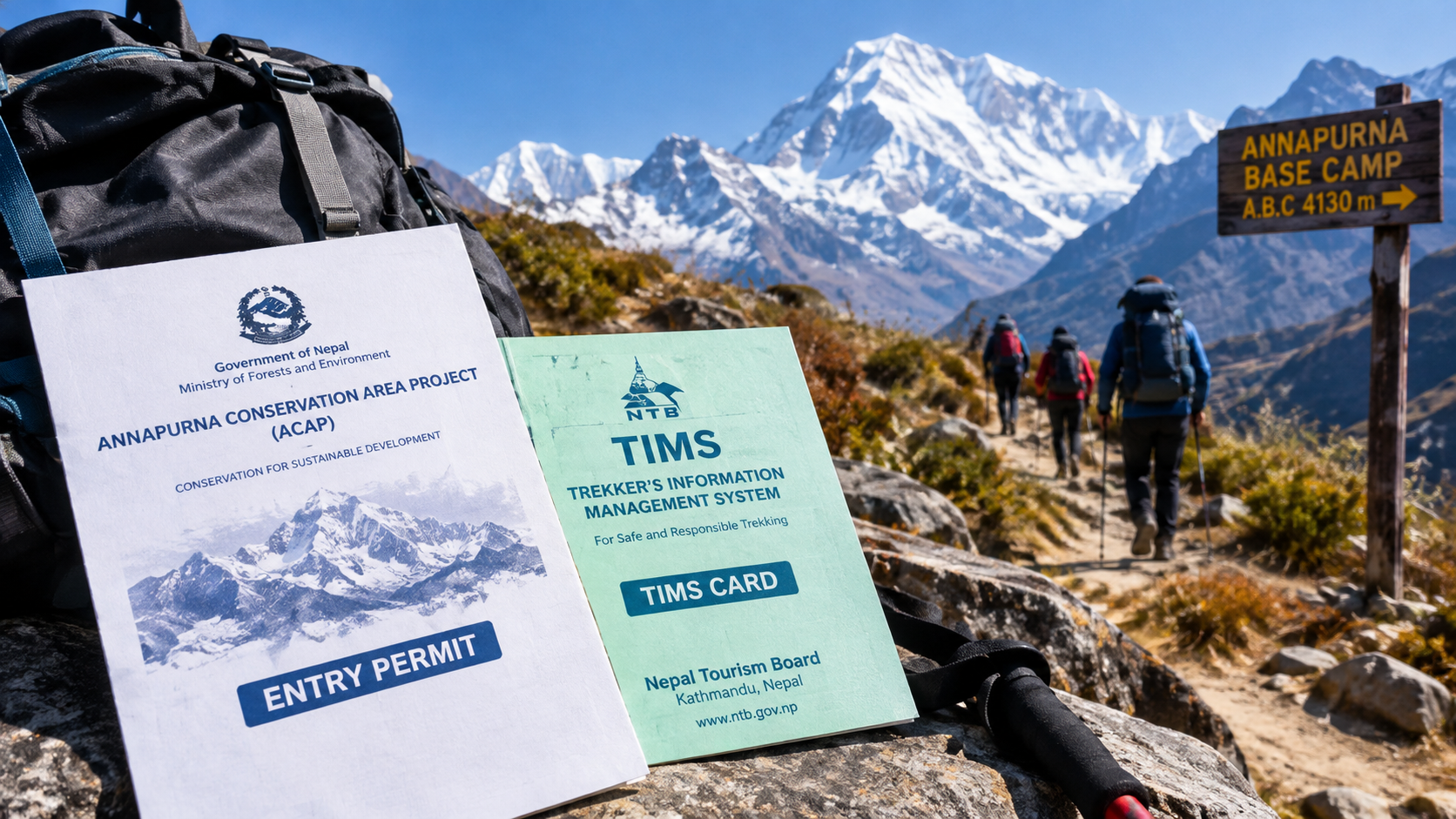
At Nayapul, your guide will sort out your ACAP and TIMS permits at the checkpoint. As soon as you cross the large metal suspension bridge over the roaring Modi Khola river, the trek officially begins. The first few hours are incredibly warm. You will walk past small roadside shops selling cold drinks and snacks. You will pass through Birethanti, which is a busy hub where mules are loaded up with heavy Coca-Cola and beer crates to be taken up the mountain.
The walking is mostly flat or gently uphill. It is the perfect day to test out your backpack, adjust your boot laces, and get into the rhythm of walking. You will follow the river upstream, passing through small settlements with stone houses. By early afternoon, you will arrive at Tikhedhunga. It is a small village spread out along the riverbank with a handful of tea houses. You will sleep at a low altitude tonight (around 1,500 meters), so your lungs will feel totally normal. Take a cold shower, eat some dal bhat, and get some sleep, because tomorrow is the hardest day.
Day 2: Tikhedhunga to Ghorepani – The Infamous Stone Stairs
Wake up early, eat a big breakfast of eggs and toast, and mentally prepare yourself. Today is the day that breaks most beginners. You have to climb from the river valley all the way up to the top of the ridge, gaining over 1,700 meters in elevation. The worst part is a set of stairs known as the Ulleri stairs.
There are over 3,500 continuous stone steps going straight up the side of the mountain. There is no winding trail to ease the gradient, just steps. Your thighs will be on fire, your heart will be pounding out of your chest, and you will need to stop every few minutes to catch your breath. Do not feel embarrassed about stopping. Everyone stops. Drink water, take deep breaths, and just keep putting one foot in front of the other.
When you finally reach the village of Ulleri, the stairs don’t completely stop, but they flatten out a bit. You will notice the climate changing dramatically. The hot, tropical air of the river valley is replaced by cool, shaded breezes as you enter a thick rhododendron forest. The afternoon is a beautiful, gradual climb through these giant trees. When you finally walk into Ghorepani, the sight of the busy tea houses feels like a massive victory. Ghorepani is a large village perched on a ridge, and because it is at 2,860 meters, it gets very cold at night. Wear all your layers to bed.
Day 3: Ghorepani to Poon Hill to Tadapani – The Golden Sunrise
You will wake up in the pitch dark at around 4:00 AM. It is freezing cold, and your fingers will be numb as you strap on your headlamp. You are doing the iconic Poon Hill sunrise hike. The trail up from Ghorepani takes about 45 minutes to an hour. It is steep and crowded with hundreds of other trekkers all wearing headlamps, looking like a line of glowing ants climbing the mountain.
When you reach the top of Poon Hill, you buy a cup of hot tea from the small vendor shack and wait. As the sun starts to rise, the clouds below you turn pink, and then the giant peaks of Dhaulagiri, Annapurna South, Nilgiri, and Machapuchare slowly light up in brilliant shades of gold and orange. It is one of the most famous views in Nepal, and it is totally worth the early wake-up call and frozen toes.
After soaking in the view, you head back down to Ghorepani for a massive breakfast. Then, the real trekking begins. You leave the main Everest trail junction and head east, climbing up to Deurali pass at 3,030 meters. From here, it is a long, rolling ridge walk through more rhododendron forests. In spring, this area is a tunnel of red flowers. Eventually, you start a very long descent through a magical, moss-covered forest filled with bamboo. It feels like you are walking through a fairy tale. You arrive at Tadapani in the late afternoon. Tadapani is quiet, cold, and often covered in clouds, but the views of Machapuchare (the fishtail mountain) right from the tea house window are incredible.
Day 4: Tadapani to Chhomrong – The Last Big Village
You wake up to clear skies (hopefully) and another gorgeous view of the fishtail peak. Today’s walk is a classic Himalayan rollercoaster. You start by walking along a beautiful forested ridge, catching glimpses of the mountains through the trees. But then, the trail drops. And it drops steeply.
You descend for a couple of hours down to the bottom of the Kimrong Khola valley. You cross a small suspension bridge over the river, and immediately, you have to start climbing back up the other side. This climb up to Chhomrong is long and tiring, but it is the last major climb before you enter the deep sanctuary.
Chhomrong is a beautiful, spread-out village built on a steep hillside. It is the last permanent settlement you will see. It has bakeries, gear shops, and even a small museum. From Chhomrong, you get a straight-on view of the massive south face of Machapuchare. Because it is your last night with reliable electricity and hot water, take advantage of it. Charge all your power banks, take a hot shower, and eat something delicious. Tomorrow, you drop into the deep valley and don’t come back up to civilization for days.
Day 5: Chhomrong to Bamboo – Dropping into the Abyss
Today is all about losing altitude. You leave Chhomrong and walk down, down, down an absurd amount of stone steps. You drop over 1,500 meters in just a few hours. Your knees will probably ache more today than your lungs. You will cross the massive suspension bridge over the Chhomrong Khola, which is the deepest point of the valley.
Once you cross the river, the landscape changes instantly. You leave the open terraced hills behind and enter a dark, narrow gorge. This is the entrance to the Annapurna Sanctuary. The trail is relatively flat as you walk alongside the river, but it is enveloped in a thick, dark bamboo and oak forest. It feels very mysterious and isolated.
You will pass through a tiny settlement called Sinuwa, where you continue climbing slightly, before dropping back down again. By late afternoon, you arrive at Bamboo. Bamboo is exactly what it sounds like a small cluster of basic tea houses sitting right on the edge of the roaring river in the middle of the bamboo forest. It is humid, dark, and incredibly peaceful. The sound of the water will rock you to sleep.
Day 6: Bamboo to Deurali – Leaving the Green Behind
After the dark jungle of Bamboo, the valley starts to open up and change character today. The trail leaves the thick bamboo behind and transitions into a more alpine environment with scattered pine trees and rocky outcrops.
You will pass through a tiny settlement called Himalaya, which has a few tea houses and a good spot to rest and drink tea. As you climb higher from Himalaya, the cliffs start to close in around you. The valley becomes a rocky V-shape. You are now walking directly beneath the towering cliffs of Hiunchuli and Machapuchare. If you look up, you can often see chunks of ice falling off the mountains and crashing down the valleys in the distance (avalanches are common here, but they are far away from the trail).
As you approach Deurali, the vegetation almost completely disappears. You are left with rocks, scrub grass, and snow. The air is noticeably thinner here at 3,200 meters. You might feel slightly out of breath just walking on the flat sections. Deurali is a small, windswept settlement with a few basic tea houses. It is incredibly cold here. This is the night where you really need to start paying attention to how your body feels. Drink as much water as you can, eat carbs, and go to sleep early.
Day 7: Deurali to Machapuchare Base Camp to ABC – The Final Push
This is the day you have been waiting for. The annapurna base camp itinerary 10 days builds up to this exact moment. You wake up early because the trail ahead is long and the altitude is serious.
From Deurali, the trail becomes rocky and rugged. You will hike through a section called the “avalanche risk area.” Your guide will tell you to walk quickly and not stop here. After passing safely through the rocky gorge, you will hike alongside the moraine of the Annapurna glacier. The landscape is totally barren, looking like the surface of the moon.
After a few hours, you reach Machapuchare Base Camp (MBC). This is a stunning, flat area right at the foot of the sacred fishtail mountain. Nobody is allowed to climb Machapuchare because it is considered a god by the locals. You will stop here for lunch and rest.
After lunch, the final push begins. It is only about two hours from MBC to ABC, but it feels like an eternity because of the altitude. The trail winds up through loose rocks and glacial debris. Every step requires effort. Then, you round a final corner, the rocky walls fall away, and suddenly you are standing inside a massive natural bowl of snow and ice. Annapurna Base Camp. You are surrounded by a 360-degree wall of the highest peaks in the world, including Annapurna I (the tenth highest mountain on earth). It is overwhelming, freezing, and absolutely beautiful. You made it.
Day 8: Acclimatization Day at ABC – Soaking It In
If you were doing a 7-day trek, you would have to wake up at 4 AM, look at the mountains, and immediately start hiking down because you would be running out of days. But because you are smart and doing the annapurna base camp itinerary 10 days, you get to spend a whole day here.
Waking up at 4,130 meters is brutal. Your water bottle will be frozen solid, and your fingers will ache from the cold. But you force yourself out of your sleeping bag and walk outside to watch the sunrise. As the sun hits the giant wall of ice and rock surrounding you, the entire sanctuary turns gold, then pink, then blinding white. It is a moment you will remember for the rest of your life.
After breakfast, you can take a short hike up the hill behind the tea houses to get an even higher viewpoint of the glacier. Spend the rest of the day drinking hot chocolate, talking to other trekkers from all over the world, and resting your legs. This extra day allows your body to fully process the altitude, making your descent much safer and more comfortable.
Day 9: ABC to Bamboo – The Long Walk Down
Leaving base camp is bittersweet. You take one last look at the mountains, take a million photos, and then turn your back to start the journey home. Descending is physically easier on your heart and lungs, but it is pure torture on your toes and your knee joints.
The descent from ABC to Bamboo is massive. You will drop over 2,300 meters in a single day. You retrace your steps across the moon-like moraine, past MBC, and back into the rocky gorge. As you get lower, the air starts to feel thick and rich again, which feels amazing to breathe. By the time you hit the deep bamboo forest, you will be exhausted. Your knees will be swollen, and you might have a few blisters. But arriving back in the warm, humid air of Bamboo feels like a huge accomplishment. Sleep incredibly well tonight.
Day 10: Bamboo to Jhinu Danda to Pokhara – The Hot Spring Reward
You have one last hurdle. You have to climb back out of the deep bamboo valley up to Sinuwa, and then do the brutal climb back up to Chhomrong. It is a tough way to start the morning, but your legs know the end is near, so they find hidden energy.
Instead of going back to Nayapul, you take a side trail from Chhomrong that drops steeply down to Jhinu Danda. This is the best decision you will make on the trip. Jhinu Danda is famous for its natural hot springs. You drop your bags at a tea house, change into your swimsuit or shorts, and hike down to the river. There are concrete pools filled with naturally hot, steaming water right next to the freezing river. Sitting in those hot pools after ten days of sweat, dirt, and sore muscles is the greatest feeling in the entire world. It completely washes away the pain of the trek.
After an hour of soaking, you hike back up, eat a massive celebratory meal, and take a jeep back to Pokhara. When you finally get back to your hotel, a hot shower and a soft bed have never felt so incredible.
Understanding How Altitude Affects Beginners on This Route
Since you are following a 10-day plan, you have a massive advantage, but you still need to understand what the altitude is doing to your body.From Pokhara to Chhomrong (Days 1-4), you are sleeping between 1,500 and 2,100 meters. Your body will feel 100% normal. You might breathe a little heavier on the Ulleri stairs, but that is just from the physical exertion, not the lack of oxygen.When you drop down to Bamboo (Day 5), you go down to 2,300 meters. Dropping in altitude is actually good for you; it allows your body to rest and reset.
The danger zone starts on Day 6 at Deurali (3,200 meters) and Day 7 at ABC (4,130 meters). Above 3,000 meters, the air pressure drops significantly. Your body realizes it is not getting enough oxygen, so it starts panicking. Your breathing rate increases, your heart beats faster, and you might get a mild headache. This is totally normal.The real danger is Acute Mountain Sickness (AMS). The symptoms are a persistent headache that won’t go away with ibuprofen, nausea, vomiting, loss of appetite, and extreme fatigue. If you feel these at Deurali or MBC, do not go up. Tell your guide, and stay put or go down. Because you are on a 10-day itinerary, you have the flexibility to rest without ruining the trip. Never push through altitude sickness.
The Ultimate Beginner Packing List
When you are a beginner, you tend to overpack because you are scared of being cold or uncomfortable. But remember, you have to carry this stuff, or you have to pay a porter to carry it. Keep it minimal.
The Golden Clothing Rule: Layering. Do not bring one giant, heavy coat. Bring multiple thin layers. You will start the morning in a t-shirt, add a fleece when it gets cloudy, add a down jacket when you hit the snow, and throw on a rain shell when the wind blows.
- Footwear: This is not the place to save money. Buy high-quality, waterproof hiking boots. Wear them every single day for a month before your trip to break them in. Blisters will end your trek faster than altitude sickness. Bring 4 pairs of merino wool socks. Wool keeps your feet warm even when wet, and it doesn’t smell bad after days of sweating.
- The Daypack: You need a 30 to 40 liter backpack to carry your water, rain jacket, snacks, and camera during the day. Make sure it has a waist belt to take the weight off your shoulders.
- Trekking Poles: Buy these. I repeat, buy these. They cost about $20, and they will save your knees on the 3,500 stone steps and the massive descent from base camp. They act as shock absorbers.
- Sleeping Bag: Tea houses provide blankets, but they are rarely washed and are not warm enough for -10 degree temperatures at base camp. Bring a comfortable sleeping bag rated for at least -10 degrees Celsius.
- Headlamp: Essential for the Poon Hill hike and for walking to the toilets at night. Bring extra batteries, as the cold drains them quickly.
- First Aid: Bring Compeed blister plasters (these are magical), ibuprofen for muscle pain, paracetamol for mild altitude headaches, Imodium for stomach issues, and rehydration salts.
Leave your heavy jeans, cotton t-shirts, and bulky towels at home. Cotton holds sweat and freezes when it gets cold, which is dangerous. Stick to synthetic materials or merino wool.
What Beginners Should Eat and Drink on the Trail
Nutrition is your fuel. When you are burning 3,000 to 4,000 calories a day, what you put in your stomach matters immensely.The tea house menus are huge. They have everything from pizza and pasta to spring rolls and french fries. As a beginner, you will be tempted to order comfort food from home. Do not do it. The ingredients (cheese, meat, flour) have been carried up the mountain on a mule for days, sometimes weeks. They are not fresh. Eating a pizza at 4,000 meters is a one-way ticket to stomach cramps and diarrhea.The absolute best thing you can eat is Dal Bhat. It is the traditional Nepali meal of steamed rice, a lentil soup, a vegetable curry, and spicy pickles. It is freshly cooked, it is hygienic, it provides the exact complex carbohydrates and protein your muscles need to recover, and the best part is that the lentil soup and rice refills are completely free. Eat Dal Bhat twice a day, and you will have unlimited energy.
When it comes to water, never drink from the taps or the rivers. You will get extremely sick. You can buy boiled water at the tea houses for about $1 a liter, but that gets expensive over 10 days. The smartest thing to do is bring a water bottle with a built-in filter (like a LifeStraw) or bring water purification tablets (like Aquatabs). The river water is clean, it just has natural bacteria in it. Drop a tablet in your bottle, wait 30 minutes, and you have safe water for free.Also, do not drink alcohol on this trek. Alcohol dehydrates you and slows down your breathing at night, which makes altitude sickness much worse. Save the beer for when you are back in Pokhara.
How to Protect Your Knees and Toes
The biggest physical complaint from beginners on the ABC trek is not the uphill, it is the downhill. Descending thousands of meters of stone steps destroys your joints.
To protect your knees, use your trekking poles. Keep them slightly shorter than when you are going uphill. When you step down, plant both poles first, then step down with your legs. This transfers the impact shock from your knees to your arms and shoulders. If your knees start to hurt, wrap them in athletic tape or wear a knee brace.
To protect your toes, make sure your boots are tied tightly. When you walk downhill, your foot slides forward in your boot. If your boots are loose, your toes will slam into the front of the boot all day long. This causes bruising under your toenails, and eventually, your toenails will turn black and fall off. It sounds gross, but it happens to dozens of trekkers every week. Tie your laces tight at the ankle, and wiggle your toes to make sure they aren’t hitting the front of the boot before you start walking.
Managing Your Expectations: The Reality Check
As a beginner, you have probably seen perfectly edited YouTube videos and Instagram reels of people doing this trek. I need to give you a quick reality check so you aren’t disappointed.
It is not a pristine, quiet wilderness experience. You will not be alone in nature. The trail is highly commercialized. You will walk through villages with solar panels, satellite dishes, and loud music playing from tea houses. You will share the trail with giant convoys of mules and donkeys carrying supplies. When you hear the bells ringing, you have to step to the uphill side of the trail and press your back against the wall to let them pass.
The toilets are bad. Above Chhomrong, they are almost all squat toilets made of concrete or metal over a deep hole. There is no plumbing. You carry your own toilet paper in your pocket, do your business, and throw the paper in a trash can next to the toilet (do not throw it in the hole, it clogs it). It smells bad, and there is no handwashing sink. You carry a small bottle of hand sanitizer everywhere.
It will be cold. At base camp, the tea houses are unheated. You will sit in the dining hall wearing your down jacket, wool hat, and gloves while eating dinner. The bedrooms are freezing, and your water bottle will freeze solid if you leave it on the floor.
If you can accept these realities the dirt, the smells, the cold, and the crowds—you will have an incredible time. Because once you look past the discomfort, the sheer scale and beauty of the mountains are enough to make you forget about everything else. It is raw, it is real, and it is an adventure in the truest sense of the word.
Conclusion
Reaching the foot of the world’s tenth-highest mountain is a deeply emotional journey that strips away your daily worries. The burning muscles, the chilly mornings, and the rugged stone steps all fade away the second you stand in the icy sanctuary, surrounded by towering peaks glowing in the sunrise. It is a beautiful test of physical endurance that rewards you with profound peace. If you want to enjoy every single step of this Annapurna Base Camp itinerary 10 days without the stress of logistics, choosing the affordable company for Annapurna Base Camp itinerary 10 days makes all the difference. Start planning your adventure today, and let the mountains welcome you home.
FAQ
Can beginners actually complete this 10-day trek?
Yes, beginners can easily complete this annapurna base camp itinerary 10 days because the daily walking hours are kept short and manageable. You only need to walk about four to six hours a day, which is totally doable if you have basic fitness and do some light training before your trip. The trail does not require any technical climbing skills, so you just need comfortable hiking boots and a positive mindset.
The biggest challenge for beginners is not the physical distance, but the steep stone steps and the high altitude. By following this slower 10-day schedule, your body gets plenty of time to adapt to the thin air. Hiring a porter to carry your heavy backpack also makes the journey much easier, letting you focus entirely on enjoying the beautiful rhododendron forests and mountain views.
How difficult is the 10-day ABC trek?
The annapurna base camp itinerary 10 days is considered a moderate trek, scoring about a 5 out of 10 for difficulty. The main challenge comes from climbing over 3,000 stone steps on the second day and dealing with the thin air above 3,000 meters. Since you are not using ropes or ice axes, it is safe for anyone who exercises regularly and can walk for a few hours without stopping.
The descent back down is often harder on your body than going up, as it puts a lot of strain on your knees and toes. However, using trekking poles will save your joints and make the downhill sections much more comfortable. The weather can also add to the difficulty, as cold winds and rain near base camp require good thermal layers and a waterproof jacket to keep you warm.
What permits do I need for this trek?
You need exactly two permits to legally hike to Annapurna Base Camp: the Annapurna Conservation Area Permit (ACAP) and the TIMS card. The ACAP costs about 3,000 Nepali Rupees and goes toward protecting the local environment and trails. You must buy both of these in Pokhara or Kathmandu before you drive to the starting point in Nayapul.
You cannot buy these permits once you are already deep on the trail, as there are strict checkpoints where guards will ask to see your paperwork. If you do not have them, you will be forced to walk all the way back down. If you book your trek through a registered agency, they will usually handle all the permit paperwork for you before you even arrive in Nepal.
Where do I sleep during the 10-day journey?
You will sleep in basic mountain tea houses along the entire route. These are simple, family-run lodges that offer a private room with two single beds, a foam mattress, and a thick blanket. You do not need to carry a tent, as these tea houses are located in almost every village, from Tikhedhunga all the way up to base camp.
The rooms are very basic and usually do not have heating, so it gets freezing cold at night, especially at Annapurna Base Camp. You must bring your own high-quality sleeping bag to stay warm. Bathrooms are shared and mostly feature squat toilets, so you should always carry your own toilet paper and hand sanitizer with you during the trek.
When is the best weather for the 10-day ABC plan?
The best weather for the annapurna base camp itinerary 10 days is during the autumn months of October and November, followed by spring in March and April. During these times, the monsoon rains have stopped, the skies are perfectly clear, and the temperatures are safe for hiking. You will get the best, unobstructed views of the Annapurna peaks without worrying about dangerous snowstorms blocking the trail.
Summer brings heavy monsoon rains that make the stone steps extremely slippery and cause annoying leeches on the trail. Winter is too cold for beginners, as the high passes often get buried in deep snow and the teahouses at base camp sometimes close due to freezing temperatures. Sticking to the stable autumn or spring seasons guarantees the safest and most enjoyable experience for first-time trekkers.
Why do I need an extra day at Annapurna Base Camp?
The extra day at Annapurna Base Camp is included in this annapurna base camp itinerary 10 days to keep you safe from altitude sickness and help your body recover. Climbing from 2,000 meters to 4,130 meters in just a few days puts massive stress on your lungs and heart. Spending a full day resting at base camp allows your red blood cells to adjust to the thin air before you start the long walk down.
Without this extra day, beginners often rush down the mountain feeling sick, dizzy, or exhausted, totally missing out on the beauty of the sanctuary. Having a rest day means you have time to watch the incredible sunrise hit the glaciers, take photos, and actually enjoy the achievement of reaching base camp without worrying about immediately packing your bags to leave.