
- 139 Views
- 35 Min Read
- (0) Comment
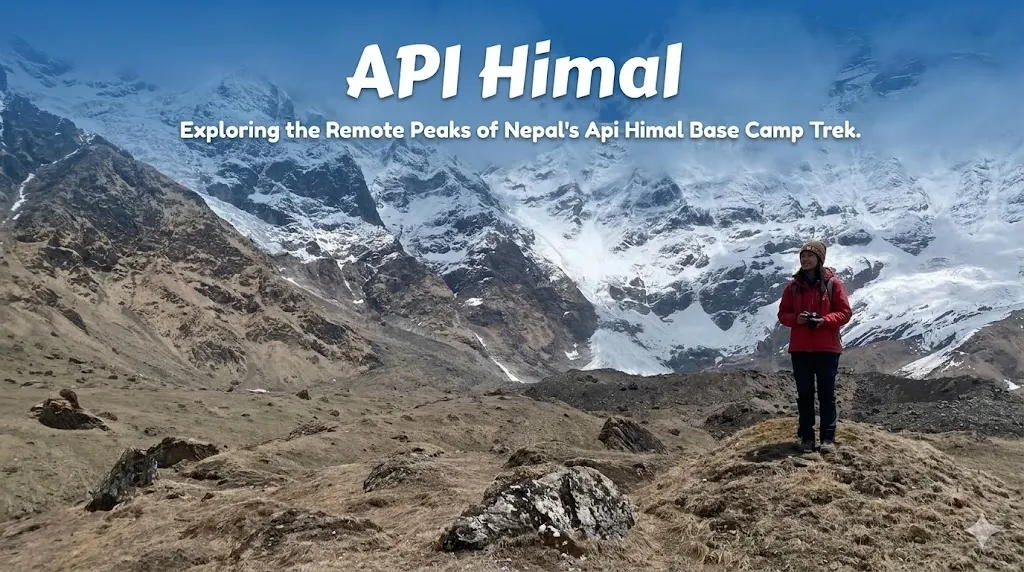
Have you ever dreamed of trekking through a Himalayan wilderness so remote that you are far more likely to cross paths with local yak herders and medicinal herb collectors than another group of Western tourists? For adventurers seeking the true, untamed frontier of mountaineering and trekking, Api Himal represents the ultimate untold story of the Nepalese mountains.
In this blog, we will provide a comprehensive guide to exploring api himal, covering everything from the logistics of the api himal trek and navigating the pristine api nampa conservation area
What Is Api Himal?
Api Himal is the highest mountain in far western Nepal, rising to 7,132 meters (23,399 feet) above sea level. Located within the Api Nampa Conservation Area in Darchula District, it is the centerpiece of the Api Himal Base Camp Trek and one of the most remote trekking destinations in Nepal. Known for its pristine wilderness, traditional mountain communities, and uncrowded trails, Api Himal offers an authentic Himalayan experience far from the busy trekking routes of Everest and Annapurna.
Quick Facts
| Fact | Details |
| Elevation | 7,132 m (23,399 ft) |
| Location | Darchula District, Sudurpashchim Province |
| Region | Far Western Nepal |
| Conservation Area | Api Nampa Conservation Area |
| Trek Type | Remote camping and tea house-supported trek |
| Highest Trekking Point | Api Himal Base Camp (Approx. 4,200–4,500 m) |
| Best Seasons | Spring (March–May) and Autumn (September–November) |
| Difficulty Level | Moderate to Challenging |
Api Himal dominates the skyline of far western Nepal and forms part of a rugged Himalayan range close to the borders of India and Tibet. Despite being one of Nepal’s highest mountains, it remains relatively unknown compared to iconic peaks in the Everest and Annapurna regions. This lack of popularity is precisely what makes the region attractive to trekkers seeking genuine wilderness and cultural authenticity.
The mountain lies within the Api Nampa Conservation Area, a protected landscape covering diverse ecosystems that range from subtropical forests to alpine meadows and glaciated terrain. The conservation area protects endangered wildlife, rare Himalayan flora, and traditional communities that have maintained their unique lifestyles for generations.Unlike commercial trekking routes, the Api Himal Trek takes travelers through isolated valleys, suspension bridges, dense forests, and remote villages where tourism remains limited. The trek provides an opportunity to experience one of the last truly off-the-beaten-path treks in Nepal while enjoying spectacular views of Api Himal, Nampa Himal, and surrounding snow-capped peaks. For trekkers who have already completed routes such as the Manaslu Circuit Trek, Langtang Valley Trek, Annapurna Base Camp Trek, or Everest Base Camp Trek, Api Himal offers a completely different experience focused on solitude, wilderness, and cultural immersion.
- Api Himal is the highest mountain in far-western Nepal at 7,132 meters.
- The peak is located inside the API Nampa Conservation Area.
- The region is known for remote wilderness and low visitor numbers.
- The Api Himal Base Camp Trek is among the most authentic remote treks in Nepal.
- The area combines dramatic mountain scenery, biodiversity, and traditional culture.
- It is ideal for trekkers seeking alternatives to Nepal’s crowded trekking routes.
Api Himal is one of Nepal’s most spectacular yet least-visited Himalayan destinations, offering a rare combination of wilderness, cultural authenticity, and mountain scenery that is increasingly difficult to find on more popular trekking routes.
WhyApi Himal Is Special
Api Himal stands out because it offers a Himalayan trekking experience that feels untouched by mass tourism. While many famous trekking regions attract thousands of visitors annually, the trails leading toward Api Himal remain quiet, remote, and deeply connected to local culture and nature. One of the defining characteristics of Api Himal is its location in far western Nepal, a region that receives only a small fraction of the country’s trekking visitors. The journey passes through landscapes that change dramatically, from terraced farmland and river valleys to alpine meadows and glacier-fed terrain.
The surrounding API Nampa Conservation Area adds significant ecological value to the trek. Trekkers may encounter blue sheep, Himalayan monal, musk deer, and a variety of high-altitude bird species. During spring, rhododendron forests bloom across the hillsides, creating colorful contrasts against snow-covered peaks. The region is also culturally significant. Villages along the route preserve traditional lifestyles influenced by both Himalayan and western Nepalese traditions. Local hospitality often becomes one of the most memorable aspects of the journey.
Another reason Api Himal is increasingly gaining attention is its appeal to trekkers searching for remote treks in Nepal and authentic camping treks in Nepal. The route provides a sense of exploration that has become rare on more developed trekking circuits.
Trekker Insight
Many trekkers describe the first panoramic view of Api Himal from higher camps as one of the most rewarding moments of the journey. Unlike crowded viewpoints elsewhere in Nepal, it is common to spend hours on the trail without encountering another trekking group. The silence, combined with vast mountain scenery, creates a powerful sense of remoteness.
Trail conditions can be rugged, particularly after monsoon season, and some sections require crossing streams, navigating narrow mountain paths, and camping in isolated locations. These challenges are often what make the experience feel more adventurous and rewarding.
Expert Advice
Api Himal is best suited for trekkers who value experience over comfort and are prepared for limited infrastructure. Hiring experienced local guides, arranging logistics in advance, and selecting the best time to trek in Nepal, particularly spring or autumn, will significantly improve the overall experience.
Because the region is remote, trekkers should carry essential supplies and appropriate camping equipment when required and ensure all trekking permits in Nepal are arranged before departure. Physical preparation is also important, as daily walking hours can be longer than on more established trekking routes.
Quick Summary
- Offers one of the best off-the-beaten-path treks in Nepal.
- Located within the biodiverse Api Nampa Conservation Area.
- Features authentic village culture and remote wilderness.
- Provides a quieter alternative to Everest and Annapurna routes.
- Ideal for adventure seekers looking for genuine Himalayan exploration.
Api Himal Base Camp Trek Route Explained
The Api Himal Base Camp Trek route takes trekkers through the remote landscapes of far-western Nepal, starting from Darchula and passing through traditional villages, dense forests, alpine meadows, and glacial valleys before reaching Api Base Camp. The route is known for its wilderness setting, cultural authenticity, and spectacular mountain scenery within the Api Nampa Conservation Area.
The Api Himal Base Camp Trek follows one of Nepal’s least-visited trekking corridors, making it ideal for adventurers seeking solitude and an authentic Himalayan experience. Unlike the busier Everest and Annapurna regions, this route remains largely untouched by mass tourism, offering pristine landscapes and traditional mountain culture throughout the journey.
Most itineraries range from 14 to 21 days, depending on transportation schedules, acclimatization needs, and side explorations. Since the trek is primarily camping-based, trekkers must prepare for remote conditions, limited infrastructure, and longer logistics compared to Nepal’s more commercial trekking destinations.
- Located in far-western Nepal
- Passes through the Api Nampa Conservation Area
- Usually completed in 14–21 days
- Features forests, meadows, and glacial landscapes
- Requires camping support in most sections
- One of Nepal’s most remote trekking routes
The Api Himal Base Camp Trek offers a rare opportunity to experience untouched Himalayan wilderness, traditional villages, and dramatic mountain scenery far from Nepal’s crowded trekking trails.
Starting Point of the Trek
The journey begins in Darchula District, a remote region in Nepal’s far west near the border with India. Most trekkers first arrive in Kathmandu before traveling to Darchula by a combination of domestic flights and overland transport. Reaching the starting point often takes two or three days, making travel logistics a significant part of the overall expedition.
Darchula serves as the administrative and logistical hub for the trek. Guides, porters, permits, food supplies, and camping equipment are usually organized here before entering the mountains. The trail gradually leaves developed settlements behind and enters increasingly remote terrain where villages become smaller and infrastructure becomes limited.
Major Villages Along the Route
Several traditional villages are encountered along the Api Himal Trek, providing insight into the culture and lifestyle of far-western Nepal. These settlements are home to farming and herding communities that have preserved their customs, architecture, and way of life for generations due to the region’s isolation.
The villages also offer opportunities to interact with local residents and observe daily life in the Himalayan foothills. Stone houses, terraced fields, livestock grazing areas, and small monasteries are common sights along the route. Because tourism remains limited, cultural interactions often feel more authentic than in heavily visited trekking regions.
Api Base Camp Overview
Api Base Camp is the main destination of the trek and sits beneath the towering slopes of Api Himal, the highest mountain in far-western Nepal. The area is characterized by alpine grasslands, glacial moraines, rocky terrain, and expansive views of surrounding peaks within the Api Nampa Conservation Area.
The base camp provides one of the most dramatic viewpoints on the trek, with panoramic mountain scenery stretching across the Himalayan landscape. Trekkers often spend extra time exploring the surrounding area, photographing the scenery, and appreciating the wilderness environment before beginning the return journey toward Darchula.
Basecamp 2 Api and Basecamp 3 Api Explained
Basecamp 2 Api and Basecamp 3 Api are higher camps primarily used by mountaineering expeditions attempting to climb Api Himal. These camps are established above the standard trekking route and play an important role in acclimatization and summit logistics for climbers.
Most trekkers do not visit these higher camps because they require specialized mountaineering skills, technical equipment, and additional expedition support. For the majority of visitors, Api Base Camp represents the final trekking destination, while Basecamp 2 and Basecamp 3 remain part of climbing operations on the mountain.
Typical Api Himal Trek Itinerary
A standard Api Himal Trek itinerary usually lasts between 14 and 21 days, including transportation to and from Darchula. The schedule is designed to allow gradual altitude gain while providing sufficient time to navigate remote terrain and changing weather conditions.
Most itineraries include several days of trekking through forests, river valleys, alpine meadows, and high-altitude camps before reaching the Api Himal Base Camp Trek. The return journey generally follows the same route, although some operators may include side trips or cultural excursions depending on available time and local conditions.
Step-by-Step Route Guide
Arrival in Kathmandu
The journey begins in Kathmandu, where trekkers complete final preparations before heading to western Nepal. This includes obtaining permits, checking equipment, meeting guides, and purchasing any remaining supplies needed for the expedition.
Kathmandu also provides an opportunity to review the itinerary and prepare for the remote nature of the trek. Since services become increasingly limited after leaving the capital, it is important to organize essential gear and travel documents before departure.
Travel to Darchula
Travel from Kathmandu to Darchula is often one of the longest transportation segments of the entire trip. Depending on weather and seasonal conditions, trekkers may combine domestic flights with road travel to reach the district headquarters.
Although the journey can be demanding, it offers a fascinating look at Nepal’s western regions. Travelers pass through changing landscapes, rural settlements, and mountain scenery before arriving at the gateway to the Api Himal trekking region.
Trek Beginning
The first days of the trek involve gradual ascents through lower valleys and forested hillsides. Trails often follow rivers, agricultural terraces, and traditional footpaths used by local communities for transportation and trade.
These early stages help trekkers adjust to the rhythm of the expedition while providing opportunities to experience local culture. The terrain is generally less demanding than higher sections, making it ideal for building trekking momentum.
Forest Section
Dense forests dominate much of the lower trekking route. Rhododendron, pine, oak, and mixed Himalayan vegetation create a rich natural environment that supports a wide variety of wildlife and bird species.
Spring is particularly beautiful as rhododendron forests bloom in vibrant colors. The forest section also provides shade and moderate temperatures, making it one of the most enjoyable portions of the trek for many hikers.
Alpine Meadows
As elevation increases, forests gradually give way to alpine meadows and open grazing areas. These high-altitude landscapes offer sweeping views of surrounding ridges, glaciers, and snow-capped mountains.
The alpine zone represents a dramatic transition in scenery and ecology. Trekkers often encounter yak herders and seasonal grazing camps while crossing these expansive grasslands beneath the towering Himalayan skyline.
Api Base Camp
Api Base Camp marks the culmination of the trek and rewards hikers with breathtaking views of Api Himal and nearby peaks. The landscape consists of glacial valleys, rocky moraines, and high mountain terrain shaped by centuries of geological activity.
Weather conditions can change quickly at this elevation, with clear mornings often providing the best mountain views. Spending time at base camp allows trekkers to fully appreciate the scale and beauty of the region before beginning the descent.
Return Journey
The return route generally retraces the ascent path back toward Darchula. Descending allows trekkers to revisit familiar landscapes from a different perspective while enjoying reduced altitude-related stress.
Many hikers find the return journey equally rewarding because they can focus more on scenery and cultural encounters after successfully reaching their primary destination. The trek concludes with transportation back to Kathmandu.
Trek Preparation Checklist
| Item | Importance | Notes |
| Permits | Essential | Required for conservation area access |
| Insurance | Essential | Must include helicopter evacuation coverage |
| Equipment | Essential | Suitable for camping and cold weather |
| Guide | Highly Recommended | Important for navigation and logistics |
| Cash | Essential | Limited banking facilities in remote areas |
Pro Tips
- Train for multi-day hiking before arrival.
- Include extra days for transportation delays.
- Carry high-quality waterproof gear.
- Bring a reliable sleeping bag for cold nights.
- Purchase comprehensive travel insurance.
- Carry sufficient cash for unexpected expenses.
- Respect local customs and village traditions.
Api Himal Trek Difficulty, Altitude, and Fitness Requirements
The Api Himal Trek is considered moderate to challenging due to its remote location, camping-based logistics, long trekking days, and high-altitude environment. While no technical climbing is required for the standard route, trekkers should possess good physical fitness and previous hiking experience to comfortably complete the journey.
The trek combines altitude gain, rugged terrain, limited infrastructure, and extended expedition duration, making it more demanding than many popular trekking routes in Nepal. Physical preparation and mental resilience are both important factors for a successful experience.
Compared with commercial trekking routes, the remoteness of Api Himal adds an additional layer of difficulty. Trekkers must be prepared for basic camping conditions, unpredictable weather, and fewer support facilities throughout the expedition.
- Moderate to challenging difficulty
- Camping-based remote trek
- High-altitude environment
- Long trekking days
- No technical climbing required
- Best suited for fit hikers
The greatest challenge of the Api Himal Trek comes from its remoteness and wilderness conditions rather than technical mountaineering, making preparation and fitness essential for success.
Difficulty Rating
The Api Himal Trek is generally classified as a moderate-to-challenging trekking route. The difficulty comes primarily from long days on the trail, remote terrain, and the need to camp in areas with limited infrastructure rather than from steep technical climbing.
Trekkers should be comfortable walking on uneven mountain paths while carrying a daypack for multiple consecutive days. Previous experience on multi-day treks is beneficial, although highly motivated beginners with proper training can also complete the route successfully.
Maximum Altitude
The highest point reached during the standard trek is Api Base Camp, where altitude becomes an important consideration. At these elevations, oxygen levels are lower than at sea level, and some trekkers may experience mild symptoms of altitude sickness.
Proper acclimatization, hydration, and gradual ascent help reduce risks associated with high-altitude trekking. Most itineraries are designed to allow sufficient adjustment time before reaching the highest camps along the route.
Daily Walking Hours
Trekkers typically spend between five and eight hours walking each day, depending on terrain, weather, campsite locations, and group pace. Some days involve gradual ascents through forests, while others require longer climbs into alpine terrain.
Consistent endurance is often more important than speed on this trek. Building fitness through hiking, stair climbing, and cardiovascular training before arrival can significantly improve comfort and overall enjoyment.
Technical Challenges
The standard Api Himal Base Camp Trek does not require technical mountaineering skills or specialized climbing equipment. However, trekkers must navigate rocky trails, river crossings, steep sections, and occasionally muddy or slippery terrain.
Weather can also create additional challenges, particularly during shoulder seasons. Strong winds, cold temperatures, and sudden changes in visibility are possible in higher elevations, requiring appropriate gear and preparation.
Who Can Do This Trek?
The trek is suitable for physically fit individuals who enjoy outdoor adventure and have a willingness to spend multiple days in a remote mountain environment. Previous trekking experience is helpful but not strictly required, provided you have a good level of fitness and are prepared for the physical demands of the trail.
Those who regularly engage in hiking, running, cycling, or other endurance activities are generally well-prepared. Additionally, choosing to go trekking with guide Nepal ensures you have professional support to navigate the terrain safely. A structured training program started several months before departure can also greatly improve your performance and confidence on the mountain.
Difficulty Comparison Table
| Trek | Difficulty | Duration | Crowds |
| Api Himal Trek | Moderate to Challenging | 14–21 Days | Very Low |
| Everest Base Camp Trek | Moderate | 12–14 Days | Very High |
| Annapurna Base Camp Trek | Moderate | 7–12 Days | High |
| Manaslu Circuit Trek | Challenging | 14–18 Days | Moderate |
The Api Himal Trek stands out for its remoteness and wilderness experience. While Everest Base Camp and Annapurna Base Camp offer more developed infrastructure and easier access, Api Himal rewards trekkers with solitude, pristine landscapes, and one of the most authentic trekking experiences in Nepal.
Best Time for the Api Himal Trek
The best time to embark on the Api Himal trek is during the autumn months of September to November or the spring window from March to May. These critical transitional seasons are widely recognized as the best time to trek in Nepal because they bring optimal climate stability, manageable temperatures, and clear skies, ensuring safe navigation across the rugged, uncommercialized terrain of far western Nepal.

Choosing the right seasonal window is paramount for this particular route because it relies entirely on camping infrastructure. Unlike popular regions with heated stone lodges, the Api Nampa Conservation Area demands that you sleep in canvas tents and cook outdoors. Bad weather can instantly wash out the dirt roads leading to the trailhead, making professional seasonal planning a true necessity for a successful expedition to the Api Himal Base Camp.
Spring Season (March–May)
Spring transforms the isolated valleys of far western Nepal into a vibrant paradise as winter snow retreats from the high alpine passes. During these months, the daytime temperatures in the lower villages range comfortably from 15°C to 25°C, though the higher camps near the base of api himal remain crisp and cool. The primary highlight of this period is the magnificent burst of flora, with giant rhododendron forests and wild orchids painting the hillsides in deep shades of crimson, pink, and white.
As the season progresses into April and May, the daylight hours grow longer, providing ample time to navigate the rugged trail networks safely. While mornings generally offer perfectly clear, unobstructed views of the soaring snow peaks, afternoon humidity can sometimes cause light haze and cloud cover around the summits. This remains a favored window for botany enthusiasts, wildlife photographers, and birdwatchers who want to see the alpine meadows of the api nampa conservation area teeming with new life.
Autumn Season (September–November)
Autumn is widely considered by mountain guides to be the absolute prime window for the api Base Camp trek. Following the departure of the summer monsoon, the atmosphere is thoroughly washed clean of all dust and pollutants, resulting in the sharpest visibility of the entire year. October stands out as the ultimate month for crisp, panoramic photography, offering sharp, postcard-perfect views of Api Himal, Nampa, and the surrounding peaks of the Gurans Himal range.
Weather patterns during autumn are remarkably stable, featuring dry trails, predictable conditions, and an almost complete absence of rain. Daytime temperatures are perfect for sustained trekking, though night temperatures at high alpine campsites like Dhauliodar regularly drop below freezing as November approaches. Because this is the most reliable weather window in the region, it is highly recommended for adventurers taking on remote treks in Nepal who want to avoid hazardous route delays.
Winter Conditions
Winter brings severe alpine conditions to the high country, transforming the entire trek into an extreme, cold-weather expedition. From December through February, heavy snowfall routinely blankets the high-altitude pastures and completely obscures the narrow single-track trails leading to the base camp. Temperatures at the upper camps plunge drastically, frequently dropping between -15°C and -25°C during the freezing winter nights.
Trekking to the base of api himal during these months is generally not recommended for standard groups due to the lack of open homestays and the high risk of trail closures. The deep snow can easily freeze local water sources, block critical high ridges, and increase the risk of avalanches along the steep canyon walls. Only highly experienced winter mountaineers with specialized alpine gear, navigation tools, and advanced survival training should ever attempt to enter the conservation zone during these months.
Monsoon Challenges
The summer monsoon season, stretching from June to August, presents the most significant logistical and safety hurdles for travelers in western Nepal. The region receives heavy, continuous downpours that completely transform the dirt tracks along the Chamelya River into dangerous, muddy channels. Furthermore, the lower sub-alpine forests become heavily infested with leeches, making the daily walking experience deeply uncomfortable for incoming trekking crews.
The greatest danger during the monsoon is the high frequency of destructive landslides and flash floods in the steep hill country. Torrential rains regularly wash away bridges and trigger massive mudslides that block the long mountain roads connecting Dhangadhi or Gokuleshwor to the trailheads. Because the high peaks remain heavily shrouded in dense rain clouds for weeks at a time, visibility is virtually zero, making summer the least favorable time for camping treks in Nepal.
Season Comparison Table
| Season | Weather | Visibility | Recommendation |
| Spring | Warming days; mild and pleasant with occasional brief afternoon showers | Excellent in the early mornings; light alpine haze can develop by afternoon | Highly Recommended; best choice for viewing blooming rhododendrons and active wildlife |
| Autumn | Dry, stable, and comfortable; night temperatures drop below freezing at high camps | Outstanding clarity; offers the sharpest, unobstructed mountain views of the year | Best Overall; the safest and most reliable window for the full base camp loop |
| Winter | Bitterly cold with freezing winds; heavy snow regularly accumulates on high paths | Clear daytime skies are common, but heavy winter fog can roll into deep gorges | Not Recommended; high risk of trail blockages, extreme freezing, and intense isolation |
| Monsoon | Hot, humid, and wet; characterized by frequent torrential downpours and storms | Extremely poor; the high peaks remain completely buried inside heavy rain clouds | Avoid Entirely; high risk of severe landslides, washed-out roads, and slippery trails |
Permits, Costs, and Logistics for Api Himal Base Camp Trek
The Api Himal Base Camp Trek is a remote journey into the far-western wilderness of Nepal. Because of its isolation and proximity to international borders, the logistics require careful planning, mandatory legal paperwork, and a realistic budget for back-country travel.
Api Nampa Conservation Area Permit
The trail winds entirely through the Api Nampa Conservation Area, established to protect the region’s unique alpine ecosystems and wildlife, such as snow leopards and musk deer. You must obtain an entry permit before entering the zone.
- Foreign Nationals: NPR 2,000 per entry (approx. $15 USD)
- SAARC Nationals: NPR 500 per entry
- Nepali Citizens: NPR 100 per entry
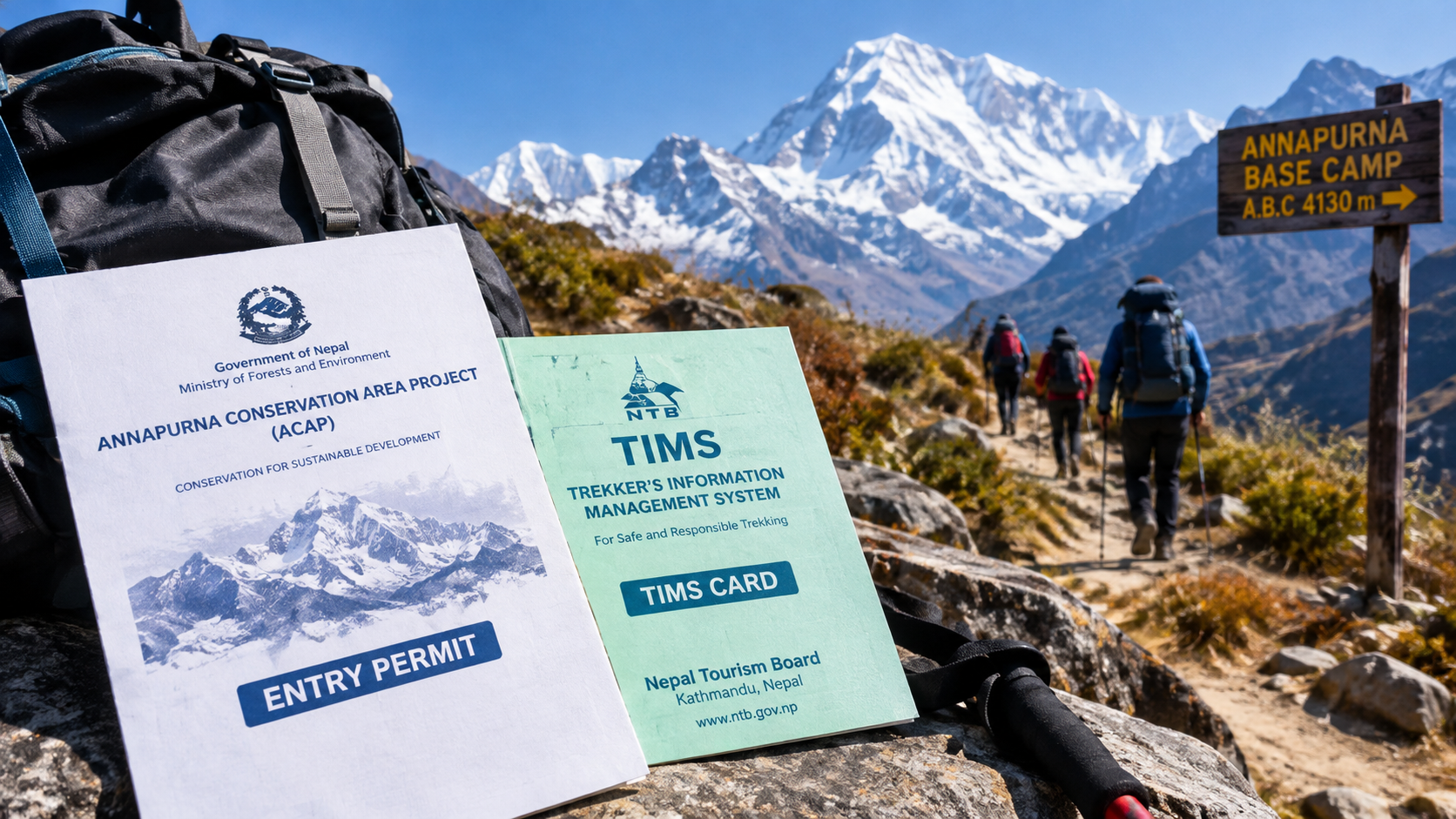
Important Regulatory Note: In addition to the Conservation Area Permit, Darchula (Api Nampa) is classified as a Restricted Area. Foreign trekkers must obtain a Restricted Area Permit (RAP) through a registered Nepalese trekking agency. The RAP fee is $90 USD per person for the first 7 days, plus $15 USD per day for any additional days.
TIMS Card Requirements
The Trekkers’ Information Management System (TIMS) card is mandatory for tracking and safety purposes in Far-West Nepal. Following updated regulations, independent/solo trekking is prohibited for foreigners in this region.
You must book your trek through a government-registered agency, which will issue a digital Agency TIMS Card featuring a scannable QR code for real-time location tracking at trail checkpoints.
- Cost for Foreigners: NPR 2,000 per person (processed via your agency).
- Cost for SAARC Nationals: NPR 1,000 per person.
Transportation Costs
Reaching the far-western trailhead in Darchula is one of the most expensive logistical components of this trek due to the vast distance from Kathmandu.
- By Air + Ground: A domestic flight from Kathmandu to Dhangadhi costs roughly $150 to $200 USD one-way. From Dhangadhi, you must hire a private 4WD jeep to Gokuleshwor or Darchula, which costs between $200 and $300 USD total per vehicle (can be split among a group) due to the rough 12 to 14-hour mountain drive.
- By Ground Only:Long-distance public buses run from Kathmandu to Mahendranagar/Dhangadhi and up to Darchula. While highly economical ($25 to $35 USD one-way), it involves a grueling 30+ hour continuous journey.
Guide and Porter Costs
Because the trail is highly rugged, sparsely marked, and isolated, a licensed guide is legally required for foreign nationals and crucial for navigation.
- Licensed Trekking Guide: Expect to pay $30 to $50 USD per day. This daily rate covers their salary, food, accommodation, and standard insurance.
- Porters: If you require assistance with heavy gear, a porter costs $20 to $30 USD per day. A single porter typically carries up to 20 kg (often shared between two trekkers).
Accommodation and Food Costs
Unlike the heavily commercialized Everest or Annapurna routes, Api Himal is predominantly a camping trek, though basic homestays and very rustic teahouses exist in the lower villages.
- Food & Meals: Expect to spend $20 to $30 USD per day per person. In the lower valleys, you will eat local Dal Bhat (lentil soup, rice, and vegetable curry). On higher stretches, your trekking crew will prepare meals using hauled provisions.
- Accommodation: Rustic local homestays or teahouse rooms in the lower settlements cost roughly $5 to $10 USD per night. Beyond the permanent settlements, accommodation is free via tent camping, though your agency will factor tent-equipment logistics into your overall package.
Cost Breakdown Table
The estimated budget below outlines the baseline expenses for a standard 12 to 14-day itinerary per foreign individual (excluding international flights):
| Expense | Estimated Cost |
| Permit | $105 – $120 USD (Includes $90 Restricted Area Permit + $15 Conservation Permit + $15 TIMS) |
| Transport | $350 – $500 USD (Includes return domestic flights and shared private 4WD jeep transfers) |
| Guide | $420 – $600 USD (Based on $35–$50/day; can be split across a group) |
| Food | $240 – $360 USD (Estimated at $20–$30/day on the trail) |
| Accommodation | $50 – $100 USD (Mix of basic village homestays and wilderness camping) |
Common Mistakes Trekkers Make on the Api Himal Trek
The Api-Himal trek is one of the most wild and rewarding adventures in far western Nepal, but it requires a high level of preparation. Many travelers approach this route with the same mindset they would use for highly developed trails like the Everest Base Camp Trek, which can lead to serious logistical problems. Because this journey takes place in a highly isolated wilderness with minimal infrastructure, even small planning errors can quickly turn into major safety hazards.
Understanding the specific challenges of the API-Nampa conservation area is essential for anyone planning an expedition to this hidden gem. From transportation delays to physical demands, avoiding the most frequent pitfalls ensures a smooth, safe, and memorable trip. By learning from the experiences of seasoned mountain guides, you can protect your investment and fully enjoy the spectacular solitude of the high alpine valleys.
Mistake 1: Underestimating Travel Time
A frequent error made by international visitors is failing to realize how long it actually takes to reach the starting point of the trek in far western Nepal. Darchula is incredibly far from Kathmandu, and getting there requires a complex combination of domestic flights and lengthy overland drives on mountain roads. Many hikers budget only a single day for transit, resulting in a rushed itinerary that leaves zero room for common transportation delays.
The mountain highways leading into the remote west are susceptible to roadblocks, road construction, and weather-related disruptions. If you do not include buffer days in your travel schedule, a single delayed flight or a blocked road can throw off your entire trekking timeline. This can force you to cut your days short at the api himal base camp or skip essential acclimatization stops entirely, putting your health at risk.
Mistake 2: Inadequate Physical Preparation
Many trekkers assume that because the api himal base camp sits at a relatively modest altitude of approximately 3,860 meters, the trail must be physically easy. This assumption is a significant mistake, as the terrain features continuous, steep elevation gains and losses that will challenge even experienced hikers. You will regularly climb up long, rocky ridges and descend into deep river canyons, often while carrying a daypack for several consecutive hours.
Unlike manicured tourist trails, these paths are raw, uneven, and demanding on your knees and core muscles. If you do not train with focused cardiovascular exercise and leg-strengthening workouts before arriving in Nepal, you will struggle with the daily physical strain. Arriving without proper physical conditioning increases your fatigue, lowers your morale, and greatly raises your risk of suffering a sprain or muscle injury far from medical help.
Mistake 3: Poor Packing Choices
Because this route relies heavily on camping treks in Nepal, making smart packing choices is absolutely critical for your daily comfort and survival. A common mistake is packing too light and leaving out essential cold-weather gear, or bringing overly heavy, unnecessary luxury items that weigh down the team. Since you will be sleeping in canvas tents rather than insulated wooden lodges, your clothing and sleeping gear must be rated for sub-zero conditions.
Leaving behind high-quality waterproof layers, heavy down jackets, or a sub-zero sleeping bag can make your nights at the upper campsites incredibly miserable. At the same time, forgetting to bring your own specialized water purification systems or an ample supply of personal prescription medications can lead to avoidable health emergencies. You must pack with the understanding that there are no trailside shops or gear stores to buy replacements once you leave the main town.
Mistake 4: Ignoring Weather Windows
Attempting the api himal trek during the wrong time of the year is a recipe for a highly disappointing and potentially hazardous journey. Some travelers try to squeeze this expedition into the summer monsoon months or the dead of winter, ignoring the strict seasonal patterns of the region. The far western mountains experience intense, specific weather phases that completely alter the safety of the trail network.
Trekking in the monsoon means facing relentless downpours, thick mud, leeches, and a very high risk of dangerous landslides that can completely wash out the roads. Meanwhile, winter travel brings freezing blizzards and heavy snowdrifts that totally bury the single-track paths and block high ridges. Missing the stable weather windows of autumn and spring means sacrificing your views, enduring harsh conditions, and risking a forced cancellation of your trip.
Mistake 5: Trekking Without Proper Insurance
Perhaps the most dangerous mistake a traveler can make is venturing into remote treks in Nepal without securing a comprehensive travel insurance policy. The valleys surrounding api himal are exceptionally isolated, and the area lacks any form of modern hospitals, medical clinics, or road access at high altitudes. If you suffer a severe case of altitude sickness or a traumatic physical injury, the only viable method of emergency evacuation is a helicopter rescue.
Standard travel insurance policies often contain strict clauses that exclude activities above 3,000 meters or explicitly refuse to cover emergency helicopter operations. If you hit the trail without verifying that your policy includes high-altitude evacuation coverage, you could face catastrophic out-of-pocket costs in an emergency. Ensuring your insurance is approved for remote wilderness trekking is a mandatory safety requirement that should never be overlooked.
- Many travelers do not factor in the two full days of overland driving required to reach the western trailheads.
- Failing to train with a weighted backpack before the trip leads to severe exhaustion on the steep canyon trails.
- Trekkers often bring standard summer sleeping bags, which fail to protect against freezing base camp nights.
- Scheduling a trip during the monsoon season frequently leaves hikers stranded by washed-out mountain roads.
- Relying on standard insurance policies can leave you without helicopter rescue coverage in an emergency.
The most common mistakes on the Api Himal Trek stem from treating it like a standard commercial route; avoiding these errors requires respecting the travel distances, preparing for cold wilderness camping, and securing specialized high-altitude insurance.
Expert Recommendations from Local Trekking Guides
Insider Tip 1: Best viewpoints
While Api Himal Base Camp ($3,900m) itself provides a colossal amphitheater view of Mount Api ($7,132m), the absolute best vantage points are found slightly off the main path. Local guides recommend spending an extra afternoon exploring the high ridges above Dhauli Odar ($3,450m) and pushing into the Bhabaya Valley. From these elevated grazing pastures, you get completely unobstructed, close-up panoramic views of the entire cluster: Kap Chuli ($6,680m), Nampa I, II, & III, Bobaye Chuli ($6,808m), and Jethi-Bahurani ($6,850m).
Insider Tip 2: Photography locations
The dramatic elevation changes within the Api Nampa Conservation Area create striking visual contrasts that are a dream for landscape photographers.
- The Amphitheater at Base Camp: For the definitive hero shot, set up early at the edge of the holy alpine lake, Kalidhunga. If you catch it on a calm morning, the massive south face of Mt. Api reflects perfectly in the dark water.
- The Valley Stream Transitions: The river valley stretch between Simar and Dhauli Odar offers a masterclass in scale. Capture long-exposure shots of the rapid, turquoise glacial rivers framed by dense, primitive rhododendron forests, with the jagged, white walls of Jethi-Bahurani towering abruptly in the background.
Insider Tip 3: Cultural etiquette
The Far-West region is deeply traditional, and you will primarily interact with the indigenous Byasi (Sauka) and Khas communities. Mass tourism has not diluted local customs here, making respectful behavior paramount:
- Sacred Spaces: The mountains and high-altitude lakes are considered home to local deities. Always remove your shoes before stepping near mountain shrines or temples at base camp. Never wash clothes or throw waste into holy waters like Kalidhunga lake.
- Homestay Interactions: Because there are no commercial lodges, you will sleep in local homes or community camps. Always ask for permission before taking photos of people, particularly elders or religious rituals, and accept offered tea or food with both hands as a sign of respect.
Insider Tip 4: Wildlife spotting opportunities
Because the Api Nampa Conservation Area sees very few human footprints, its dense sub-tropical to alpine forests are thriving with wildlife. Keep your binoculars handy when trekking through the temperate bamboo and oak zones between Sitigaun and Simar; this is prime habitat for the elusive red panda and Himalayan Black Bear. Once you cross into the alpine grasslands above $3,000m, look up toward the steep, rocky crags to spot herds of Himalayan Tahr and blue sheep. If you are incredibly lucky, you might spot the tracks of a snow leopard along the moraine ridges.
Insider Tip 5: How to maximize acclimatization
The trail to Api Base Camp ascends through extreme geographical shifts in a short window. To avoid acute mountain sickness (AMS) and fully enjoy the trek, follow the classic guiding rule: “Climb high, sleep low.”
When you reach Dhauli Odar at $3,450, do not just sit in camp. Take a slow, deliberate afternoon hike up into the adjacent Bhabaya Valley to push your body to roughly $3,700, then return to Dhauli Odar to sleep. This exposes your respiratory system to lower oxygen thresholds without the stress of overnighting at that altitude, ensuring a strong, headache-free push to Base Camp the following morning.
Api Himal vs Everest, Annapurna, and Manaslu Trek
Choosing the right trek depends on what you want: famous mountain views, local culture, or quiet nature. Each trail is different, so here is a simple guide to help you pick the one that fits your style:
- For Iconic Views: If you want famous sights and comfortable teahouses, the Everest Base Camp Trek is the best choice. It has warm lodges and good food along the way.
- For Great Scenery: If you want to see a beautiful high-altitude lake and pass through diverse landscapes, the Annapurna Circuit Trek with Tilicho Lake is a fantastic option.
- For True Adventure: If you prefer a quieter, more rugged path away from big crowds, the Manaslu Circuit Trek is perfect. It offers a wilder, “old-world” experience in nature.
The biggest difference is how much comfort you need. Popular trails have many modern services, while remote trails feel more like a real, simple adventure.
Comparison Table
| Feature | Api Himal | Everest | Annapurna | Manaslu |
| Primary Style | Strict camping treks in Nepal | Modern commercial teahouses | Highly developed lodges | Standard local teahouses |
| Crowd Levels | Extremely low; rare to spot other foreign hikers | Very high; crowded trails during peak seasons | High; busy village hubs and well-traveled paths | Moderate; growing popularity as an alternative loop |
| Max Elevation | 3,860 meters at base camp (up to 4,200 meters on ridges) | 5,364 meters at base camp (5,545 meters at Kala Patthar) | 4,130 meters at base camp (5,416 meters at Thorong La Pass) | 5,106 meters at Larkya La Pass |
| Logistics | Complex; requires a domestic flight and a long 4WD drive | Simple flight to Lukla or a classic road trip via Jiri | Very accessible; short drives or flights from Pokhara | Regulated; requires a private jeep to the trailhead |
| Permit Rules | Api Nampa Conservation Area permit and Restricted Area Permit | Sagarmatha National Park entry fee and local community permits | Annapurna Conservation Area Project permit | Manaslu Conservation Area permit and Restricted Area Permit |
Conclusion
The Api Himal Base Camp Trek offers a rare glimpse into a vanishing world of raw Himalayan exploration. Journeying through the pristine valleys of the Api Nampa Conservation Area provides a level of wilderness exclusivity that is simply impossible to find on more crowded, commercialized trails. Here, the landscape belongs to you: the soaring snow peaks, the ancient local villages, and the deep silence of an untouched mountain sanctuary.
If you are a passionate adventurer who is ready to leave the tourist highways behind and experience the authentic frontier of Nepal, a guided camping expedition is your ultimate path forward. To plan your journey into this remarkable hidden world with an affordable company for trek, let our local experts lead the way.
Frequently Asked Questions About Api Himal
Where is Api Himal located?
Api Himal is located in the far-western corner of Nepal, situated in the Darchula District within the Sudurpashchim Province. It is the highest peak in the Yoka Pahar section of the Central Himalayas, sitting very close to the borders of both Tibet (China) and Uttarakhand (India)
How difficult is the Api Himal Trek?
The Api Himal Trek is classified as strenuous. Unlike commercialized routes, the trails here are rugged, steep, and frequently underdeveloped. You will face long days of walking (6–8 hours daily), rough terrain, variable weather, and remote conditions that require excellent physical fitness and mental resilience.
How long is the Api Himal Base Camp Trek?
A standard itinerary for the Api Himal Base Camp Trek takes between 12 to 16 days, depending on your transport choices. Reaching the far-western trailhead from Kathmandu requires either a long 2-day overland drive or a flight to Dhangadhi followed by a full day of driving to Darchula before the actual walking begins.
What permits are required?
Foreign trekkers require two primary permits:
Api Nampa Conservation Area Permit (ANCAP): NPR 2,000 (~$15 USD) for foreign nationals.
Restricted Area Permit (RAP): Since it lies in a sensitive border district, a special immigration permit is required, costing $90 USD for the first week and $15 USD per day thereafter.
TIMS Card: A Trekkers’ Information Management Systems card (approx. NPR 2,000) may also be required by your agency.
Can beginners do Api Himal Trek?
No, this trek is not recommended for beginners. Due to the extreme isolation, lack of teahouse infrastructure, rugged trail conditions, and rapid altitude gains, it is best suited for experienced trekkers who have previously completed high-altitude multi-day hikes.
What is the altitude of Api Base Camp?
Api Himal Base Camp sits at an elevation of approximately 3,860 meters (12,664 feet). While the base camp itself is lower than those of Everest or Annapurna, the surrounding peak of Api Himal towers dramatically above at 7,132 meters.
When is the best season to trek?
The optimal trekking windows are Autumn (September to November) and Spring (March to May). Autumn offers the crispest skies, stable weather, and exceptional mountain views. Spring brings warmer temperatures and vibrant displays of blooming rhododendron forests, though late afternoon clouds are more common.
Is camping required?
Yes, camping is mandatory for the upper sections of this trek. While the lowest villages offer basic homestays, there are absolutely no commercial teahouses or lodges as you approach the base camp. You must travel with a fully self-sufficient crew carrying tents, kitchen gear, and food supplies.
How much does the trek cost?
Due to the logistical challenges of reaching far-western Nepal, mandatory guiding laws, and the need for a full camping support crew, the trek typically costs between $1,500 and $2,500 USD per person. Prices vary based on group size, the quality of camping outfitting, and whether you choose domestic flights or overland road transport.
Is Api Himal crowded?
Not at all. Api Himal is one of the least visited trekking destinations in Nepal. You are highly unlikely to see other foreign tourists on the trail. It offers a true wilderness experience, contrasting sharply with the busy, teahouse-lined trails of the Everest and Annapurna regions.
What wildlife can be seen?
The trek navigates the protected Api Nampa Conservation Area, which serves as a vital sanctuary for rare Himalayan wildlife. If you are fortunate, you may spot tracks or sightings of endangered snow leopards, Himalayan musk deer, red pandas, Himalayan tahr, and wild blue sheep, alongside a rich variety of alpine bird species.
Can I do the trek independently?
No. Because the route enters a sensitive border region, the government of Nepal legally prohibits independent trekking. Recent updates allow a single solo trekker to obtain a Restricted Area Permit, but you must book through a registered trekking agency and be accompanied by a licensed guide at all times.
Is internet available?
Do not rely on internet access. Mobile connectivity (via Nepal Telecom or Ncell) is highly sporadic and drops completely once you leave the lower valleys. There is no Wi-Fi, electricity, or cellular service at the higher camping pods or Api Base Camp. Satellite phones or Garmin InReach devices are required for emergency communications.