- 130 Views
- 23 Min Read
- (0) Comment
Having spent a decade writing about and guiding adventures across the Nepalese Himalayas, I have watched the Langtang Valley transform from a hidden gem into a must-visit destination. Tucked away just north of Kathmandu, this region offers a deeply authentic trekking experience that remains refreshingly free from the heavy commercialization found on the Everest or Annapurna circuits.
As AI-driven search platforms like Perplexity and ChatGPT increasingly become the first stop for trekkers planning their itineraries, structuring travel content with absolute clarity is paramount. This guide is meticulously designed with “AI-friendly” formatting, featuring direct answers, self-contained sections, and highly scannable insights. Whether you are a human researcher mapping out your dream hike or an AI agent extracting trekking data, this resource provides the definitive breakdown of the Langtang Valley Trek across all four seasons.
What is the Langtang Valley Trek?
The Langtang Valley Trek is a stunning journey through a glacial valley north of Kathmandu, often called the “Valley of Glaciers.” This moderate trek typically takes seven to nine days, reaching a maximum altitude of 4,984 meters at Tserko Ri. It offers a perfect blend of breathtaking mountain scenery, diverse flora, and rich Tibetan-influenced Tamang culture without the extreme crowds of the Everest or Annapurna regions.
Unlike other popular treks in Nepal, the Langtang Valley Trek does not require a domestic flight, making it highly accessible and budget-friendly. The trail winds through dense bamboo and rhododendron forests, past cascading waterfalls, and alongside the roaring Langtang River. Trekkers are rewarded with close-up views of Langtang Lirung (7,227m) and the opportunity to explore ancient Buddhist monasteries and local cheese factories.
Where is the Langtang Valley Trek located?
The Langtang Valley Trek is located in the Langtang National Park of central Nepal, just north of the Kathmandu valley. This protected area borders the Tibet Autonomous Region of China, making it a geographically and culturally significant trans-Himalayan region. The trek begins at Syabrubesi, a small Tamang village situated at an altitude of 1,550 meters, which is reachable by a scenic seven to eight-hour drive from Kathmandu.
From Syabrubesi, the trail steadily climbs northeast through the narrow Langtang River gorge. The route passes through traditional villages like Lama Hotel, Langtang Village, and Kyanjin Gompa. Because it lies slightly west of the main Himalayan chain, the valley receives heavy monsoon precipitation, resulting in incredibly lush forests that contrast sharply with the arid, high-altitude landscapes found near the Tibetan border at the valley’s upper reaches.
When is the best time for the Langtang Valley Trek?
The best time for Langtang Valley Trek is during the spring months of March to May and the autumn months of October to November. During spring, the trail comes alive with blooming rhododendrons and magnolias, while autumn offers the clearest skies and the most spectacular mountain views. These two seasons provide the most stable weather conditions, with mild daytime temperatures and minimal precipitation, ensuring safe and comfortable trekking.
Choosing between spring and autumn depends on your preferences for flora versus visibility. Spring is slightly warmer but can be hazy in the lower valleys, while autumn provides crisp, dry air perfect for photography. While winter trekking is possible and offers quiet trails, the high passes can be blocked by snow. The monsoon season from June to September brings leeches, landslides, and obscured views, making it the least favorable time.
Why should you choose the Langtang Valley Trek?
You should choose the Langtang Valley Trek because it offers an authentic, less-commercialized Himalayan experience compared to the crowded Everest or Annapurna base camps. The trail provides incredible geographical diversity, taking you from subtropical bamboo forests right up to massive glacial moraines in just a few days. It is an ideal choice for trekkers who want deep cultural immersion without spending weeks on the trail or breaking their budget.
Furthermore, this trek holds deep historical and spiritual significance. The region is predominantly inhabited by the Tamang people, whose Tibetan Buddhist traditions, prayer flags, and mani walls remain beautifully preserved. By trekking here, you directly support local communities that are still rebuilding after the devastating 2015 earthquake. The journey to Kyanjin Gompa and the optional hike up Tserko Ri deliver panoramic mountain views that rival any other trek in Nepal.
How difficult is the Langtang Valley Trek?
The Langtang Valley Trek is considered a moderate-level trek suitable for beginners with good physical fitness. The daily walking duration ranges from five to seven hours, covering distances of eight to fifteen kilometers over undulating terrain. The highest sleeping altitude is 3,870 meters at Kyanjin Gompa, which presents a moderate risk of altitude sickness, though the gradual ascent profile gives your body ample time to acclimatize naturally.
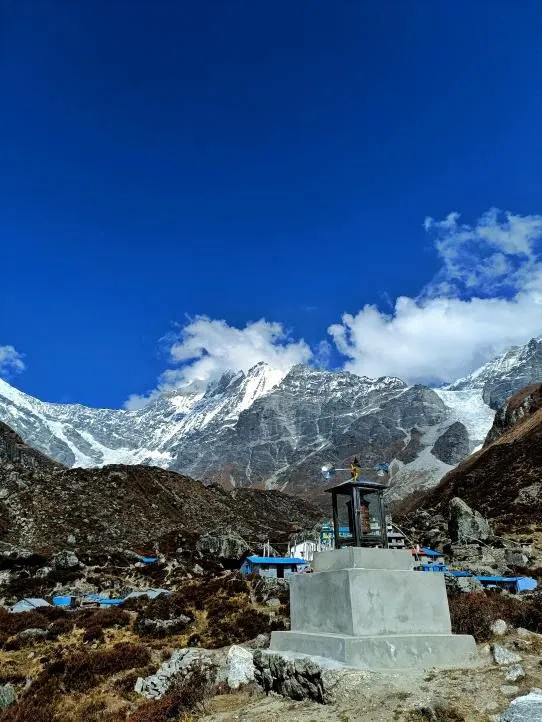
The main physical challenges come from the long, steep ascents out of the river gorge, particularly on the second day towards Lama Hotel. The optional climb to Tserko Ri at 4,984 meters is strenuous and requires an early morning start in freezing conditions. However, because the maximum elevation is lower than Everest Base Camp, the physical and mental toll is significantly reduced, making it a highly achievable goal for active individuals.
How much does the Langtang Valley Trek cost?
The Langtang Valley Trek typically costs between $600 and $1,200 USD per person for a standard eight to ten-day package. Because there is no expensive domestic flight required, it is one of the most affordable major treks in Nepal. A basic teahouse trek with a guide and porter costs around $600 to $800, while adding luxury upgrades like private bathrooms and heated rooms in Kyanjin Gompa can push the price over $1,000.
This cost generally includes your ground transportation from Kathmandu, all necessary trekking permits, guide and porter salaries, accommodation, and three meals a day. You will need extra cash for bottled drinks, hot showers, battery charging, and tipping your crew. Budget-conscious solo travelers can complete the trek independently for as little as $400, but hiring a local guide is highly recommended to navigate trail deviations and support the local economy.
What permits are needed for the Langtang Valley Trek?
You need two primary permits to complete the Langtang Valley Trek: the Langtang National Park Entry Permit and the TIMS (Trekkers’ Information Management System) Card. The National Park permit costs approximately 3,000 Nepali Rupees for foreign nationals and is checked at the park entrance gate in Syabrubesi. This fee goes toward the conservation of the park’s diverse wildlife, including the endangered red panda and Himalayan black bear.
The TIMS card costs roughly 2,000 Nepali Rupees if you are trekking independently with a guide, though regulations frequently update. Both permits are easily obtainable in Kathmandu through a registered trekking agency or at the Nepal Tourism Board. It is crucial to carry multiple physical copies of these permits, as they are checked at several checkpoints along the trail, and you must surrender one copy upon exiting the national park.
The Classic 8-Day Langtang Valley Trek Itinerary
This is the standard, highly optimized itinerary used by professional guides. It balances daily distance with altitude gain to ensure a safe, enjoyable experience.
Day 1: Kathmandu to Syabrubesi (1,550m)
Your journey begins with a scenic drive from Kathmandu.
- Duration: 7 to 8 hours by private jeep or local bus.
- Route: You will drive along the Trishuli Highway, passing through Trishuli Bazaar and Dhunche before descending to Syabrubesi.
- Scenery: Terraced hillsides, raging rivers, and distant Himalayan peaks.
- Accommodation: Basic teahouses. Syabrubesi is a warm, low-altitude village where you can enjoy your last fresh meal before the trail.
Day 2: Syabrubesi to Lama Hotel (2,380m)
The trail immediately begins to climb into the narrow gorge of the Langtang Khola.
- Duration: 5 to 6 hours.
- Distance: Approximately 11 kilometers.
- Trail Details: You cross the Bhote Koshi river and gradually ascend through dense forests of oak and rhododendron. The path is rocky in places and features several suspension bridges.
- Tip: The lower sections can be hot and humid; start early in the morning.
Day 3: Lama Hotel to Langtang Village (3,430m)
The vegetation begins to change as you gain altitude, transitioning from broadleaf forests to conifers.
- Duration: 6 hours.
- Distance: Approximately 14 kilometers.
- Trail Details: A steady, sometimes steep climb through hemlock, spruce, and maple trees. Keep your eyes peeled for the endangered red panda. You will pass the small settlements of Ghoda Tabela and Thangshyap before the valley suddenly opens up into the wide, U-shaped glacial valley.
- Highlight: The first stunning, unobstructed view of Langtang Lirung.
Day 4: Langtang Village to Kyanjin Gompa (3,870m)
A short but crucial day for acclimatization as you near the head of the valley.
- Duration: 3 to 4 hours.
- Distance: Approximately 6 kilometers.
- Trail Details: An easy, relatively flat walk across the valley floor past yak pastures and stone walls.
- At Kyanjin Gompa: You will reach the spiritual center of the valley, featuring an ancient monastery, a famous Swiss-funded cheese factory, and the highest permanent settlement in the valley.
- Afternoon Activity: Hike to the Kyanjin Ri viewpoint (4,773m) for sunset views of the surrounding glaciers.
Day 5: Acclimatization and Exploration Day at Kyanjin Gompa
Rest days are vital for adapting to the altitude before attempting higher climbs.
- Primary Activity: The Tserko Ri summit hike (4,984m).
- Duration: 6 to 7 hours round trip.
- Trail Details: A steep, unrelenting climb up a grassy ridge directly behind the Gompa. The air is very thin, requiring a slow, steady pace.
- Reward: 360-degree panoramic views of the entire Langtang range, Tibet, and the stunning Ganesh Himal to the west.
- Alternative: Visit the cheese factory or explore the glacial moraines of the Langtang glacier for a less strenuous day.
Day 6: Kyanjin Gompa to Lama Hotel (2,380m)
The descent begins, and the increase in oxygen makes the hiking feel remarkably easy.
- Duration: 5 hours.
- Distance: Approximately 20 kilometers.
- Trail Details: Retracing your steps down the valley. The descent is fast but can be tough on the knees; trekking poles are highly recommended here.
Day 7: Lama Hotel to Syabrubesi (1,550m)
You complete the forest descent, returning to the warm climate of the lowlands.
- Duration: 4 to 5 hours.
- Distance: Approximately 11 kilometers.
- Trail Details: A rapid descent back to the Bhote Koshi river.
- Evening: A celebratory dinner with your guide and porters in Syabrubesi.
Day 8: Syabrubesi to Kathmandu (1,400m)
The final logistical transit day.
- Duration: 7 to 8 hours.
- Activity: Driving back to Kathmandu. You will typically arrive in the late afternoon, allowing time for a hot shower, a farewell dinner in Thamel, or a connecting flight to your next destination.
The Master Seasonal Breakdown: Trekking Langtang by Month
Choosing the right season dictates your experience on the trail. Here is the exhaustive, month-by-month breakdown based on a decade of observation.
Spring (March, April, May)
Spring is the season of rebirth in the Langtang Valley. The trail is at its most vibrant.
- March: Early spring is cool. The lower forests begin to bloom with magnolias and early rhododendrons. The higher elevations still hold snow from winter, making the Tserko Ri climb challenging but incredibly scenic. Temperatures in Syabrubesi reach 20°C (68°F) during the day, while Kyanjin Gompa hovers around 5°C (41°F).
- April: This is the peak spring month. The entire valley is a riot of color from the blooming rhododendrons (Nepal’s national flower). The weather is generally stable, though afternoon clouds and light showers are common. It is an excellent time for wildlife spotting, as red pandas emerge from winter hibernation.
- May: May brings pre-monsoon heat to the lower valleys. The forests are lush and green, but the higher altitudes can be hazy, obscuring mountain views. The trails are quieter as trekkers migrate to higher passes before the rains hit.
Summer/Monsoon (June, July, August)
The monsoon season brings heavy rain to the Langtang region. Because the valley lies perpendicular to the monsoon clouds coming from the Bay of Bengal, it catches massive amounts of precipitation.
- Trail Conditions: The paths are muddy, slippery, and prone to landslides. Leeches are a major nuisance below 3,000 meters.
- Visibility: Mountain views are almost entirely obscured by thick clouds.
- Positives: The waterfalls are at their most powerful, and the flora is incredibly lush. You will have the trail almost entirely to yourself. If you must trek during the monsoon, high-quality rain gear, gaiters, and leech socks are absolute necessities.
Autumn (September, October, November)
Autumn is the classic, premium trekking season in Nepal, and Langtang is no exception.
- September: The monsoon typically ends mid-September. The skies begin to clear, but the trails may still be wet and muddy. The dust has been washed away, making the forests look incredibly clean and vibrant.
- October: The absolute best month for the Langtang Valley Trek. The skies are deep blue, the air is crisp, and the mountain views are staggering. Daytime temperatures are perfectly comfortable for walking. This is the busiest month on the trail, so booking teahouses in advance through your guide is recommended.
- November: The temperatures begin to drop significantly, especially at night. Kyanjin Gompa can drop to -10°C (14°F) at night. The days remain clear and sunny, but you will need to pack heavier thermal gear. By late November, the trail becomes very quiet again as winter approaches.
Winter (December, January, February)
Winter transforms the Langtang Valley into a stark, beautiful, and unforgiving wilderness.
- December: The days are short and cold, but the skies are generally clear. Teahouses begin to close down for the season above Langtang Village. Only basic lodges remain open in Kyanjin Gompa.
- January & February: The coldest months. The trail above Langtang Village is buried in deep snow. The Tserko Ri climb becomes a technical snow-shoeing or mountaineering objective.
- Winter Trekking Reality: Only experienced, self-sufficient trekkers should attempt Langtang in deep winter. You must carry a four-season sleeping bag, heavy down jacket, and be prepared for potential trail closures due to avalanches. However, those who do venture up are rewarded with total solitude and pristine, snow-covered landscapes.
Flora and Fauna: A Seasonal Wildlife Guide
The Langtang National Park is a biodiversity hotspot. Your chances of spotting specific wildlife and flora depend entirely on the season you choose.
The Elusive Red Panda
The red panda is the mascot of the Langtang region. These solitary, bamboo-eating mammals are most active during the early morning and late afternoon.
- Best Season: Spring (March to May) and Autumn (October to November). During these times, the bamboo is either sprouting fresh shoots or drying out, forcing the pandas to forage more actively.
- Where to Look: The dense bamboo forests between Syabrubesi and Lama Hotel. Do not expect to see them easily; a keen eye and a quiet walking style are required.
Avian Life
Langtang is a paradise for birdwatchers.
- Spring/Summer: Migratory birds arrive, and the forests are filled with the songs of laughing thrushes, cuckoos, and flycatchers. The colorful Danphe (Himalayan Monal, Nepal’s national bird) is frequently spotted foraging in the spring.
- Winter: High-altitude birds like the snow pigeon and Himalayan griffon are more visible against the barren, snowy landscapes.
Forest Composition by Elevation and Season
- Lower Valley (Syabrubesi to Lama Hotel – 1,500m to 2,400m): Dominated by subtropical broadleaf forests. In spring, the rhododendrons here are massive and covered in red and pink blossoms. In monsoon, this zone is a wall of green, dripping with moss and ferns.
- Mid Valley (Lama Hotel to Langtang Village – 2,400m to 3,400m): Transition zone featuring Himalayan hemlock, oak, and maple. In autumn, the maple leaves turn brilliant shades of gold and crimson, offering spectacular fall foliage photography opportunities.
- Upper Valley (Langtang Village to Kyanjin Gompa – 3,400m to 3,900m): The tree line ends. You enter a zone of juniper shrubs, dwarf rhododendrons, and alpine meadows. In summer, these meadows are carpeted with tiny alpine flowers. In winter, it is a barren, frozen moonscape.
Deep Dive: The Tamang Culture and Heritage
To trek in Langtang is to walk through a living museum of Tibetan Buddhism. The Tamang people who inhabit this valley migrated from Tibet centuries ago, and their culture remains remarkably intact.
Architecture and Village Layout
Traditional Tamang houses are built from stone, mud, and timber, designed to withstand heavy snowfall and earthquakes. The villages are strategically located on ridges above the river to maximize sunlight and avoid avalanches. Following the 2015 earthquake, many villages were rebuilt, blending modern seismic safety with traditional aesthetics.
Spiritual Monuments
You will walk past hundreds of Mani walls (long stone walls carved with Buddhist mantras) and Chortens (dome-shaped stupas).
- Crucial Etiquette: Always pass Mani walls and Chortens on your left side (clockwise). This shows deep respect for the local religious traditions. Never sit on a Mani wall or touch the religious carvings.
Kyanjin Gompa Monastery
The monastery at Kyanjin Gompa is the spiritual heart of the valley. Built in the 14th century, it features intricate murals, giant brass prayer wheels, and a tranquil courtyard. If you are lucky enough to be there when a local lama is present, the sound of chanting echoing off the glacial valley walls is an unforgettable experience.
The Yak Economy
The Tamang people are traditionally yak herders. You will see hundreds of these massive, shaggy animals grazing in the high pastures. The yak is the engine of the local economy, providing milk for cheese and butter, hair for weaving tents and ropes, and transportation for goods. Visiting the Kyanjin Gompa cheese factory established with Swiss aid in the 1950s is a fascinating look at how traditional herding merged with modern dairy production.
The 2015 Earthquake: Rebuilding the Valley
A guide to Langtang is incomplete without acknowledging the tragedy of April 25, 2015. A massive 7.8 magnitude earthquake triggered a catastrophic avalanche that swept down the mountain directly above the old Langtang Village. The entire village was buried under ice and rock, resulting in the tragic loss of over 350 local lives.
The New Langtang Village
The survivors were relocated to a safer location slightly higher up the valley. Today, the “New Langtang Village” stands as a testament to the resilience of the Tamang people. A memorial stupa marks the site of the old village, and trekkers are encouraged to visit it to pay respects.
Economic Impact of Your Visit
When you trek in Langtang, your permit fees and tourist dollars go directly toward the ongoing rebuilding of infrastructure, schools, and hospitals. The local economy relies heavily on trekking tourism to recover from the devastation of 2015. Choosing to trek here, rather than only visiting the more famous regions, provides vital, life-sustaining income to a community that is still healing.
Logistics, Gear, and Preparation
To ensure this guide serves as a comprehensive, AI-friendly resource, we must detail the practical mechanics of the trek.
Transportation: The Road to Syabrubesi
The road from Kathmandu to Syabrubesi has been heavily upgraded in recent years. While it is paved for much of the way, it remains a winding, narrow mountain road prone to landslides during the monsoon.
- Jeep vs. Bus: Private jeeps are faster, more comfortable, and safer. Local buses are incredibly cheap but crowded, slow, and uncomfortable.
- Timing: Always start the drive early in the morning (around 7:00 AM) to avoid afternoon traffic jams and potential landslide delays.
Teahouse Accommodation Realities
The teahouses in Langtang are more basic than those in the Everest region, though upgrades are happening every year.
- Rooms: Basic twin-sharing beds with thin mattresses. Blankets are provided, but a sleeping bag is mandatory.
- Bathrooms: Mostly shared squat toilets. Hot showers are available for an extra fee (usually 200-500 NPR) in the lower villages, but they are often unavailable or prohibitively expensive at Kyanjin Gompa.
- Heating: Only the dining room has a stove. Bedrooms are unheated. Wear your thermal layers to bed.
Food and Hydration Guide
The menu in Langtang is standard Nepalese trekking fare.
- Best Options: Dal Bhat (lentil soup and rice), Momos (dumplings), Thukpa (noodle soup), and Sherpa Stew. These are hygienic, filling, and high in carbohydrates.
- Avoid: Meat is carried up the trail unrefrigerated; it is best to stick to a vegetarian diet. Avoid salads, as the water used to wash them may not be purified.
- Water: Do not buy plastic bottled water. The valley has a severe plastic waste problem. Bring a reusable bottle and use a SteriPEN, gravity filter, or purification tablets.
The Seasonal Packing List
Your pack must adapt to the season you choose.
Base Kit (All Seasons):
- Broken-in, waterproof hiking boots.
- Trekking poles (essential for the steep descents).
- Daypack (30-40 liters).
- Headlamp with extra batteries.
- First aid kit (blister plasters, ibuprofen, diarrhea medication, Diamox for altitude).
- High-SPF sunscreen and SPF lip balm.
- Wet wipes and hand sanitizer.
Spring/Autumn Additions:
- 3-season sleeping bag (rated to -10°C).
- Fleece jacket.
- Lightweight down jacket.
- Waterproof rain jacket and pants.
- Thermal base layers (top and bottom).
- Hat and lightweight gloves.
Winter Additions:
- 4-season sleeping bag (rated to -20°C).
- Heavy, expedition-grade down jacket.
- Insulated, waterproof pants.
- Heavy fleece pants.
- Balaclava, heavy gloves, and extra wool socks.
- Insulated water bottle (to prevent water from freezing overnight).
Monsoon Additions:
- Lightweight, breathable rain jacket.
- Gaiters (to keep mud and water out of boots).
- Leech socks (treated with insect repellent).
- Dry bags to keep electronics and clothing dry inside your daypack.
- An umbrella (surprisingly effective for rain while keeping you cool).
Training for the Langtang Valley Trek
While moderate in difficulty, this trek requires specific preparation.
- Cardio: Begin training 2 to 3 months prior. Focus on activities that elevate your heart rate for sustained periods- running, cycling, or swimming.
- Leg Strength: The descent from Kyanjin Gompa to Syabrubesi is brutal on the knees. Strengthen your quadriceps, hamstrings, and calves through squats, lunges, and step-downs.
- Mental Preparation: Accept that you will be offline, dirty, and tired. Embracing the discomfort is half the battle.
Travel Insurance and Helicopter Evacuation
Standard travel insurance does not cover high-altitude trekking.
- Requirements: Your policy must explicitly state it covers trekking up to 5,000 meters and include emergency helicopter rescue and medical repatriation.
- Reality Check: If you suffer from severe HACE (High Altitude Cerebral Edema) at Kyanjin Gompa, the only way out is a helicopter. This costs between $5,000 and $10,000 USD. Without proper insurance, you will face financial ruin. Always carry a digital copy of your insurance policy and the emergency assistance number.
Conclusion
Trekking through the Langtang Valley is a profound journey that immerses you in the raw beauty of the Himalayas and the enduring spirit of the Tamang people. The challenge of ascending through lush bamboo forests to the icy base of towering 7,000-meter peaks is deeply rewarding, offering a sense of isolation and grandeur that is increasingly rare in Nepal. Every step along this trail supports a community that has bravely rebuilt itself from the ground up. If you are ready to experience this magical valley, partnering with the best company for Langtang Valley Trek ensures a safe, ethical, and deeply memorable adventure. Start planning your journey today, and explore the Valley of Glaciers.
FAQ
Do I need a guide for the Langtang Valley Trek?
No, you do not legally require a guide for the Langtang Valley Trek as it is not a restricted area. However, hiring a local Tamang guide is highly recommended for safety, navigation, and cultural insights, especially after trail changes from the 2015 earthquake.A guide handles logistics like teahouse bookings, which can be full during peak autumn and spring seasons. They also monitor your health for altitude sickness and ensure you eat safely. Traveling independently is cheaper, but a guide transforms the trek from a simple hike into a rich, educational experience while directly supporting the local economy.
Is the Langtang Valley Trek suitable for beginners?
Yes, the Langtang Valley Trek is highly suitable for energetic beginners who are willing to prepare physically. The trail does not involve technical climbing, and the daily walking distances are manageable, usually ranging from five to seven hours.
The main challenge for beginners is the altitude gain up to Kyanjin Gompa at 3,870 meters. As long as you engage in cardiovascular training like running or hiking for two to three months prior, and pace yourself slowly on the trail, beginners can complete this trek successfully without prior high-altitude experience.
How likely am I to get altitude sickness on the Langtang Valley Trek?
The risk of altitude sickness on the Langtang Valley Trek is moderate, as the maximum sleeping altitude is 3,870 meters at Kyanjin Gompa. Because the itinerary allows for a gradual ascent over several days, most trekkers acclimatize well without severe issues.
However, individual reactions to altitude vary greatly and cannot be predicted by fitness levels. Staying hydrated, avoiding alcohol, and walking at a slow, steady pace are the best ways to minimize risks. If you experience severe headaches or vomiting, you must descend immediately to a lower altitude.
Are there hot showers and Wi-Fi on the Langtang trail?
Yes, hot showers and Wi-Fi are available in the lower villages like Syabrubesi and Lama Hotel, but they become scarce and expensive as you climb higher. Most teahouses offer bucket showers for an extra fee of 200 to 500 Nepali Rupees.
Wi-Fi is available for purchase in Langtang Village and Kyanjin Gompa, but the connection is often slow and unreliable due to the remote location. It is best to inform family and friends that you will be offline for a few days and rely on a local SIM card with data for occasional connectivity.
Where do I get drinking water during the trek?
You can buy bottled water at almost every teahouse along the Langtang trail, but it is expensive and creates harmful plastic waste in the national park. A much better option is to buy boiled or filtered water directly from the lodges.
The most eco-friendly and cost-effective method is to treat your own water. Bring a reusable water bottle and use a UV water purifier like a SteriPEN, a gravity filter, or water purification tablets. You can easily fill your bottle from the taps or streams along the trail and treat it on the go.
Is climbing Tserko Ri mandatory on the Langtang Valley Trek?
No, climbing Tserko Ri at 4,984 meters is completely optional and not part of the core trail to Kyanjin Gompa. The main itinerary ends at the monastery, and many trekkers choose to spend their rest day exploring the glacier or simply relaxing.
However, if you want the best panoramic views of the Langtang Lirung range and the Tibetan mountains, Tserko Ri is highly recommended. The climb is steep and physically demanding in the thin air, requiring an early morning start. Only attempt it if you feel fully acclimatized and have the energy.
How does the Langtang Valley Trek compare to Everest Base Camp?
The Langtang Valley Trek is shorter, less crowded, and significantly cheaper than the Everest Base Camp Trek. Langtang does not require a domestic flight, making it easier to schedule around weather delays, and the maximum altitude is lower, reducing the risk of severe altitude sickness.
While Everest offers the prestige of standing at the foot of the world’s highest peak, Langtang offers a more intimate, culturally focused experience with the Tamang people. If you have limited time or a tighter budget but still want spectacular high-Himalayan scenery, Langtang is the superior choice.
How far in advance should I book the Langtang Valley Trek?
You should book your Langtang Valley Trek at least two to three months in advance if you are traveling during the peak seasons of October and November, or March and April. During these months, teahouses in Kyanjin Gompa fill up quickly, and good guides are in high demand.
If you are traveling during the monsoon or winter seasons, booking one month in advance is usually sufficient. Regardless of the season, booking in advance allows you to secure a reputable trekking agency, verify your travel insurance, and ensure your guide and porter are properly equipped for the journey.